Rochester suffered one of the most deadly fires in its history in 1888. More than three dozen people likely died during or after a night of terror.
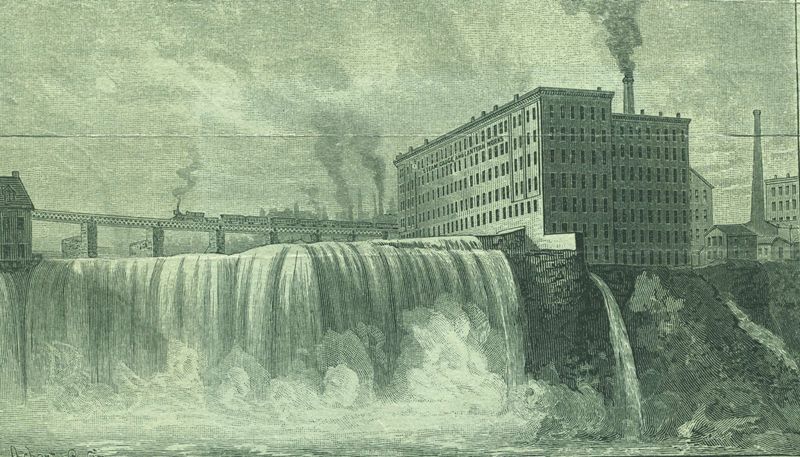
The fire happened on Nov. 9, 1888, at the Steam Gauge and Lantern Co., a seven-story structure located on Centre Street in the High Falls district. The first two stories were below street level in the building perched at the top of Upper Falls.

An alarm was sent in around 7:30 p.m. and the fire department rushed to the scene, but by the time they arrived the flames had grown considerably.
At the time, about 250 people were employed at the company and about 60 men had been working nights on the fifth, sixth and seventh floors. The building’s internal structure was made of wood.
With the fire blazing in the first story, the men were unaware of the immediate danger below them. The watchman at the time went away to give the alarm and reportedly had been too dazed to warn the workers beforehand.
Soon the workers realized the danger they were in, leaving them in a terrible situation. Even though there was a fire escape, it was too small and the iron material became too hot from the way the flames mounted up through the elevator well.
Seeing how their options to escape were blocked, many decided to jump. Some were killed, others fatally injured and nearly all sustained more or less serious injuries.
The fire department had recently acquired an early version of a ladder truck, drawn by horses, and this helped because it allowed ladders to reach higher, City Historian Christine Ridarsky said. Also, the department had just gotten netting, and they stretched this out for victims who had to jump. Alas, many who jumped overshot the net and crashed down on the rocks in the gorge.
Ridarsky said the most accurate number of fatalities is 38. She also said that the first night of the fire, they were reporting about five people dead and 17 missing.
“Within about 18 months after this fire, there were almost 400 new fire escapes installed in the city,” Ridarsky said. “So it did have an impact very quickly.”
Nobody appears to know where the fire started. The engineer of the building says he believes the fire started on the second floor where the casks were. Some think a spark may have been kindled in shavings or straw by the friction of the machinery.
Howard Villegas, the lieutenant public information officer for the Rochester Fire Department, said that safety reforms have changed things since 1888, from having better equipment to faster response times.
“From alarm systems being installed in most commercial buildings, early detection is huge,” Villegas said. “We have sprinkler systems, our new innovation that most places you’ll see nowadays have. All those things combined have been the biggest development in the last 100 and almost 50 years.”
When it comes to making the decision to call for back up during a fire, there are several factors the fire department considers like the amount of damage the fire is causing, the number of people in the building or how fast the fire is spreading.
“Typically a lot of these older big buildings, the fire department goes through them at least once a year,” Villegas said. “We try to pre-plan, and we kind of try to play things minute by minute.”
Villegas also talked about how the fire department is fully accredited, as they have adopted the highest standards in the nation.
“The accreditation is more for the community to understand that we have a very high-end department, and they are getting the top service,” Villegas said.
Editor’s note: The headline of this article was changed May 6 to correct a date reference introduced during editing.
This article originally appeared on Rochester Democrat and Chronicle: Deadly Rochester factory fire still haunts city 138 years later
Reporting by Kerria Weaver, Rochester Democrat and Chronicle / Rochester Democrat and Chronicle
USA TODAY Network via Reuters Connect