Want to drink the same beer George Washington did? Or eat a meal within the same walls where Alexander Hamilton dined? There’s a certain magic in knowing generations of diners sat in the very same rooms before you, swapping stories over tankards of ale or warming up in front of the fire — including our nation’s first president.
With historic taverns scattered throughout the Hudson Valley — and America’s 250th birthday celebrations in full swing — it’s easier than ever to relive the past while enjoying a modern meal in centuries-old surroundings. These are places where floors creak beneath your feet, fireplaces crackle, and every uneven beam or centuries-old stone wall holds a wall of stories. Long gathering places for travelers, politicians, soldiers, and locals, you can almost feel the ghosts of the past as you peruse your menu. In some cases, “almost” is the key word as there are reports of actual ghosts at many of them (shout out to The Horse & Hound in South Salem, The Old 76 House in Tappan and The Beekman Arms in Rhinebeck).

So where can you go when you want to travel back to another era and dine the way our forefathers did (albeit with modern tastes in mind)? The following offers a sampling of properties, from Manhattan to Pine Plains, where you can drink in the atmosphere and raise a glass to history.
Peter Pratt’s Inn, Yorktown Heights
George Washington didn’t sleep here but his horse did. That’s because the restaurant, with most of its original fixtures, used to serve as a stable for soldiers.
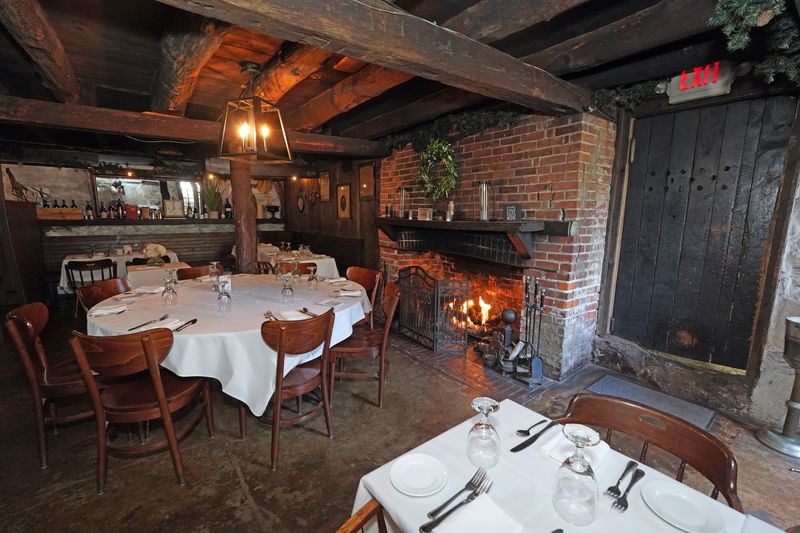
There’s a short story, a longer version and an “epic” tale on the eatery’s website which chronicles the colorful history of this Revolutionary War-era colonial homestead which, at one point, served as a bordello. Nestled in the oldest section of Yorktown (then called Hanover), the tavern, home to an inviting stone fireplace, owes much of its historical significance to its location.
The property stands on the site of General Washington’s Northern Continental Command Post during the 1781 campaign against the British. Originally the foundation of a barn built in 1780, what grabs your attention first are the horseshoes leading into the restaurant’s entrance.
Long a part of the Carpenter-Davenport estate, the spot remains authentically colonial thanks to thick, chestnut beams and original hand-hewn framework. Like a cat with nine lives, the property has been added to over the years and seen its share of guests including those from the Gilded Age such as the Vanderbilts, Gettys, and Duncan Hines (their signatures adorn the guest register in the Inn’s center hallway).
Nostalgic reminders of an earlier era can be found in almost every corner of the restaurant from an old-fashioned pay phone by the restrooms, to a wedding reception bill from 1971 and a 1966 Mother’s Day menu when a rack of lamb cost $6. The kitchen, however, remains firmly rooted in the present, offering contemporary fare such as Duck Two Ways, seared day-boat Hokkaido scallops, lamb lollipops, venison stew, saffron seafood risotto, and organic chicken breast. Peter Pratt’s popular wine dinners further underscore its reputation as a destination for serious dining. Taste history: 673 Croton Heights Road, 914-962-4090, peterprattsinn.com.
The Bird & Bottle Inn, Garrison
There’s more than 260 years of history at “The Bird,” as locals call it. Renovated to its former glory in 2022, the Dutch Colonial property, which dates to 1761, originally served as a stagecoach stop for passengers traveling between New York City and Albany.
Its strategic geography — between the Fishkill Military Supply Depot, the Garrison Redoubts (defensive positions), West Point and the Beverly Robinson house, which served as headquarters to generals like Benedict Arnold — made it an anchor for historical figures such as George Washington, Alexander Hamilton, and the Marquis de Lafayette, who likely passed through, stopping for water or, more likely, a pint.
Known for many year as Warren’s Tavern, it later operated as a farm, grist mill and sawmill under the ownership of Justus Nelson and his son, James. The property was also the ancesteral home of Emily Warren Roebling, who served as chief engineer and construction supervisor for the Brooklyn Bridge in the 1870s (her photo hangs in the library).
In another first for women, Lena Richard became the inn’s first executive chef in 1940, a high achievement for a woman of color.
If the inn’s walls could talk, it would certainly name names as many a celeb — think Hollywood icons Joan Crawford and Veronica Lake, James Beard (who was a consulting chef) and former Tonight Show bandleader Skitch Henderson (a past inn owner) — have been among those who wined and dined here.
Today, guests will find the same welcoming front porch they did, along with a library, tavern and restaurant featuring dishes such as a 12-ounce Berkshire pork chop, Venetian style rice and peas, veggie farm burger and branzino.
The property also has ample outdoor space for weddings and events as well as five inn rooms, eight fireplaces, cozy nooks and lots of charming details, including the uneven flooring of the wide plank (and original) wood floors. Whatever you do, don’t leave without checking out the Revolutionary war lithographs and old West Point maps in the tavern. You’ll also find a menu dating to 1957 hung in the hallway dating to the day when prime rib was $4.85 and a glass of wine was 75 cents. Taste history: 1123 Old Albany Post Road, Garrison, 845-424-2333, thebirdandbottleinn.com.
The ’76 House, Tappan
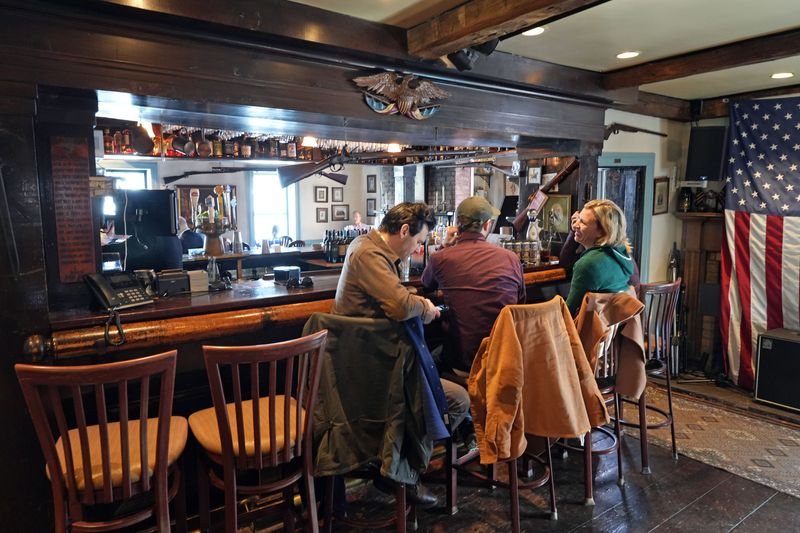
The spirit of 1776 lives inside The ’76 House — literally. The Tappan restaurant, which was built in 1686 and expanded in 1755, is not only home to two (friendly) ghosts, but thanks to its array of artifacts and Revolutionary War history — Alexander Hamilton lived upstairs and George Washington drank many a beer here — the mood and vibe instantly transport you back in time.
You almost don’t know where to look first as the restaurant, with its massive timbered beams, planked floors and four fireplaces, holds centuries worth of secrets in its walls.
Filled with a host of mementos, framed documents and faded clippings, you’ll find stories from another era in almost every nook, including muskets used in war battle. According to general manager Liz Fortugna, the only other place where you can touch and feel them is in a museum.
Billed as America’s oldest tavern and listed as a National Landmark, the tavern is also where British Army Officer John André was held prisoner after negotiating with Continental Army General Benedict Arnold to secretly turn over control of the American fort at West Point to the British. André, who was captured in Tarrytown in 1780, lived in the room now called The Prison, where he was wined and dined before being tried at the church across the street. Later, on Oct. 2, 1780, he was marched up the hill down the road and hanged (that area is now a historic monument).
Replicas of letters between Washington and André are on the wall near the restaurant’s reception podium, along with outfits worn during that time. You’ll also find the original delft tiles on the Tap Room fireplace and the upside-down watercolor of the treacherous Arnold. This is, according to lore, where Washington, after hearing of his friend’s betrayal, turned his picture upside down.
This is also where you can drink the same beer Washington drank. The Tavern Keeper’s Ale is sold both to go in cans and growlers as well as at the bar. Apparently, Washington loved it so much, he took the recipe back to Mount Vernon where he made it himself.
Other pivotal military leaders that were frequent ’76 House diners and drinkers included Nathanael Greene, Major General William Alexander (aka Lord Stirling), Brigadier General John Glover, Baron von Steuben and The Marquis de Lafayette. Hamilton was also a two-year boarder, living in one of the rooms upstairs — now restaurant offices. Taste history: 110 Main St., Tappan, 845-359-5476, 76house.com.
The Horse & Hound Inn, South Salem
While there’s no record confirming that George Washington was ever here, the property predates the American Revolutionary War, having originally been built as a homestead. What looks from the outside like a cozy colonial home, traces its history to 1749. For the past 30 years, it’s been owned by husband-and-wife Sue and Silvano Vale who cater to the community with American fare such as burgers, salads, sandwiches, pasta, steak, chicken, salmon and more.
The property also served as a mason schoolhouse, a gin and rum mill, and stagecoach stop for travelers headed from New York City to Danbury, Conn. An adjoining building was a blacksmith shop for guests, horses and travelers.
The restaurant, with the motto “where dining is historic,” still preserves many of its original 18th century features, evoking an era Washington surely would recognize thanks to wide plank floors, large stone fireplace and lots of wood beams.
Adding intrigue to the history, Sue said there have been sightings of benevolent ghosts, including a young woman and a man sweeping the hallways. Years ago, she even had paranormal experts come check them out. And who can blame them for wanting to stay? The place is cozy and homey with a bar that’s long served as a local hub. There’s also a back (party) room and an outdoor patio where you can see Sue’s garden filled with rosemary, sage, thyme, basil, and chives. Taste history: 94 Spring St., 914-763-3108, thehorseandhoundinn.com.
Fraunces Tavern, New York City
Perhaps one of the most famous Old World taverns, if not THE most famous, is this Wall Street temple to history where you’ll not only find a restaurant, but a museum. Billed as the oldest bar in Manhattan and on the National Register of Historic Places, it was also the watering hole for many of the founding fathers. And, it’s where George Washington gathered his officers to bid them farewell after the British Army left America at the end of the Revolutionary War.
Constructed in 1719, the building, built as an elegant residence by merchant Stephen Delancey, was later transformed in 1762 by Samuel Fraunces who converted it into a bar securing its place as the epicenter of Patriot activity.
Most famous is the Long Room, part of the museum on the second floor, that recreates what a typical tavern public room looked like in the 18th century featuring artifacts that are more than 200 years old. This is also where, in 1783, Washington delivered his emotional farewell to his officers nine days after the British evacuation.
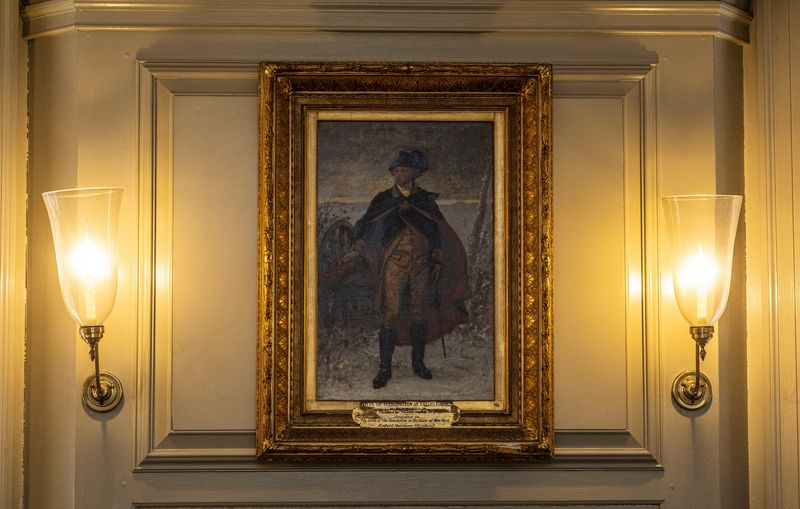
There’s a lot to take in here, including numerous portraits of Washington, information about tavern fare (Fraunces Tavern was known for its desserts), details on the importance of Black colonists, along with how the Americans won the war.
As for dining, you have your choice of the Tallmadge and Bissell rooms or the Independence Bar, Lafayette’s Hideout Bar, The Whisky Bar, Wine Room or Piano Bar. Each has its own colonial charm and menus, ensuring you relive history with every visit. Taste history: 54 Pearl St., 212-968-1776, frauncestavern.com.
The Tavern at Beekman Arms, Rhinebeck
If you’ve ever read a historical novel and wished you could transport yourself to its pages, this is your next best thing. George Washington, Philip Schuyler, Benedict Arnold, and Alexander Hamilton all slept, ate, drank, argued, and laughed at was previously called Bogardus Tavern (the place dates to 1704). Drills by the Fourth Regiment of the Continental Army even took place on the front lawn and a sturdy timber and stone building was built to withstand possible Native American attacks. It’s also where locals took refuge when the British burned the state capital, Kingston, across the river.
The tavern, where you can enjoy Dutch pot pie and braised lamb shank, is also where a quarrel began between Vice President Aaron Burr and Alexander Hamilton took place. (Later that year, in July 1804, Burr killed Hamilton.)
As Rhinebeck grew, so did the property, which hosted numerous meetings, tea parties, public auctions, and even religious services conducted by traveling preachers. Horace Greely, the famous newspaper editor, was among the inn’s frequent guests as was politician (and later Secretary of State) William Jennings Bryan who, according to the hotel’s website, “grandly orated from a second-story window to an enthusiastic gathering on the front lawn.” And in 1888, Benjamin Harrison and his running mate, Levi Morton, assembled in the inn with their supporters, where they learned the convention had picked them to run for the presidency.
With so many prominent and wealthy New York families owning country estates nearby, the inn and tavern were incredibly prosperous between the Civil War and World War I and continued that way through later years when novelist Thomas Wolfe and former President Franklin Delano Roosevelt were frequent guests. With all that history, you can expect there are also ghost stories; the inn placed number three on Historic Hotels of America’s “most haunted hotels” list with reports of footsteps, cold breezes, strange smells and whispers— especially in Rooms 21 and 22. There’s also been sightings of a black figure seen both in the kitchen and emerging from the wine cellar.
While an overnight stay extends your history lesson, you can easily get your fill of the past by dining in the Colonial Tap Room, which, thanks to overhead beams and an open-hearth fireplace, remains unchanged from back in the day. Taste history: 6387 Mill St., 845-876-1766, beekmandelamaterinn.com.
Purdy’s Farmer & the Fish, North Salem
It’s hard to resist dining in a property listed on the National Register of Historic Places — especially one with a farm to table focus. While this seafood-forward restaurant never operated as a tavern during the Revolutionary era, its three massive fireplaces — two of them still wood-burning — and original hand-hewn beams, transport diners back in time. so, too, do the vintage photos inside.
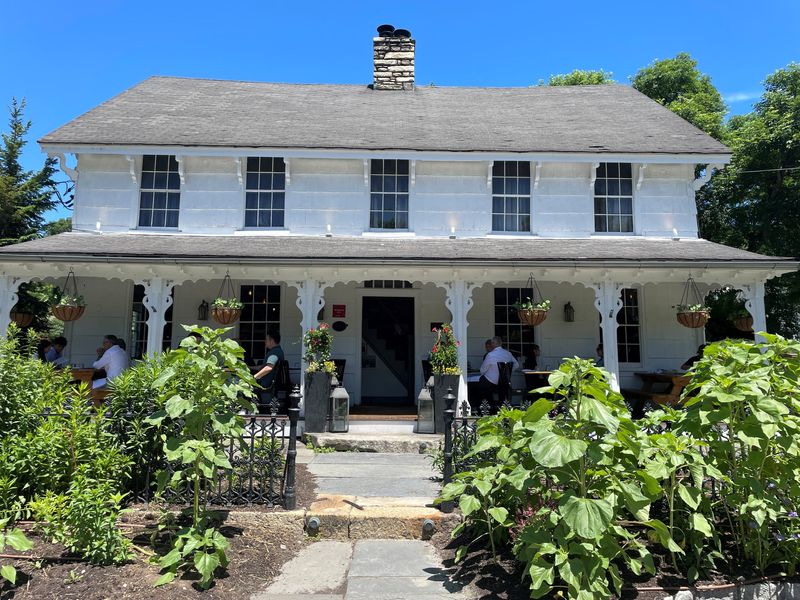
Once part of the Joseph Purdy homestead, the building, which dates to 1775, is typical of the rural frame dwellings of the late 18th century Federal period. What makes it stand out is its front porch, added to the home around 1870, where diners clamor for tables come warm weather. Also intriguing: the well-worn narrow staircase visible upon entry, where centuries of footsteps have left their mark, offering a small but tangible connection to the people who once called this place home.
If the rural charm of it all doesn’t grab you — the farmhouse overlooks the fields that supply much of the kitchen’s produce — the food will. Officially recommended by the Michelin Guide, the fish-centric menu features an array of freshly shucked oysters, chowder, tuna, snapper, salmon and a lobster roll along with farm-stand veggies. Taste history: 100 Titicus Road, North Salem, 914-617-8380, farmerandthefish.com.
Bedford Post Inn, Bedford
Once a vital stagecoach stop connecting New York City to Boston, the inn, which dates to 1762, is believed to have provided shelter and sustenance to soldiers and local militia during the Revolutionary War. Its wine cellar is even rumored to having been used as a hiding place for both people and other valuable supplies.
Today, this rustically elegant haven, with an eight-room inn, serves everything from Wellfleet oysters to curry roasted cauliflower, roasted branzino, fried pork chop and Steak Frites. Whatever you do, try the restaurant’s fluffy popovers with honey butter. And, if you come in winter, make sure to ask for a seat by one of their four fireplaces. Taste history: 954 Old Post Road, 914-292-9516, bedfordpostinn.com.
Stissing House, Pine Plains
While there’s no specifics on which Revolutionary War heroes ate or drank here, it’s easy to imagine they did thanks to Stissing House’s Grande Dame charm. The former watering hole, built in 1782, practically drips with history, thanks to its dim lighting, multiple fireplaces, exposed brick, hand-hewn wood beams, and centuries-old wide-plank floors. If that’s not enough to pull you in, the wood-fired cooking, locally sourced ingredients, and polished, welcoming service, certainly will.
Back when Pine Plains was a bustling crossroads, this was “the” place to drink, dance and dine. The property even boasted America’s first domed ballroom, a story in itself. Today, thanks to its acclaimed chef/owner Clare de Boer, it’s the kind of reservation you need to book 30 days in advance, starting at 9 a.m.
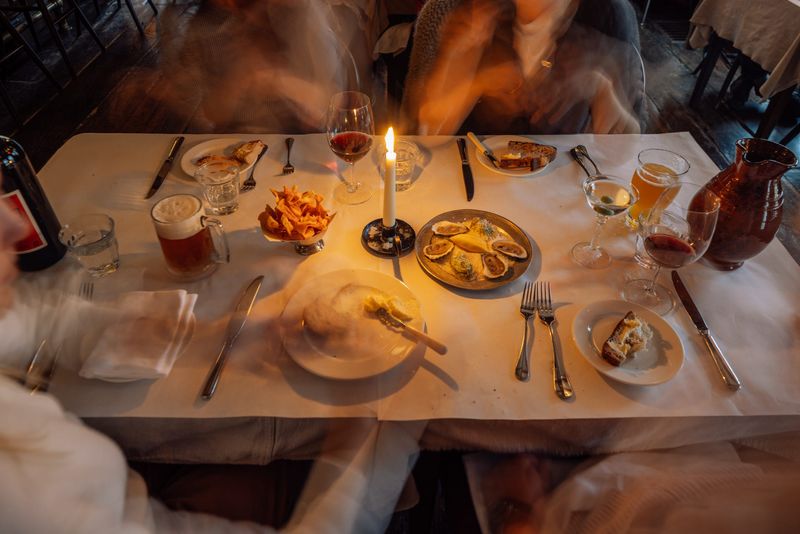
Walking through the restaurant today, it’s hard not to feel as though you’ve stepped into another century, one filled with flickering candles, uneven floorboards and walls that hold long-buried tales from the past. The setting alone could be your reason for coming here but it’s the food that also hold your attention. With a seasonal menu that’s ever changing you might find Chicory Caesar with sunchokes, coal-roasted dayboat scallops with green garlic butter, Shepherd’s pie or grilled bavette steak with horseradish cream and broccoli rabe. Taste history: 7801 S. Main St., 518-771-3064, stissinghouse.com.
Hungry for more restaurant news?
Sign up for my free weekly newsletter, which often includes behind-the-scenes info I don’t always share in my stories at profile.lohud.com/newsletters/manage.
Jeanne Muchnick covers food and dining. Click here for her most recent articles and follow her latest dining adventures on Instagram @jeannemuchnick or via the lohudfood newsletter.
This article originally appeared on Rockland/Westchester Journal News: Celebrate America’s 250th at a Hudson Valley historic restaurant
Reporting by Jeanne Muchnick, Rockland/Westchester Journal News / Rockland/Westchester Journal News
USA TODAY Network via Reuters Connect
By Jeanne Muchnick, Rockland/Westchester Journal News | USA TODAY Network