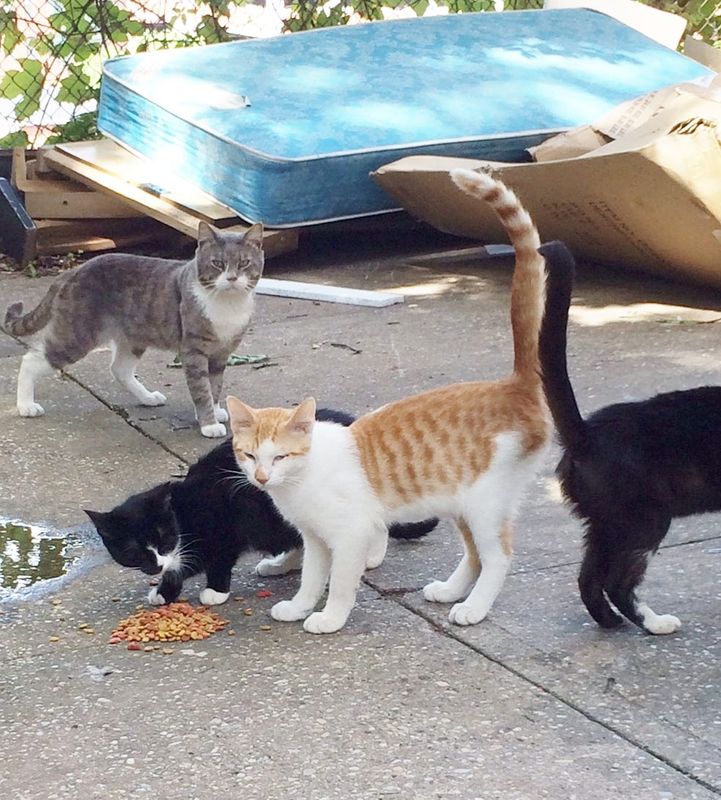
Neighborhood cats can be a nuisance, acting like they’ve moved in. Whether they’re digging up your flower beds or yowling at midnight, stray cats can turn from cute to chaotic.
When a neighbor is feeding them and encouraging their return, frustration can turn into a search for legal options.

In a state with strong animal protection laws and a growing network of community cat programs, figuring out your rights may not be as simple as chasing the cats away.
Can I sue my NY neighbors for feeding stray cats?
In New York, the answer is complicated. You’ll need more than a scratched lawn to win in court. You can’t sue simply because cats wander onto your property.
However, under Nuisance Laws, if the presence of stray cats causes ongoing, unreasonable interference with the use and enjoyment of your home, then you can file a private nuisance claim.
This includes constant noise, visible feces, damage to gardens and/or vehicle scratches.
Is that cat a stray, or a pet?
However, it can be tricky to define whether a neighbor is responsible for a stray cat.
Whether cats are owned, roaming or truly feral, they are considered to be “companion animals” under Agriculture & Markets Law sections 353 and 353‑a. This law prohibits cruelty, neglect or poisoning. Thus, harming stray cats isn’t allowed, even if they’re trespassing.
If your neighbor is actively feeding, sheltering or caring for stray cats, their actions could make them legally responsible because feeding can be seen as caretaking.
What you can do instead of suing your neighbor
It’s best to start by politely talking to your neighbor about the situation. You can at least try to ask your neighbors to stop feeding the cats.
You can also contact your local animal control. Many towns offer trap, neuter and release options.
Organizations like SPCA Westchester in Briarcliff Manor often step in to rescue animals in need. The group reportedly supported 789 feral cats with its trap and release program in 2024, according to the SPCA Westchester website. Learn more by calling 914-941-2896 or going to spcawestchester.org.
How to succeed at your stray cats case
If you do turn to court, it will be a battle to win your case.
In order to be successful, evidence must be provided that your neighbor’s actions (like feeding the cats) caused substantial and unreasonable harm to your property, rising to a private nuisance.
This includes photos or videos that prove damage, frequency and the persistence of the cat(s) coming onto the property.
It is also essential to have proof that your neighbor is feeding or encouraging the cats.
You’ll need solid documentation, proof of causation and a clear legal basis under state tort law.
If the cats are truly unowned or part of a community trap, neuter, and release program, legal options may be limited, and working through municipal or nonprofit channels can be more effective.
This article originally appeared on Rockland/Westchester Journal News: Can I sue my neighbor for stray cats on my property? What New York state law says
Reporting by Michelle Grisales, Rockland/Westchester Journal News / Rockland/Westchester Journal News
USA TODAY Network via Reuters Connect