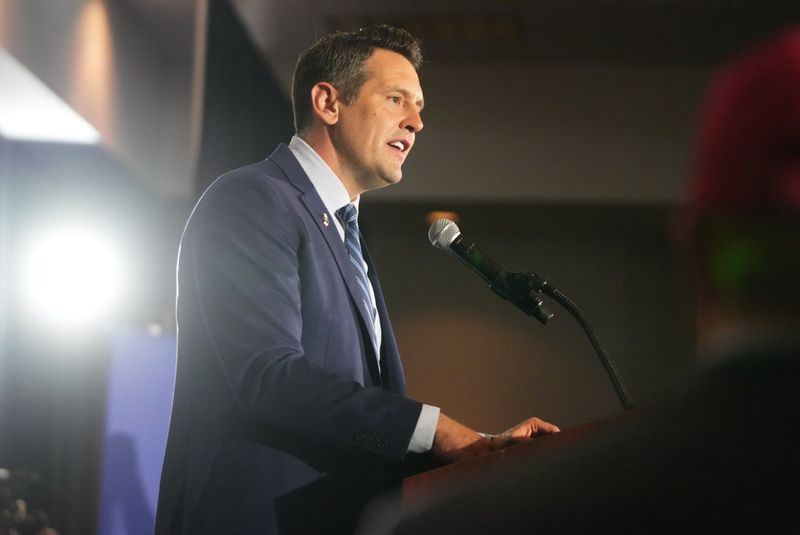
The Zach Lahn-Rob Sand general election matchup for governor is unlike anything Iowa has seen before. The candidates, and their specific pairing, scramble political dynamics that have been predictable for years.
Much can be said about U.S. Rep. Randy Feenstra losing the Republican primary to Lahn despite receiving President Donald Trump’s endorsement in the campaign’s final days. But the more interesting questions about the results of the June 2 primary elections are more forward-looking and Iowa-specific.

Who is the anti-cancer, pro-water-quality candidate?
Lahn can credit part of his rise to the appeal of his four-pronged “Iowa First” platform. He pledges an honest and more adversarial assessment of agriculture’s contribution to poor water quality and, possibly, cancer rates than Iowans have heard this century from prominent Republicans. “I will take on the big ag cartels. I will break up their monopolies, and I will get Iowa farmers a fair deal,” Lahn said after his victory June 2.
Sand, who was unopposed in his Democratic primary, also emphasizes cancer and health, echoing the party’s refrain that not nearly enough has been done to protect Iowans and their water. His solid policy proposals could make a difference. But in looking for a way to stick in voters’ minds on this topic, Sand cannot match the novelty of, say, “the Republican who’s serious about water quality.”
For years, the Register editorial board has advised and implored for more regulation of the agricultural practices that have yes, helped this state grow, but now make its waters undrinkable. Lahn is unique in taking that connection to heart.
Voters selected candidates with vast personal resources
Wealthy Iowans have run for governor before, as recently as Democrat and businessman Fred Hubbell in 2018.
But Lahn and Sand stand out for both appearing able to bankroll impressive campaigns without going outside their families. Lahn’s most recent filing with Iowa authorities said he raised just under $1 million from January through May 14, including three donations of $150,000 or more. Before that, he’d made a $2 million personal loan to his campaign.
As for Sand, he raised almost $10 million in the first part of the year, with almost half of those donations coming from his wife and in-laws, including his father-in-law, businessman Nixson Lauridsen.
With analysts agreeing that Iowa has one of the nation’s most competitive governor’s races this year, plenty more direct donations and outside spending will be available, too. Neither man will be able to assert that he alone is operating a fully grassroots campaign. And both will have to prove they know how the rest of us cope.
Will Iowans buy into ‘carpetbagger’ messaging about Lahn?
Democratic activists have gleefully disparaged Lahn the past few weeks after reporting by the Register and others explained that he routinely flies between homes in Kansas and Iowa and didn’t vote in Iowa between 2016 and 2024. Lahn says he considers himself a full-time Iowa resident and pledges to spend most of his time in the state if elected.
Whether or not the “carpetbagger” label is fair, Iowans are not used such a charge being even plausible for a nominee for governor. They’re often lifelong Iowans, and exceptions such as Deidre DeJear, Jack Hatch and Tom Vilsack all moved here permanently as young adults. History won’t offer much help, then, for figuring out if how Lahn has spent his adult life matters to prospective voters. Republican primary voters elevated Lahn over four people with conventional Iowa-dominant histories.
To win Iowans’ vote, you have to ask Iowans for their votes
It’s one thing to try your hardest and lose. It’s quite another to barely campaign in public. Iowans have long had a reputation for wanting to meet their candidates — from would-be presidents on down.
But Feenstra decided to buck that most Iowan of traditions — and Iowans decided to buck him.
Regardless of anybody’s policy positions or other qualifications, Iowa is better off for having two candidates for November (instead of just one) who have actually been aggressive about engaging with people face to face.
The lesson ought to be stark for anybody tempted by the Feenstra Formula in Iowa in the future.
Polk County voters want a reset
No Republican candidates are currently running for any of the three seats up for election on the Polk County Board of Supervisors. Two Democratic incumbents, Angela Connolly and Tom Hockensmith, are stepping down, and former state Rep. John Forbes beat incumbent supervisors chairman Matt McCoy in the June 2 primary.
So it’ll be three new faces by January, one of them less familiar than expected after political newcomer Heather Jones-Brown edged veteran Des Moines City Councilman Joe Gatto for a seat representing the southeastern part of the county. The other two supervisors, both Republicans, were first elected in 2024.
Whatever value McCoy’s experience brought is outweighed by the welcome prospect of putting years of accusations and lawsuits fully behind the board. Voters decided Gatto’s 12 years of experience on the City Council weighed less than Jones-Brown’s fresh perspective.
Lucas Grundmeier is the Register’s opinion editor.
This article originally appeared on Des Moines Register: Zach Lahn-Rob Sand contest scrambles Iowa political patterns | Opinion
Reporting by Lucas Grundmeier, Des Moines Register / Des Moines Register
USA TODAY Network via Reuters Connect
By Lucas Grundmeier, Des Moines Register | USA TODAY Network