A Hardin County family farm recently completed an ambitious transition from hogs to mushroom production.
The Faaborg family, led by Tanner Faaborg, decided to switch their focus to mushrooms after realizing how much hog farms harm the environment.

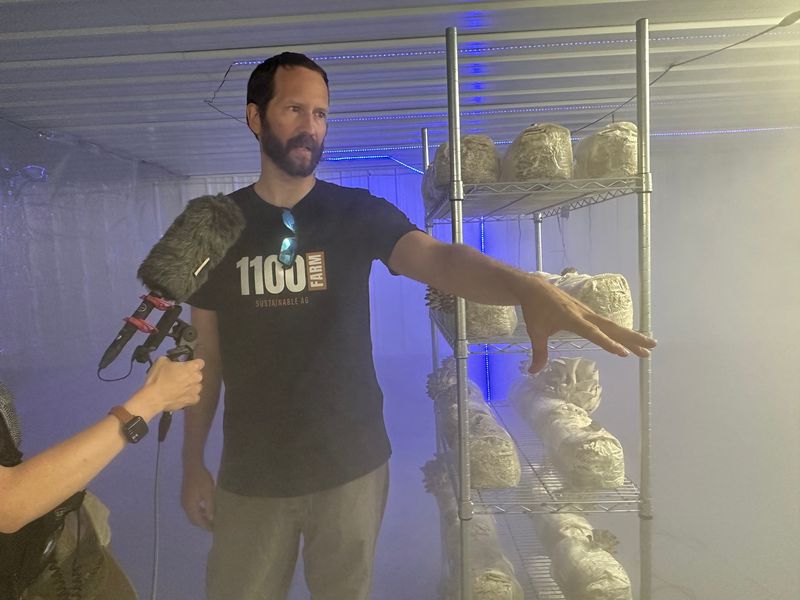
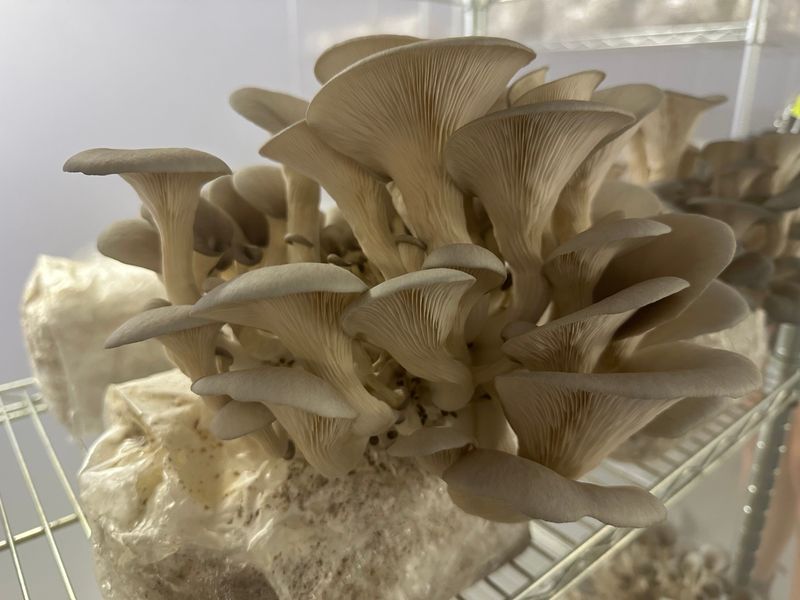
1100 Farm, a nod to the average number of hogs the farm used to have, grows mushrooms out of a converted hog barn. After a successful pilot, the farm now produces Oyster, Lion’s Mane and Reishi mushrooms for consumers.
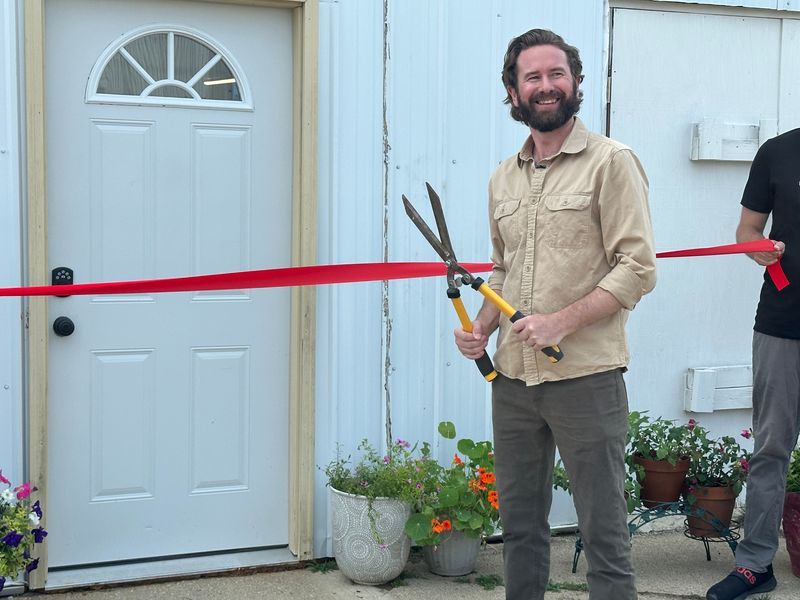
On Aug. 8, the family and their collaborator, Transfarmation Project, cut the ribbon on the completed hog barn conversion.
1100 Farm has even attracted national interest. A documentary film crew visited the farm in July 2024, to capture the groundbreaking of the Faaborg family’s mushroom-growing operation.
Tanner Faaborg said the documentary is still in post-production and the family is “very eager” to learn when it will be released. The Faaborg’s story was also picked up by the New York Times in 2024.
Hog farm began its transition almost four years ago
1100 Farm began as a hog farm just 45 minutes north of Des Moines in Radcliffe.
Founded by Tanner Faaborg’s parents, Tammy and Rand Faaborg, they raised hogs for more than 30 years.
“We were definitely at a point where we had raised enough hogs,” Rand Faaborg said. “We pitched to the family that if somebody had a good idea for these buildings, we’d like to hear it.”
Tanner Faaborg then stepped in with a sustainable business alternative and brought the rest of the family on board.
In October 2022, the last of the pigs left the farm and the Faaborgs began renovating the old hog barn. They started a pilot project in 2023 with Transfarmation, a non-profit that is “building a better food system with farmers,” Director Katherine Jernigan said.
Transfarmation provided technical assistance, funded educational resources to learn how to grow the mushrooms, and contributed a $15,000 grant to fund 1100’s pilot.
The former hog barn houses four grow rooms, a commercial kitchen, a laboratory space, and a production room, which Jernigan said is a “huge milestone.”
“At the time when we began, everybody told us that was not possible,” Jernigan said. “When we converted the barn, we created a replicable plan that can be repeated anywhere industrial pig farming exists.”
Why give up raising hogs to grow mushrooms?
The Faaborgs wanted to be more sustainable after seeing the negative impact hog farms could have on the environment, mainly due to waste.
Tanner Faaborg said it was hard seeing independent family farms disappear, and small towns dwindle in population from a lack of opportunity.
“We’re hoping to show it’s possible to retrofit existing infrastructure in a sustainable way while also creating profits and trading jobs in an area that is lacking for opportunity,” Tanner Faaborg said.
What mushroom products does 1100 Farm produce?
Lion’s Mane and Reishi mushrooms are being grown for tinctures, or herbal extracts, to help with things like nerve pain and relaxation. The mushroom tinctures are available for purchase on 1100 Farm’s website.
The Lion’s Mane mushrooms are also used for coffee and hot chocolate. 1100 plans to unveil a mushroom jerky product soon and expand into local markets for fresh produce, Tanner Faaborg said.
Sustainability doesn’t stop with mushrooms
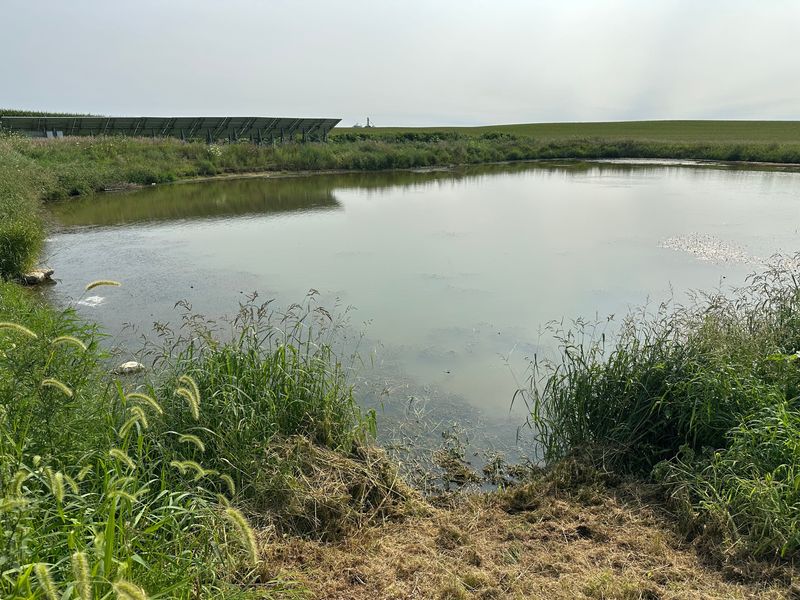
The Faaborg’s pond, which used to hold hog waste, was completely excavated and is filled with freshwater and wildlife, including fish, frogs, toads, turtles and a family of ducks.
“That feels very rewarding,” Faaborg said. “This project is not just mushrooms, but conservation and rewilding efforts.”
What’s next for 1100 Farm?
Transforming 1100 Farm is a long-term, ambitious project that will continue to expand for decades, Tanner Faaborg said.
They’ll plant trees in the fall near the freshwater pond. The family also plans to install a pollinator garden and perform prairie restoration.
Celia Brocker is a government, crime, political and education reporter for the Ames Tribune. She can be reached at CBrocker@gannett.com
This article originally appeared on Ames Tribune: Once an Iowa hog farm, this mushroom business draws national attention
Reporting by Celia Brocker, Ames Tribune / Ames Tribune
USA TODAY Network via Reuters Connect
By Celia Brocker, Ames Tribune | USA TODAY Network