Moments before performing a traditional Meskwaki dance at a community center in a central Iowa town, Stephanie BadSoldier Snow overheard a comment that she said made her question her existence.
“’I thought they were all dead. I thought we killed them all,’” BadSoldier Snow recalled a boy loudly telling his father as he stood in a food line.

She and her family were invited to showcase tribal songs and dances to families and children in a town just 50 miles from her home near Iowa’s Meskwaki Nation. The boy’s comment years ago made it clear to her that some people there had never heard of her nearby community.
“I was shocked,” she said. “It’s sad. It was sad to me.”
But BadSoldier Snow, who has conducted dozens of similar Meskwaki educational programs with her family to teach about the tribe’s way of life and culture at schools, veterans homes, corporate offices and community centers across Iowa, said such reactions are not uncommon.
“A lot of people don’t really know much about us,” she said.
‘We’re still here’
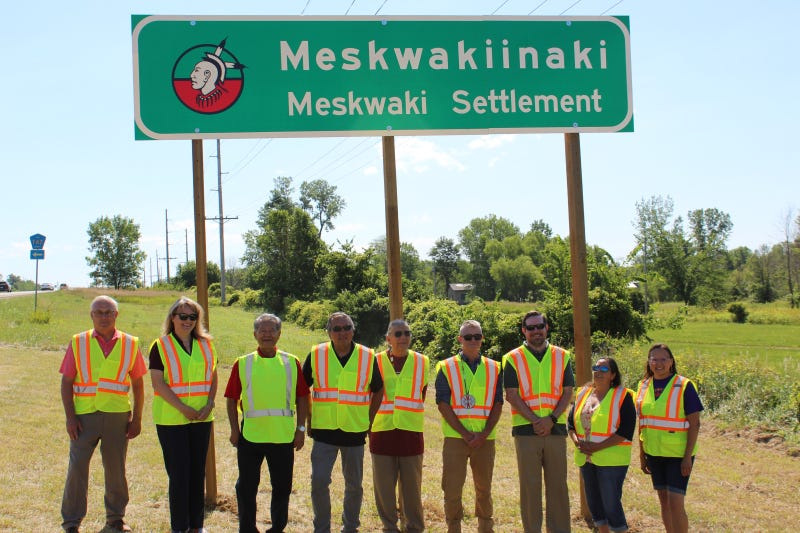
Known to the U.S. government as the Sac & Fox Tribe of the Mississippi in Iowa, the Meskwaki Nation is the only federally recognized tribe based in Iowa, though the Winnebago Tribe of Nebraska operates its WinnaVegas Casino Resort on tribal land in Iowa across the Missouri River from its reservation. The Meskwaki were among the first tribes in the United States to raise money and purchase their own land rather than residing on a federally designated reservation.
The tribe’s ownership of the land allowed it to avoid a later move by the U.S. government to break up reservations into individually owned tracts ― a change that would have weakened the communal bond the Meskwaki people consider vital to their endurance as a sovereign nation within a state.
As the United States marks its 250th year, the Meskwaki own more than 8,100 acres in Tama, Marshall and Palo Alto counties. They can look back on their own history of overcoming challenges and upheaval on their road to self-determination.
As federal policies continue to evolve and the Meskwaki contend with the complexities of modern American life, community members say it’s more important than ever to preserve their culture and way of life for future generations.
As BadSoldier Snow said, she wants to remind the Nation’s neighbors that “we’re still here.”
Time together short, but great-grandmother leaves deep impression
BadSoldier Snow’s earliest memories are of her great-grandmother, Sophia White Swan, who raised her until dying when BadSoldier Snow was about 4 years old. She remembers going to the woods with her to harvest wild onions, herbs for medicinal teas and morel mushrooms in the spring. White Swan also grew traditional corn, beans and squash in her garden.
She was one of tens of thousands of Native American children in the U.S. and Canada sent to federal or church-run boarding schools through her teenage years, a system that endured until the 1970s. The boarding schools were aimed at assimilating indigenous children through what Native Americans came to see as the erasure of their culture and religion and the substitution of the culture and Christianity of White settlers.
BadSoldier Snow said her great-grandmother was once forced to clean the dorms at her school with a toothbrush as punishment for speaking Meskwaki. That punishment was on the mild end, she added.
White Swan didn’t share many other details with her family about her years at the boarding school, where she said she was forced to dress like a “White woman,” BadSoldier Snow said. But when White Swan finally returned home for good, she changed into her two-piece traditional day dress. And that’s what she wore for the rest of her life, BadSoldier Snow said.
She said her great-grandmother’s experience proves you can be disconnected from your land and people but hold on to your beliefs, traditions and values.
“Those cultural ways are really, really special,” she said. “And no matter how much they did to try to erase that in her, she still had that. And that’s what she passed on to me.”
Iowa becomes home to ‘People of the Red Earth’
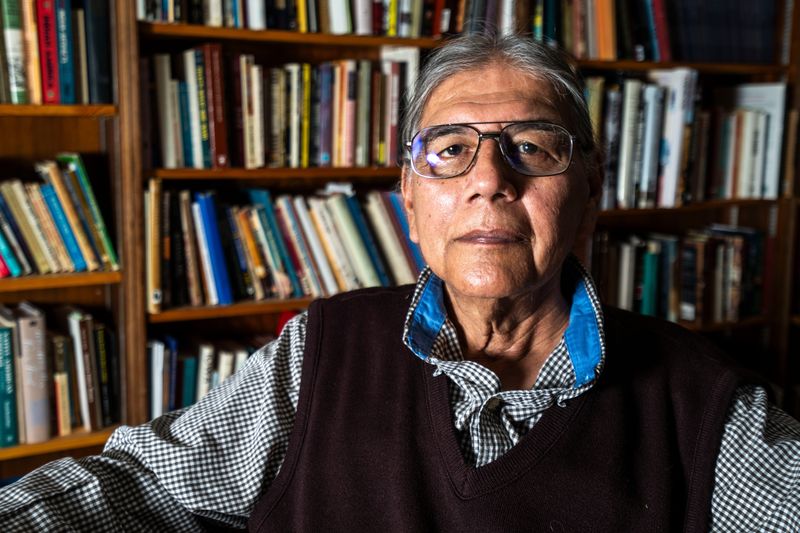
Meskwaki historical preservation director Johnathan Buffalo said he doesn’t have to go back many generations to when the tribe “owned” all of Iowa. The Meskwaki — a name that translates to “People of the Red Earth” — originated in the Lake Saint-Jean area of what is now Quebec, Canada, and migrated to areas including present-day New York, Pennsylvania, Ohio, Michigan and Wisconsin before landing in the east-central woodlands of the future Hawkeye State along the Iowa River.
Through the early 1800s, a series of treaties ceding tribal lands, as well as conflicts between Native Americans and the U.S. government, contributed to the eventual banishment of the Meskwaki to Kansas, as spelled out in an 1842 treaty, said Eric Zimmer, a University of Iowa-educated historian and author of “Red Earth Nation: A History of the Meskwaki Settlement.”
An 1804 treaty combined the Meskwaki and Sauk tribes into one, making it easier for the federal government to exile both, Zimmer said. Conflicts, including the Black Hawk War in 1832, accelerated their removal.
The U.S. Army in 1843 built a fort at the confluence of the Des Moines and Raccoon rivers, near today’s Principal Park, to oversee the process. It led to the settlement of what is now the city of Des Moines.
It’s estimated that only about 1 in 5 Meskwaki actually went to the Kansas reservation around 1846, as ordered, Zimmer wrote. Many remained scattered throughout Iowa and others filtered back from the Great Plains, seeking the woodlands and rolling terrain they knew so well.
They found support among White neighbors who circulated petitions supporting their continued presence, and the Iowa Legislature voted in 1856 to authorize the Meskwaki to reside in Iowa. The tribe pooled about $1,000 by selling handmade crafts and saving their treaty annuities to purchase the first 80 acres in 1857 from Tama County landowners Isaac and Susan Butler.
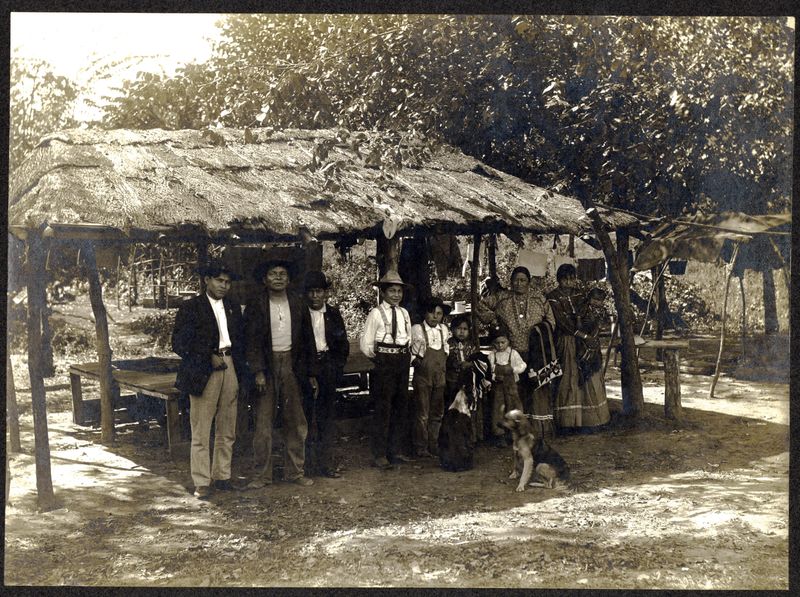
About 250 tribal members settled on the land near the twin towns of Tama and Toledo and, Buffalo said, it became the Meskwaki people’s home. The tribe grew corn and held seasonal ceremonies from spring through fall there. It was where babies were born and tribal members buried their dead.
“And that has happened over and over again in the thousands of years we have been on this continent. In Iowa, that same process was followed,” Buffalo said.
Tribe among first to purchase its own land
Helping make the land purchase possible against the wishes of the federal government, Iowa Gov. James Grimes agreed to hold the land in trust. In exchange, tribal members pledged to pay Iowa property taxes and follow state laws, Zimmer wrote.
That arrangement continued for about 40 years until several confrontations between the state and tribe over land rights issues, like taxes and leases, and a cultural clash with Christian crusaders who advocated for assimilation, pushed Iowa to relinquish its relationship with the tribe. It transferred the settlement to a federal trust, a status held by most reservations in the U.S.
Zimmer said that over the past decade, the “Landback” movement has gained traction among Native Americans as many Indigenous communities and supporters have rallied around reclaiming their land, pushing back against centuries of dispossession. As of 2023, the U.S. Department of the Interior reported some 3 million acres had been returned to tribes.
But the Meskwaki achieved that goal long ago as the deeded owners of their bought-and-paid-for land. They are among the oldest and clearest cases of Indigenous land reclamation, following a handful of tribes such as the Santa Ana Pueblo, who purchased land from neighboring Spanish colonists in present-day New Mexico in the early 1700s, Zimmer said.
He said that in some ways, the Meskwaki Nation is both a settlement — because of the tribe’s land purchase — and a reservation because the land is held in trust. This unique status has created legal ambiguity and friction with the federal government, testing the tribe’s sovereignty and self-governance.
Throughout history, the U.S. government has had varying degrees of success in honoring the tribe’s rights to self-determination, Zimmer said. Still, over the last half-century, he said, the settlement’s growth and economic success, with ventures such as the Meskwaki Bingo Casino Hotel built in 1992, have made the Meskwaki Nation more politically powerful. That has allowed it greater leverage in exercising its rights, he said, including establishing its own education system and hunting regulations.
‘Nation within a nation’: How the Meskwaki practice sovereignty
Like her great-grandmother, BadSoldier Snow left the settlement to attend school — except for her, it was a choice.
BadSoldier Snow earned a bachelor’s degree in anthropology from Grinnell College, an interest that began with watching anthropologists study Meskwaki culture in her settlement.
She said the study strengthened her understanding of her culture, and she has used those skills to benefit her community.
Described by community members as a “nation within a nation,” the Meskwaki exercise their sovereignty by maintaining institutions such as their own police force and court. A 2025 agreement with the state of Iowa helped reinforce that, giving Meskwaki officers the ability to pursue suspects who leave the boundaries of the settlement.
In the 1980s, Buffalo said, the tribe gained educational sovereignty when its Meskwaki Settlement School transitioned to a tribally operated school from one established by the U.S. Bureau of Indian Affairs.
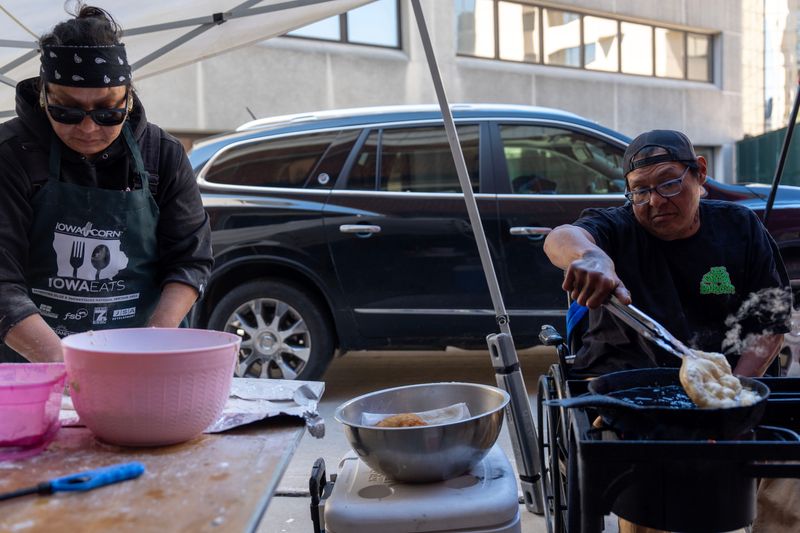
BadSoldier Snow says practices like speaking the Meskwaki language and exercising food sovereignty — consuming a diet that includes traditional, self-grown foods — also are critical. In 2012, she was part of the leadership team that founded the Meskwaki Food Sovereignty Initiative.
“We were trying to address people’s physical health and how that can impact mental and spiritual health. We wanted to bring back a sense of connection to the earth,” she said.
While some community members farm their own land and harvest grain and vegetables, including heirloom varieties first bred in native gardens, the settlement’s initiative offers open prairie spaces for community members who lack their own tracts to farm. The settlement also holds workshops, empowering community members to grow, harvest and preserve their food.
The Meskwaki Settlement-Buffalo Refuge Area — 205 acres of pasture and forest that is home to 45 to 55 bison — offers a source of meat for enrolled tribal members.
“The buffalo play a strong cultural role within the Meskwaki lifestyle, they are here to complete the Meskwaki way of life, and they are not feedlot animals, but are treated as wildlife,” Meskwaki Natural Resources says.
The Meskwaki Bingo Casino Hotel is a main revenue driver for the settlement, and the tribe is among Tama County’s largest employers. The hotel has helped the tribe fund education, infrastructure and initiatives such as language and cultural programs, as well as its food sovereignty program.
Many community members also are employees of the Meskwaki Nation, working in the tribal attorney general’s office, child care facilities, the financial office, senior services, a health clinic, a language preservation initiative, public works and the police department. The tribal council, composed of seven tribal members living in the settlement, serves as its governing body, representing the tribe in all matters, the settlement’s website says.
Buffalo, who leads the settlement’s historical museum, said sovereignty extends to the tribe’s cultural and religious freedoms, as well as its ability to share its history and culture on its own terms.
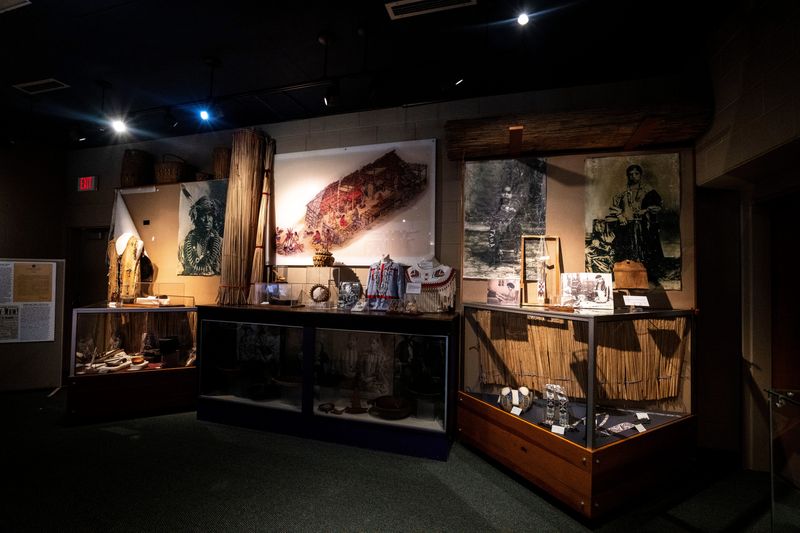
In late April, the Meskwaki Settlement celebrated the return of more than 200 historical artifacts from the Missouri State Museum in Jefferson City, marking the largest such repatriation by the tribe. Meskwaki officials said it was the result of a 33-year effort and that the items will be housed in the Meskwaki Cultural Center & Museum.
Buffalo’s grandson, Romeo Buffalo, 23, has talked to college students about Meskwaki culture and traditions since he was in elementary school. His grandfather and uncles, in turn, taught him traditional Meskwaki dances. His father taught him how to sing. And he taught himself to play the flute.
“Without music and without our religion, we wouldn’t be Meskwaki,” the younger Buffalo said. “Sovereignty got us where we are today. I’m grateful and thankful to be Meskwaki.”
Threats to Meskwaki sovereignty persist
BadSoldier Snow said changing administrations and agendas in Washington is one of the ongoing concerns when it comes to Meskwaki sovereignty and freedom.
She cited President Donald Trump’s challenge to birthright citizenship as he seeks to sharply restrict which children born in the United States are automatically citizens. Birthright citizenship has long been interpreted to include everyone except children born to diplomats, invading military forces and — initially — to Native Americans, who were given birthright citizenship under a 1924 law.
Trump’s administration and congressional Republicans also have sought to pull back protection of sites such as the Grand Staircase-Escalante National Monument in Utah, which contains tracts sacred to the Pueblo and other tribes.
BadSoldier Snow said such policies are threats to the settlement’s sovereignty. Still, the Meskwaki are people bestowed with tenacity, she said.
“There’s this fortitude in us that says no matter what they do to us, we’re always going to be Meskwaki,” she said.
Understanding sovereignty is the best way to know how to defend it, she added, pointing to the importance of a combination of formal Western education and learning the traditional Meskwaki way of life.
Another problem in preserving sovereignty is what she terms colonization ― the erosion of traditional values and teachings amid an overwhelming stream of outside influences. With evolving technology, there’s no way to shut them off, a particularly potent distraction for young people who’ve never known a world without cellphones and social media.
“These are accepted things in our community, therefore we’re going to have to find a way to balance those two things,” she said.
Sophie Shuckahosee, a Meskwaki freshman at the University of Iowa, agreed that continuing to practice Meskwaki traditions and culture can be more difficult for her generation once they move off the settlement. But many still want ties to their Meskwaki identity, dressing in powwow regalia and participating in traditional dances, she said.
Shuckahosee said she credits her parents for instilling the tribe’s values in her and encouraging her to hold on to the tribe’s customs. She is on a pre-dental track and said she plans to practice in her community once she graduates.
“I talk to a lot of people my age, and they want the same thing,” she said. “Like, they are pursuing higher education for their community.”
‘Our next generation is everything’
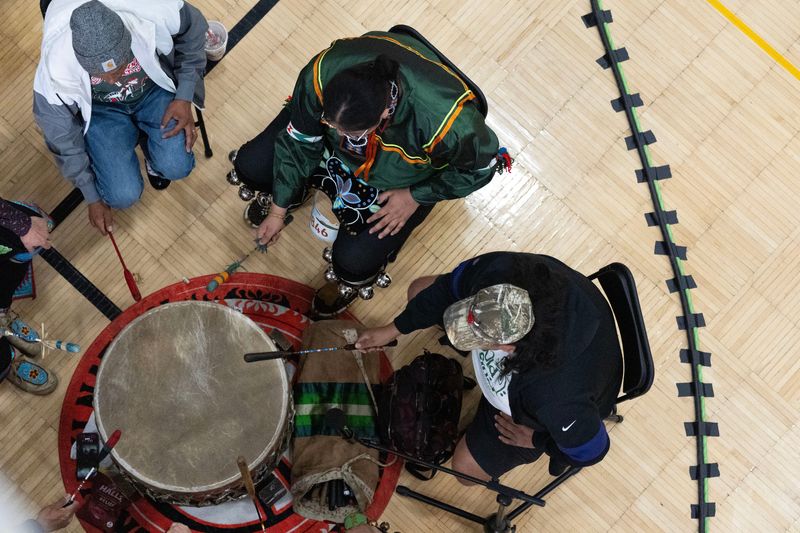
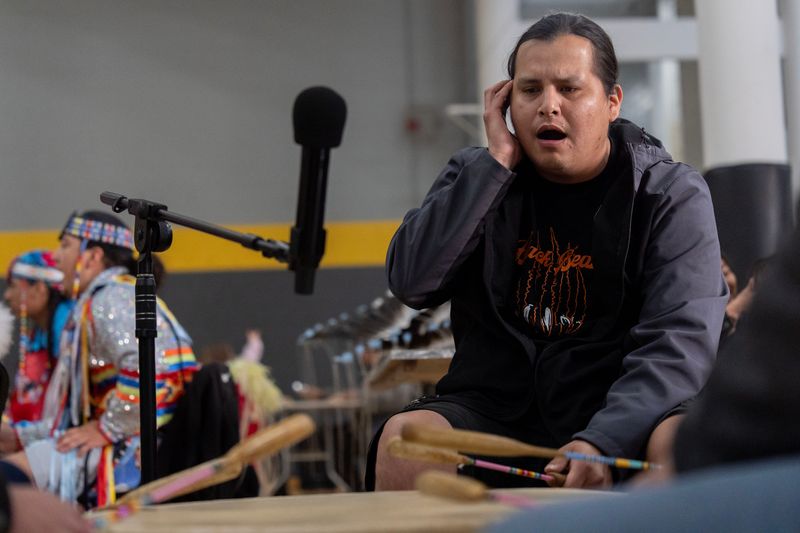
The sounds of drums and song echoed through the walls of the University of Iowa’s Field House on a sunny April morning for the school’s 29th annual Powwow. Dancers representing multiple tribes — adorned in multicolored headdresses, feathered fans, and beaded clothing — stomped their feet to songs, including the flag song, victory song, and a sneak-up dance.
The theme: “Here: Yesterday, Today, & Tomorrow.”
Romeo Buffalo carried his 1½-year-old daughter in his arms as he danced, swaying from side to side as he moved clockwise with other dancers on the gym floor.
He wore a gunpowder horn and bells passed down to him from his grandfather. His daughter wore the last dress his grandmother made before she died.
“Our next generation is everything,” he said. “Everything I do is for this little girl right here.”
Virginia Barreda is the Des Moines city government reporter for the Register. She can be reached at vbarreda@dmreg.com.
This article originally appeared on Des Moines Register: Meskwaki Settlement endures as a sovereign nation within Iowa
Reporting by Virginia Barreda, Des Moines Register / Des Moines Register
USA TODAY Network via Reuters Connect