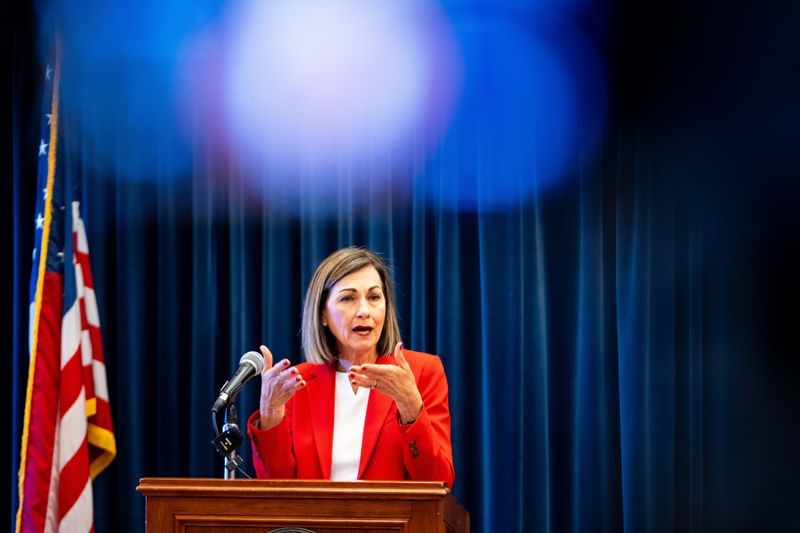
Iowa children are barred from getting the vaccine for human papillomavirus, HPV, without a parent’s permission, under a law Gov. Kim Reynolds has signed.
Senate File 304 alters part of Iowa law that granted juveniles the legal right to consent to medical services to prevent, diagnose or treat a sexually transmitted disease or infection, rescinding the right to consent to “a vaccination for a sexually transmitted disease or infection.”

The law goes into effect July 1.
The Centers for Disease Control and Prevention says the HPV vaccine can prevent more than 90% of cancers, such as cervical cancer, linked to the virus. HPV causes nine out of 10 cases of cervical cancer, the CDC says.
It also been linked to a lower risk of developing head and neck cancers, particularly among men and boys.
The new law also affects the vaccine for Hepatitis B, a liver disease caused by the virus of the same name.
Republican supporters tout the law as protecting parents’ rights, while Democrats lambast it as a change that would further spike Iowa’s sky-high cancer rates.
It passed the House in a 63-29 vote, with Rep. Matthew Rinker, R-Burlington, breaking from his party to oppose it. The Iowa Senate passed it in a 33-14 party-line vote in 2025 and kept it alive for consideration this year.
The American Cancer Society Cancer Action Network on May 12 sent Reynolds a letter asking her to veto the legislation, citing its effectiveness in preventing cancer.
“Iowa has the second highest cancer rates in the country, and we share your goal of reducing our cancer rates,” said the group’s letter, signed by Iowa Government Relations Director Jackie Cale. “Unfortunately this change to state law will reduce access to proven cancer prevention tools and move us in the wrong direction.”
More GOP-led states pushing to ease vaccine rules
With the new law, Iowa joins a growing number of Republican states that have moved to relax vaccine rules amid a rising “medical freedom” push, coupled with U.S. Health and Human Service Secretary Robert F. Kennedy Jr.’s “Make America Healthy Again” movement that centers lifestyle changes over traditional health care.
Kennedy Jr. is a longtime vaccine skeptic who has roundly criticized the HPV vaccine as “the most dangerous vaccine ever invented,” falsely claiming it increases the risk of cervical cancer.
The HPV vaccine has been tied to dramatic reductions in high-risk HPV that cause cervical cancer since its inception.
During heated House debate on the measure in April, Democrats called it a “pro-cancer bill” and argued the current law protects youth, especially survivors of child sex abuse, who aren’t able to have open conversations about sex with their parents.
Rep. Austin Baeth, D-Des Moines, a practicing physician, said children may go without being treated for STIs because they aren’t comfortable talking to their parents. He pointed to data showing higher HPV vaccine uptake rates in states with laws allowing minors to consent.
“I believe that a child, especially an adolescent, should be able to have a trusting relationship with a physician and there are times, unfortunately, when there is not a trusting relationship between a child and their parent, and so sometimes there have to be other adults in their lives who look out to protect them,” Baeth said.
During debate on the bill, Rep. Jeff Shipley, R-Birmingham, said the same consent powers should not be granted to young minor children as older adolescents. The HPV vaccine is available to children as young as 9 years old.
“I think if you want to vaccinate a child, I think convincing their parents that that’s a good course of action is a very reasonable step that we should have in our law,” Shipley said.
Marissa Payne covers the Iowa Statehouse and politics for the Register. Reach her by email at mjpayne@registermedia.com. Follow her on X at @marissajpayne.
This article originally appeared on Des Moines Register: Kim Reynolds signs Iowa law requiring parental consent for HPV vaccine
Reporting by Marissa Payne, Des Moines Register / Des Moines Register
USA TODAY Network via Reuters Connect