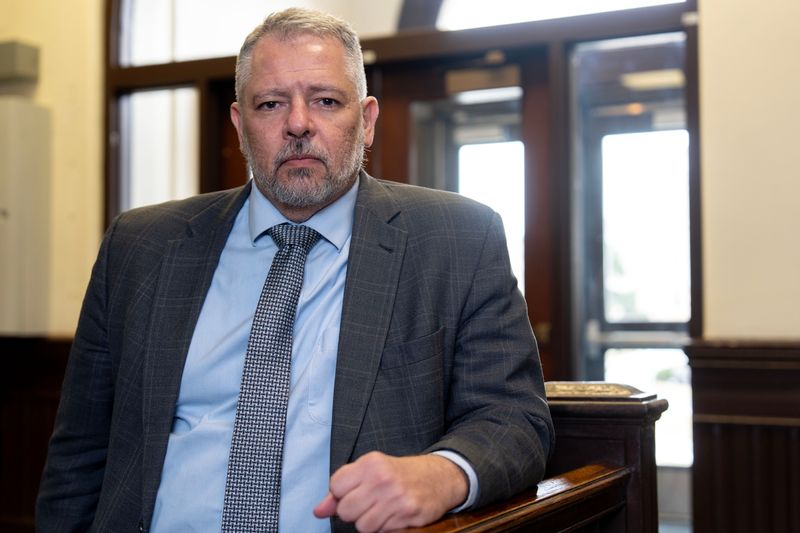
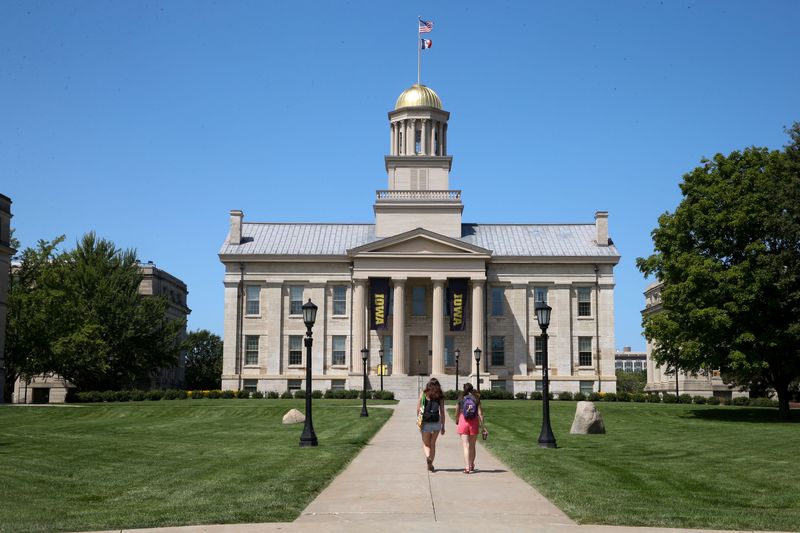
IOWA CITY — Christopher Rufo stood in the Old Capitol Building as snow fell steadily outside on a gray winter afternoon, his dark eyes and short beard giving him the air of a modern revolutionary.
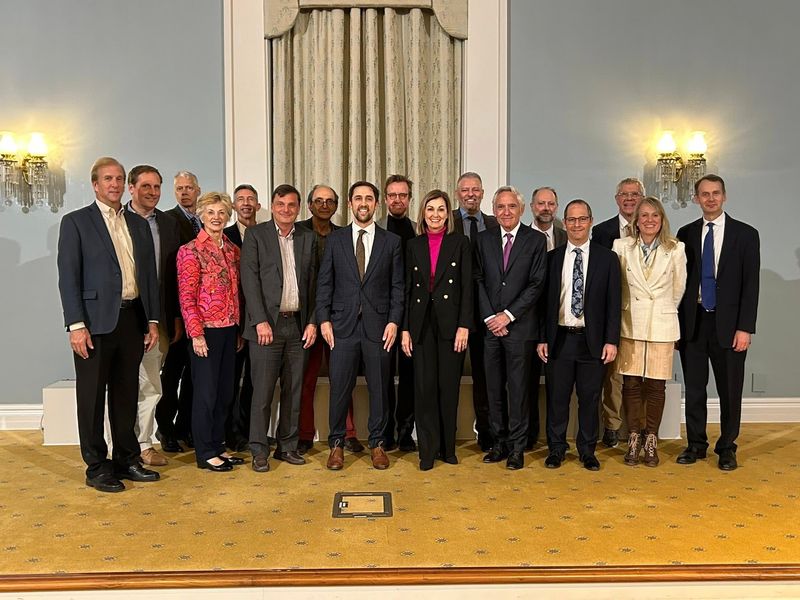
The conservative activist and writer gathered with Republican lawmakers, academics and Iowa Regents for his keynote address during the launch of the University of Iowa’s state-mandated Center for Intellectual Freedom in December.

The launch of the center marked a turning point, said the Manhattan Institute for Policy Research fellow, one that will “reorient the university to the highest good” and put an end “to left-wing ideological domination.”
The ensuing applause, and a two-day summit, marked the beginning of the new academic program — but it also highlighted the ideological battle in Iowa’s public universities.
Signed into law in 2025, GOP lawmakers championed the Center for Intellectual Freedom to encourage more varied perspectives on what they argued are overwhelmingly liberal campuses.
The center joins a nationwide effort to establish “civic centers” at public universities.
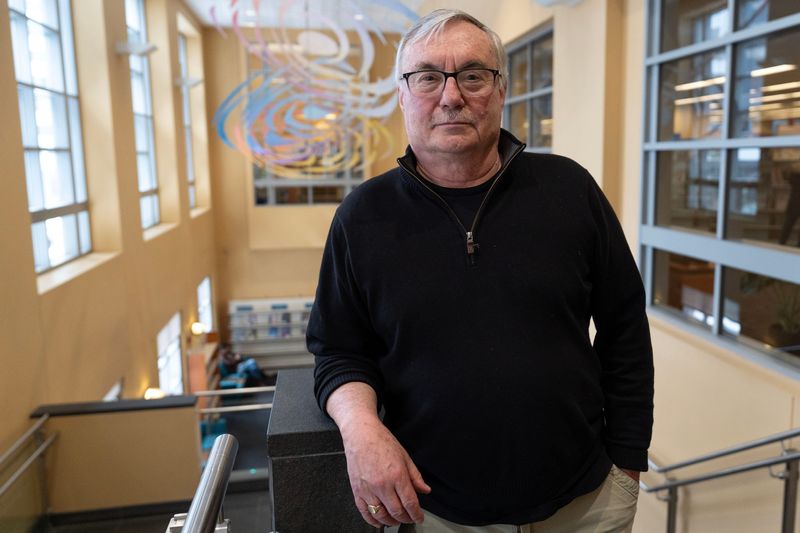
The center’s interim director, UI economics professor Luciano I. de Castro, said the center’s purpose is to expand intellectual thought “to get to the truth.”
“You cannot have some subjects that’s off limits because it is uncomfortable for one person or another,” he said.
Three months after the high-profile launch, Iowa’s Center for Intellectual Freedom is off to a slow start. The initial two classes began in March, but have had low enrollment — only 21 of 64 available seats were filled. Two people had dropped one of the courses by the second week.
Some of the guest lecturers include Fareway’s Reynolds Cramer on April 14 and Emory University English Professor Emeritus Mark Bauerlein on April 9.
Critics have questioned whether the curriculum reflects a broad-based civics education or represents an attempt to spread conservative viewpoints for college credit.
“If they were doing a better job of bringing together divergent points of view and engaging in a stimulating dialogue in a way that appeared to the public as being better balanced,” said Sen. Herman Quirmbach, D-Ames, “then the whole thing might be worthwhile.”
What makes the University of Iowa’s Center for Intellectual Freedom unique?
The Center for Intellectual Freedom is the first civics-focused program in Iowa mandated by legislative action.
The center’s leadership reports to the Iowa Board of Regents, rather than to university president Barbara Wilson or executive vice president and provost Kevin Kregel, making it unique on the UI campus.
Lawmakers appropriated $1 million for the center for fiscal year 2026, which ends June 30. The state gave the program another $1 million for fiscal year 2027.
The Board of Regents, tasked with overseeing the center’s mission, staffing and budget, declined multiple interview requests to discuss the center and its work.
UI President Barbara Wilson also declined interview requests about the center. She said in a statement: “The role of a public university is to encourage free inquiry, to be a place where students, faculty and staff can exercise their voices and engage with opinions different than their own.”
Interim director de Castro said the department intends to offer additional courses, as well as certificates, majors, minors and graduate programs in American civics, centered on constitutional thought, foundational debates and traditional education. The details of those offerings are not yet publicly available.
The initial pair of seven-week center courses are underway, though none are scheduled for the fall. The center’s only full-time faculty is its interim director, who is teaching the courses. Regents have said they will hire a full-time director at an annual salary of $238,708 by Dec. 31.
Reporters were denied access to the spring classes — de Castro said university policy forbids “allowing unregistered individuals to attend classes.”
Reporters stood outside the classroom three times to ask exiting students about their experiences. Enrolled students declined interviews.
Early spending, low enrollment test new center in first year
The inaugural seven-week courses, “Political and Economic Institutions in the US” and “American Culture and Values,” were scheduled to begin in January, but were delayed because of staff scheduling and student participation issues, the Daily Iowan reported.
The course syllabi states the material will “aim to inspire students to embark on a compelling journey of discovery and learning about significant issues related to the courses’ theme.”
Lectures cover topics such as “Why Capitalism Rocks;” “Self-reliance as an American Value;” and how the 1994 midterm elections (when Republicans captured control of the U.S. House for the first time since 1952) will impact Election Day in 2026.
The one-credit courses were developed in two months, which is why de Castro said they are pass-fail.
de Castro said he was “the only professor (at) the University of Iowa (who) actually supported” the legislation for the Center for Intellectual Freedom when it was first introduced.
He has been helping to shape a long-term vision for the Center for Intellectual Freedom but that is not yet developed, he said. He hopes to be the one to oversee the center longer term, he said he has applied for the full-time position to run it.
The Board of Regents and the 26-member advisory council are searching for a permanent director, who will be appointed by Dec. 31. The search alone is estimated to cost $100,000. In February, the Board of Regents were finalizing a contract with the Chicago-based executive search firm, Heidrick & Struggles. However, the deal fell through, The Daily Iowan reported.
“It takes some time to learn, to develop, to correct and we are in this stage,” de Castro said. “It’s a lot of effort, but it’s also very exciting because you have the opportunity to create something new and something you believe will be valuable for the students. We are right there.”
Of the center’s $2 million in funding over two years, about $438,000 is allocated to the director’s salary and benefits, with a third of the budget supporting staffing. The bill mandating the Center for Intellectual Freedom requires at least five full-time tenure-eligible faculty members, though it is unclear how the staff will be appointed or paid. The current budget does not include salaries for the full-time faculty.
So far, in addition to staff costs, the center has spent $80,064 on its introductory summit in December 2025. The event included Rufo, the senior fellow at the conservative think tank the Manhattan Institute. The center spent $34,000 to bring Rufo to campus, although he initially asked for $50,000, the Cedar Rapids Gazette reported.
Ongoing funding will be determined by future state appropriations, the Iowa Board of Regents, and private donations, Hensley said at the February Board of Regents meeting.
Bruce Fehn, a historian and associate professor emeritus at the UI College of Education, said he worries that the UI’s center promotes ideological teachings over “academic excellence.”
“The amount of money the Republicans have invested in the Center indicates their seriousness of purpose in narrowing, rather than widening freedom of thought,” Fehn said, who has no affiliation with the Center aside from having attended December’s summit.
Civic education centers spread nationwide as Republican lawmakers target universities
The Center for Intellectual Freedom fits within the trend of civic centers emerging on college campuses across the country. They are often fueled largely by majority-GOP legislatures looking to address perceived left-leaning ideology in higher education.
Forty-five civic centers exist at universities and colleges, according to the nonpartisan Heterodox Academy.
They tend to have several common goals, including emphasizing core American texts, engaging in civic discourse, broadening the range of viewpoints and delving into multidisciplinary studies of American life.
Half of the centers were founded after the George Floyd protests of 2020, 14 were established by legislative mandate.
“Centers cluster aroundtwo major themes: ‘civic thought’ (classical liberalism, American founding, Western civilization) and ‘civic discourse’ (dialogue across difference, viewpoint diversity),” the Heterodox report said.
In Iowa, the University of Northern Iowa was the first to propose a civic center idea to the Board of Regents, creating a “Center for Civic Education” in late 2024.
UNI political science professor Allison Rank is the director of the Center for Civic Education. The department does not offer specific classes; instead, it operates the Iowa Civic Educators Institute.
The institute, which is funded by a three-year, $1.22 million grant from the U.S. Department of Education, allows UNI students and Iowa teachers to improve their “knowledge of the American political tradition and the ideas, traditions, institutions, and texts essential to American Constitutional Government and our American history and heritage” through a variety of fee-based seminars.
Iowa State University unveiled its own Cyclone Civics initiative at the November 2024 Iowa Board of Regents meeting, most recently becoming the “Center for Cyclone Civics.”
The Center for Cyclone Civics, according to its website, “is dedicated to advancing nonpartisan civic education and research.” The center offers “programming, partnerships and outreach efforts.”
Iowa State’s center is led by a pair of co-directors: Kelly Shaw, a political science professor, and Karen Kedrowski, also a political science professor and director of the Carrie Chapman Catt Center for Women and Politics.
“The center does not advocate for or against any political party, candidate, or ideological position. Instead, we provide research, educational programming, and public engagement opportunities that encourage critical thinking, open inquiry, constructive dialogue, and respect for diverse viewpoints,” the center says on its website.
Iowa State is committing $250,000 per year for five years to the center, according to an Iowa State news release, while the directors are expected to “supplement” the yearly budget with $120,000 in private funds.
When the University of Iowa was slow to draft a proposal for its own civic center, lawmakers stepped in and directed it.
“We were pleased with the direction UNI and Iowa State were going, and we just didn’t see any meaningful progress being made at the University of Iowa,” said Rep. Taylor Collins, R-Mediapolis, who chairs the Iowa House Higher Education Committee.
New courses feature current University faculty, guest lecturers
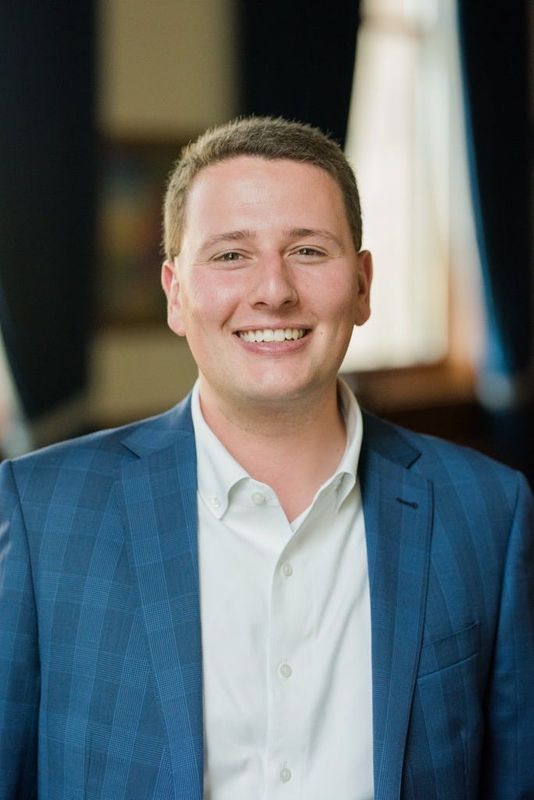
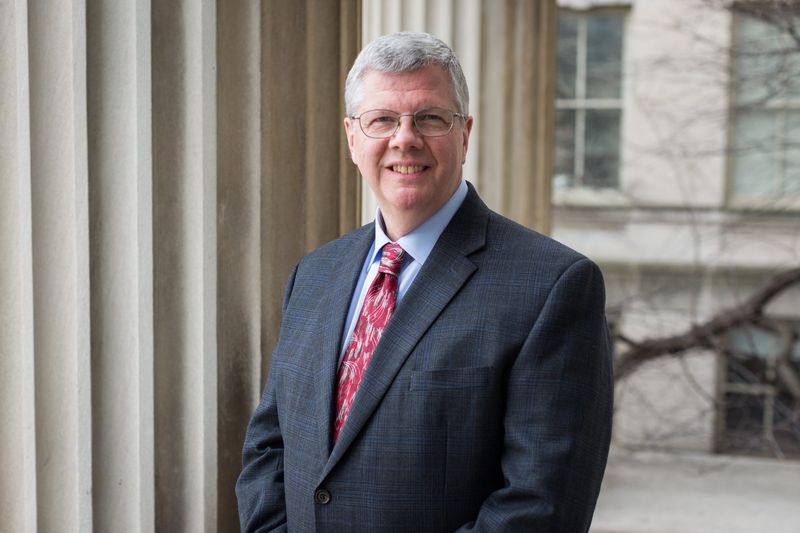
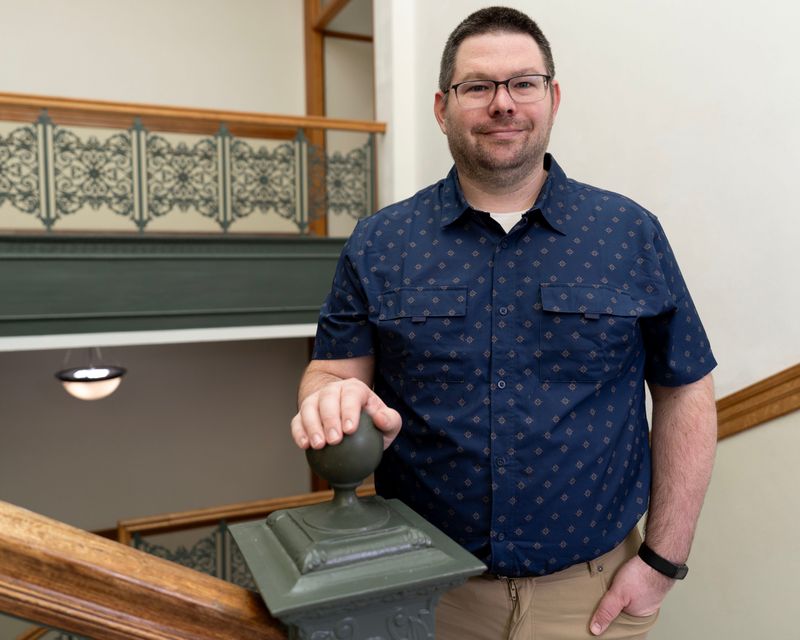
Of the planned lecturers during the spring semester, three are from current UI faculty members: political science associate professor Timothy Hagle, political science lecturer Alex Smith and philosophy professor Richard Fumerton.
Hagle hosted a pair of lectures: “The Judiciary: The Least Dangerous Branch?” on March 24 and “Freedom of Speech” on March 26. In the “Freedom of Speech” lecture, Hagle examined how freedom of speech and the press intersect with current topics, such as cancel culture, hate speech and doxing.
“The nice thing about these two courses, it gives me an extended class period … that I can dig in and focus in on certain issues that I think are particularly important, usually things that are in the news,” he said.
Smith lectured on the role of the Iowa Caucuses on March 31 and a week later on “Representation in Congress,” to help students better understand lawmakers’ motivations. The talks were nonpartisan, he said.
Smith said de Castro never told him to “come in and teach from a certain ideological standpoint.”
If he was pushed to lean a certain way?
“I would have said, ‘No, I’m not going to do that,’” Smith said.
Make up of center’s advisory council, prompts questions
The center’s detractors accuse the Regents of stacking the advisory council that oversees the center with Republican members.
The Regents approved the center’s 26-member advisory council on September 2025. The council includes notable Iowans, such as former U.S. Rep. Greg Ganske, as well as 13 faculty members from colleges and universities outside Iowa and one UI employee, as required by law.
Of the council’s 26 members, 11 are Republicans, three are Democrats and 12 have “no party affiliation.” All but two of those members are men. The council will give advice and deliver feedback to the Center for Intellectual Freedom director and the board, according to the bylaws.
Several of the council members are also guest lecturers, including Fareway CEO Reynolds Cramer, President and CEO of Heart of America Group Mike Whalen and Emory University English Professor Emeritus Mark Bauerlein.
“The majority are independent,” de Castro said. “… We tried to get independents, and I tried to get some women also, but unfortunately, couldn’t get their approval or their consent.”
de Castro said he invited members of the Democratic Party to participate in the advisory council and the two courses but “was not able to get their collaboration for the center.”
Hope Metcalf, a clinical associate professor in the UI College of Law, said at a February Board of Regents meeting she was initially excited about the center. She saw “how much the deep and toxic polarization of our greater culture has infected the campus,” but that excitement turned to disappointment.
“I listened, I talked, I had fascinating conversations. I met people with perspectives I hadn’t yet considered. But unfortunately, I was struck by a couple of things,” Metcalf said. “One was the remarkable lack of intellectual diversity among the panelists. Secondly … there seemed to be, I hesitate to say an overt hostility, but a deep misapprehension about what it is that I and my colleagues do every day when we come to teach here.”
Are the political views at the University of Iowa balanced?
Collins, de Castro and Regent Christine Hensley said they each have fielded concerns from students and faculty who felt a need to “self-censor” conservative ideas in the classroom. The Center for Intellectual Freedom was created, in part, to address those concerns.
“… That’s the biggest feedback I hear, is just how students and faculty are self-censored because they believe there’ll be retribution for having conservative beliefs,” Collins said.
Quirmbach and Senate Minority Leader Janice Weiner, D-Iowa City, said they haven’t heard the same concerns.
“I do not ever recall receiving any emails suggesting that,” Weiner said.
During the 2025 legislative session, de Castro cited a 2020 peer-reviewed study, “Partisan registration of faculty in flagship colleges,” which found that among professors in the humanities and social sciences, Democrats outnumber Republicans.
At the UI, 91 of 141 faculty were Democrats, compared with eight who were Republicans, the study found.
A 2026 study by Gallup and the nonpartisan Lumina Foundation, however, found Republican students aren’t feeling discouraged about sharing their views.
“The College Reality Check: What Students Experience vs. What America Believes” study gathered responses from nearly 4,000 college students. The study said “between 64% and 74% of Democratic, Republican and independent students” said professors encouraged students to share their views “even if it makes others uncomfortable.”
“Just 2% of all college students, including 3% of Republicans, say they feel they don’t belong on their campus due to their political views,” the study said.
Questions remain over how Iowa should teach civic education
Supporters and critics both say they believe civic education is important. But they haven’t reached a consensus on the best way to teach civics and American history at Iowa’s public universities.
“I’m not naive, I’m a political scientist…I’m curious how the external politics will try to shape the different things going on here,” Smith said. “I hope to see that a place called the Center for Intellectual Freedom would be about civic education and intellectual freedom rather than be primarily about teaching these sorts of topics from a certain ideological position whether that’s the left, from the right, from the center, just that it could actually be an intellectually diverse place that is not bound to one particular way of thinking.”
It’s not clear whether the Center for Intellectual Freedom can lead the University of Iowa in that mission long term.
University of Iowa registration for the 2026-27 fall semester runs through May 1. As of April 10, the Center for Intellectual Freedom had no classes scheduled beyond its inaugural semester.
The center has financial support but has not yet proven student interest. It also lacks full-time faculty, set classes and a full-time director.
But de Castro sees a need for the center to thrive.
“I have in my heart the interest of the people of Iowa that would be benefited by having a broader and richer program here at this university,” de Castro said. “This is what motivates me.”
Jessica Rish is an entertainment, dining and education reporter for the Iowa City Press-Citizen. She can be reached at JRish@press-citizen.com or on X, formerly known as Twitter, at @rishjessica_
This article originally appeared on Ames Tribune: Iowa’s intellectual freedom center starts slow as balance questioned
Reporting by Jessica Rish, Des Moines Register / Ames Tribune
USA TODAY Network via Reuters Connect