The list of Iowa beaches with concerns for swimmers shrank in the second week of the Iowa Department of Natural Resources’ beach monitoring report.
Test results at three Iowa beaches showed levels of E. coli or algae that pose a risk to swimmers, which is down from four beaches ahead of Memorial Day weekend. Two other beaches are currently closed and weren’t tested.

The Iowa Department of Natural Resources provides weekly updates on which state beaches are experiencing high levels of E. coli or algae that can be dangerous to swimmers. You can check the latest reports on the DNR website or by calling 515-725-3434.
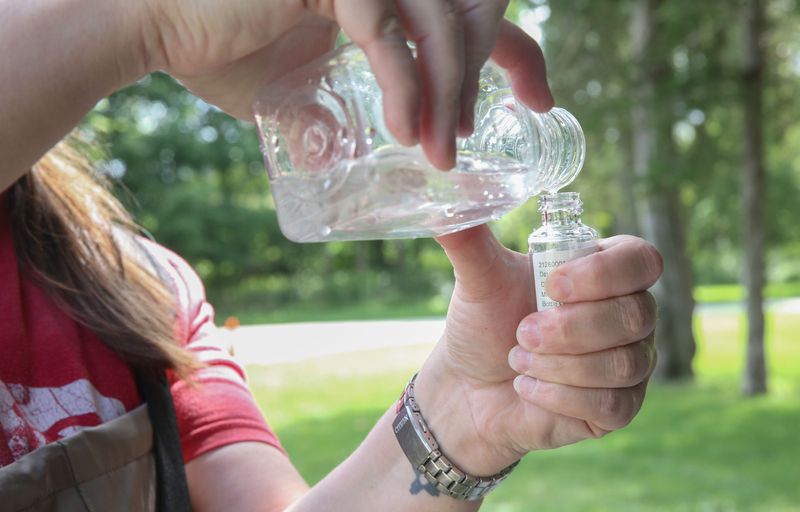
The DNR collects weekly samples at 39 state-owned swimming beaches to determine the public’s risk of coming in contact with waterborne diseases. Testing starts a week prior to Memorial Day and runs through Labor Day.
What Iowa DNR beaches are not recommended for swimming?
Bobwhite State Park
Lake Darling Beach
Pine Lake South Beach
Which Iowa beaches have improved to ‘OK for swimming’?
Two beaches considered “not recommended for swimming” in Week 1 data, posted on May 22, are now OK for swimming:
What Iowa beaches have a special status?
Lake Keomah: Monitoring by DNR is currently suspended. The DNR drained the lake in July 2024 for a major renovation and water quality improvement project that will last until spring 2026. The DNR warns people to stay out of the lake bed, which might look dry, but is soft and could quickly entrap people.
Blue Lake Beach: Monitoring at Blue Lake is suspended while the Lewis and Clark State Park is closed. The DNR is removing trees and has restricted access to the entire park.
How does the Iowa DNR classify Iowa’s beaches based on their water quality?
DNR officials classify state park beaches into one of three categories annually based on their history of bacteria results in recent years:
Vulnerable: Beaches are considered vulnerable when the geometric mean standard is exceeded in three or more of the five most recent sampling seasons.
Transitional: The beach’s geometric mean standard is exceeded in two or fewer sampling seasons of the five most recent years of monitoring and was listed as “vulnerable” in the past monitoring seasons.
Less vulnerable: The beach’s geometric mean standard is exceeded in two or fewer sampling seasons of the five most recent years of monitoring and was listed as “transitional” or “less vulnerable” in past monitoring seasons.
This article originally appeared on Des Moines Register: Iowa DNR flags 3 state beaches for E. coli, algae risks this week
Reporting by Brian Smith, Des Moines Register / Des Moines Register
USA TODAY Network via Reuters Connect