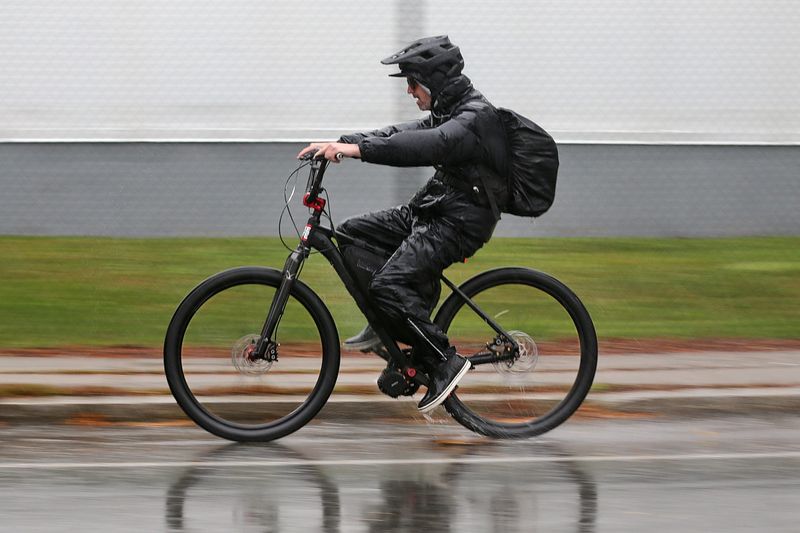
Ten years ago it would have been unusual to see electric bikes on Iowa City trails. Today they are part of everyday life. They help older adults stay mobile, give teenagers more independence, and make short car trips unnecessary. On the Iowa River Corridor Trail, the Clear Creek Trail, and the paths around Terry Trueblood, e-bikes have become a normal part of how people move around town. That is a good thing.
But Iowa City is beginning to face a challenge many bike-friendly communities are struggling with: Not every vehicle being marketed as an “e-bike” is really the same thing. A Class 1 pedal-assist bicycle ridden at 17 mph by someone commuting to work is fundamentally different from a high-powered throttle bike capable of speeds beyond 40 mph. The problem is not e-bikes themselves. The problem is confusion, inconsistent understanding of the rules, and a growing market of high-powered machines that blur the line between bicycle and motorcycle.

Iowa law already recognizes important distinctions through its three-class system. Class 1 and 2 e-bikes are limited to 20 mph. Class 3 bikes can reach 28 mph with pedal assist and require riders to be at least 16 years old. Under Iowa law, low-speed e-bikes are generally treated similarly to bicycles, though local trail systems can establish their own rules. That framework makes sense. The issue is that technology is moving faster than public understanding and enforcement.
Anyone who regularly uses Iowa City trails has likely seen the tension already developing: riders moving too quickly through crowded pedestrian areas, oversized throttle-powered bikes built more like motorcycles than bicycles, and parents purchasing machines online without realizing they may exceed Iowa’s legal definition of an e-bike. That matters because Iowa City has spent decades building trails designed to function as shared public spaces. Pedestrians, runners, wheelchair users, cyclists and families with strollers all use the same network. That system works because speed differences remain relatively manageable and predictable. A 12 mph difference matters on a crowded trail. A 30 mph difference changes the character of a shared trail completely.
Unfortunately, the public conversation often collapses into two extremes. Either all e-bikes are treated as dangerous, or any discussion of regulation is dismissed as anti-bike hysteria. Both reactions miss the point. Most e-bike riders are responsible, and many are exactly the kind of people cities should want out of cars and onto trails. E-bikes reduce traffic, parking demand, and transportation barriers for people who might not otherwise ride at all. At the same time, it is reasonable to acknowledge that high-speed electric motorcycles do not belong on crowded recreational paths simply because they have pedals attached.
Iowa City should avoid waiting until a serious crash forces rushed policy decisions. Instead, local leaders should focus on a few practical steps now.
The goal should not be fewer bikes. The goal should be safer shared spaces. Iowa City has spent years building trails that work because users trust one another to share them responsibly. As electric transportation continues to grow, preserving that trust may matter more than any single rule the city eventually adopts.
Brian Brandsmeier of North Liberty is an Iowa City Bike Ambassador with Bike Iowa City.
This article originally appeared on Iowa City Press-Citizen: Iowa City needs a nuanced conversation about e-bikes | Opinion
Reporting by Brian Brandsmeier, Guest columnist / Iowa City Press-Citizen
USA TODAY Network via Reuters Connect