Iowa Republicans are seeking to place restrictions on libraries to prevent juveniles from accessing books that include sexual content or are intended for adults.
House File 2309 would require libraries to keep books and other material intended for adults in a separate adult section of the library that could not be accessed by minors without parental consent. It includes potential civil and criminal liability for librarians and libraries that allow minors to access books or materials intended for adults.

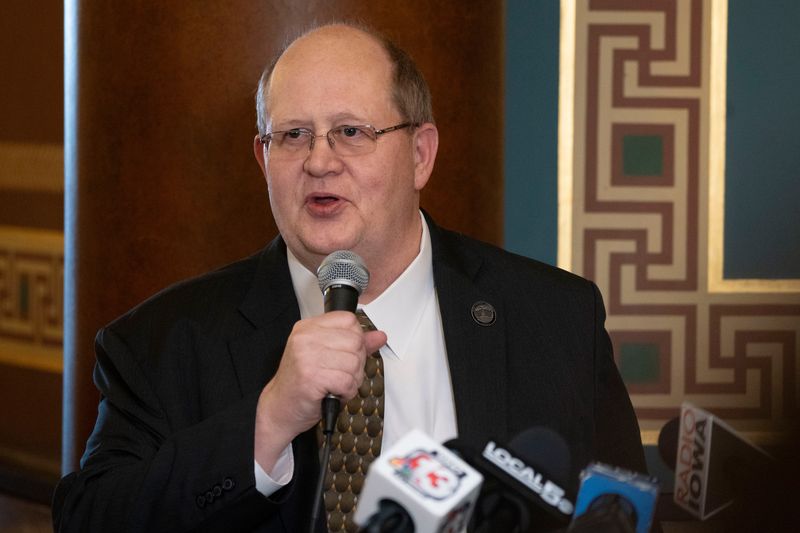
Rep. Charley Thomson, R-Charles City, pushed back on concerns raised at a subcommittee meeting Thursday, Feb. 12, that the bill would lead to books being banned.
“This doesn’t ban a single piece of paper,” he said. “This restricts access to minors and puts the access decision up to the parents, where it should be.”
Leslie Noble, with the Iowa Library Association, said the bill would create logistical challenges for libraries, especially in rural areas, and could lead to children losing access to library collections.
“HF 2309 is a regulation in search of a problem,” she said. “Illegal content is already illegal. Libraries do not provide unlawful materials, and existing state and federal laws prohibit the distribution of obscene or illegal content.”
Libraries would have to bar minors from accessing adult material without parental consent
Before allowing anyone under 18 access to “material harmful to minors,” the bill would require librarians to verify the person is at least 18 years old or has written parental consent to access certain material.
The bill defines “material harmful to minors” as books, magazines, videos or other media that include sexual content and, “taken as a whole, the material lacks literary, artistic, political or scientific value for minors.”
The language is similar to a decades-old obscenity standard adopted by the U.S. Supreme Court that is widely in use in Iowa and around the country.
Libraries would be required to review all books and other materials and classify them either as general access or harmful to minors.
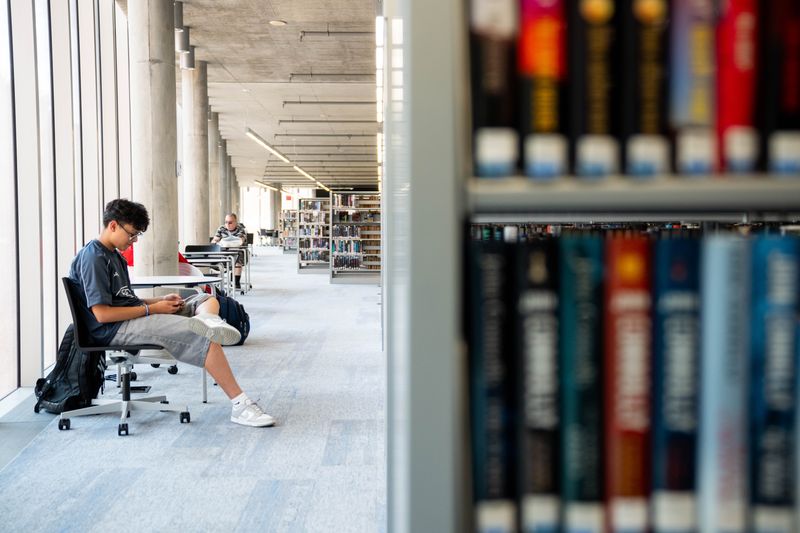
Anything classified as harmful would have to be in an adult section of the library, physically separated from young adult or children’s sections and clearly marked as containing adult material. The books or other materials could not be visible to minors who are using other portions of the library.
Librarians would face civil, criminal penalties for violating the law
If it became law, any parent would be allowed to sue a library, a library’s board of trustees or a library employee who violates the requirements. If the lawsuits were successful, librarians could be assessed damages of $1,000 to $10,000, plus additional damages for causing emotional distress or if the violation was willful or reckless.
The bill also contains criminal penalties for someone who willfully disseminates harmful material to minors who do not have parental consent, assists a minor in circumventing parental consent requirements, provides false information to parents or conceals or destroys records.
The crime would be a serious misdemeanor, punishable by up to a year in jail, for a first offense. A second offense would be an aggravated misdemeanor, punishable by imprisonment of up to two years and a fine of up to $10,000.
A librarian or library would be exempt from liability if they have adopted policies required by the bill and made a good-faith effort to comply with them, or if their violation is caused by “an isolated error or mistake.”
Supporters say bill protects children, librarians say it would be costly and restrictive
Lawmakers heard from Iowans who spoke in favor and against the bill at the Feb. 12 subcommittee.
Teri Hubbard, a public library board trustee in Sioux Center, said the bill “is about protecting children.”
“We’re often told that parents must monitor what their children read,” she said. “Parents absolutely play a central role, but institutions also carry responsibility. If parents are expected to be informed, it’s reasonable to expect trained professionals, who already rely on reviews and summaries, to use those same tools to make age-appropriate placement decisions.”
Jeff Pitts, a lobbyist for the Iowa Faith and Freedom Coalition, said the bill provides a “workable middle ground” for those concerned with children’s access to certain library materials.
“Iowa’s taxpayer-funded libraries must, above all else, provide a safe and innocent space for children to learn and grow and thrive,” he said. “For us, the number one priority for a public library should be to provide a secure place where parents don’t have to shield the eyes, ears and minds of their children. Every other worthy objective ranks well below this one.”
Librarians raised concerns that the bill could impose financial costs on libraries and “would strain already tight budgets and limited staff time.”
“In some communities, compliance with this bill may all but be impossible without restricting minors’ access to library collections altogether,” Noble said. “This would result in reduced services to families and young people. The risk of civil and criminal liability will deter individuals from serving their communities on library boards or working in libraries.”
Cities and counties also raised concerns that they would be financially responsible for costly lawsuits against libraries.
“This legislation waives governmental liability and makes cities vicariously liable for library decisions, exposing taxpayers to statutory damages up to $10,000 per item,” said Chelsea Hoye, a lobbyist for the Iowa League of Cities. “So even with good faith defense, the risk of litigation alone could be very crippling or our small town libraries.”
Rep. Megan Srinivas, D-Des Moines, said she’s concerned that the bill could endanger libraries, especially in rural areas.
“As well as the fact that this ultimately would fall on cities and counties and the way that they make up that cost is increasing property taxes,” she said.
Rep. Samantha Fett, R-Carlisle, dismissed the concerns about the cost of complying with the bill, saying libraries already have separate children’s and adult sections.
“This is just a way for parents to have some trust in their local public libraries that when those children walk into the library, whether they’re on a field trip with school, whether they’re with their parents or not with their parents, that they’re not going to be exposed to explicit materials,” she said.
Republicans considering several other bills on libraries
Iowa Republicans are advancing several bills that would place new restrictions on libraries in order to limit access to materials they say is harmful.
Stephen Gruber-Miller covers the Iowa Statehouse and politics for the Register. He can be reached by email at sgrubermil@registermedia.com or by phone at 515-284-8169. Follow him on X at @sgrubermiller.
This article originally appeared on Des Moines Register: Iowa bill says kids need parental consent to read adult library books
Reporting by Stephen Gruber-Miller, Des Moines Register / Des Moines Register
USA TODAY Network via Reuters Connect