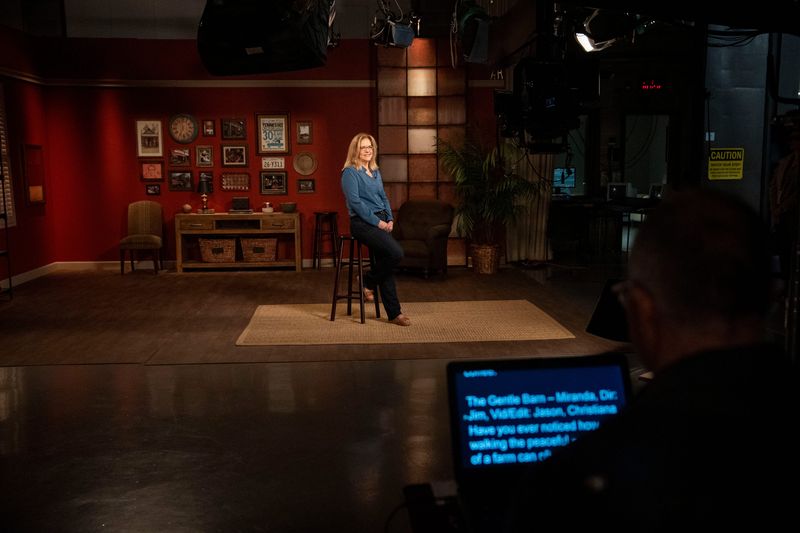
Federal funding cuts to public media could impact Iowa PBS programming like “Road Trip Iowa” or live coverage of college wrestling meets and degrade its extreme weather warning system, particularly in rural areas of the state, the executive director of Iowa PBS warns.
President Donald Trump first proposed a clawback to the federal funding — which would trickle down to local public media like Iowa PBS and Iowa Public Radio — in an executive order on May 1. The order, which was titled “Ending taxpayer subsidization of biased media,” said that “Government funding of news media in this environment is not only outdated and unnecessary but corrosive to the appearance of journalistic independence.”

Trump requested the Corporation for Public Broadcasting (CPB), a nonprofit created by the Public Broadcasting Act of 1967, suspend its $1.1 billion in support to public broadcasting. While both organizations derive funding from sources outside of the CPB grants, cuts could still prove to be detrimental, particularly to local stations.
Separately, a similar funding cut passed the House 214-212 on June 12. Now it goes to the Senate where it is expected to be debated later this summer.
The request has to be approved by both chambers of Congress within 45 days in order to become law.
“In a time when media opportunities continue to collapse, particularly at the local level, it’s really important to keep local PBS stations strong,” said PBS CEO and President Paula Kerger.
Small local stations like Iowa PBS and IPR will likely be disproportionately affected should the recission pass, said Myrna Johnson, executive director for IPR.
In the past year, IPR received 10% of its funding, about $1 million, from CPB grants, according to Johnson. The damage could be substantial if the cuts move forward, she said.
“There would be tough choices to make,” Johnson said. “But we have not yet made those choices.”
Iowa PBS receives 18% of its total budget, about $3.5 million annually, from CPB grants. But it also receives state support and fundraising through PBS members, which goes toward producing content like high school sports coverage, Iowa tourism programming and local history documentaries. Those programs could be at risk should the federal funding cuts win approval.
The local station also provides services like educational outreach work, as well tornado warnings, thunderstorm warnings and AMBER alerts, which all flow through PBS’s network of towers. The towers serve as a backup for FEMA.
“This is a really big moment for the public media system,” Johnson said. “You can look at it in sort of bite-sized pieces, you know, one station at a time, but if you take it as a whole, it’s going to make a huge impact on the public media system overall.”
Indeed, the effects of some funding cuts are already beginning to take hold. On May 20, USA TODAY reported that nationally, PBS Kids had furloughed 25% of staff after the Trump administration cut the Ready to Learn grant, which provided funding for educational children’s shows.
On May 30, PBS sued the Trump administration, just three days after NPR did the same.
Iowa PBS knows local communities value its services, said Andrew Batt, Iowa PBS executive director. Feedback received over the station’s 56 years of operation has been overwhelmingly positive, from the public and lawmakers alike.
A survey conducted by YouGov for PBS found 81% of Iowans believe PBS funding is “too little or about right.” Seventy-two percent of Iowans believe defunding PBS would do more to harm the country than it would to help the federal budget, according to the same survey.
“Public television is a partnership,” Batt said. “We continue to work with our delegation and communicate to our members how essential it is to provide this service. Our focus is on continuing to communicate, and to survive.”
Batt believes the purpose of the cuts is not to undermine local stations, but to send a message on a much larger scale.
“We believe that the (Trump) administration’s actions on the rescission are aimed at the national organizations and the public media system and not at us locally,” Batt said. “But the cuts proposed by the administration will negatively impact all of the services we provide here in Iowa.”
“I remain hopeful,” Batt said. “There is so much good that can come from public television in a state like Iowa and I think there is an opportunity to protect those stations that the vast majority of Iowans watch and support.”
Norah Judson is a reporter for the Register. Reach her at njudson@gannett.com.
This story was updated to add new information.
This article originally appeared on Des Moines Register: ‘I remain hopeful’: What could happen to Iowa PBS, IPR if Congress passes funding clawback
Reporting by Norah Judson, Des Moines Register / Des Moines Register
USA TODAY Network via Reuters Connect