In 2020, Harvest Academy admitted its first students into the nonprofit’s two-year, therapeutic vocational school to help voluntarily rehabilitate men who struggled with homelessness, substance abuse or incarceration. Now, the organization has started a major expansion of its operations.
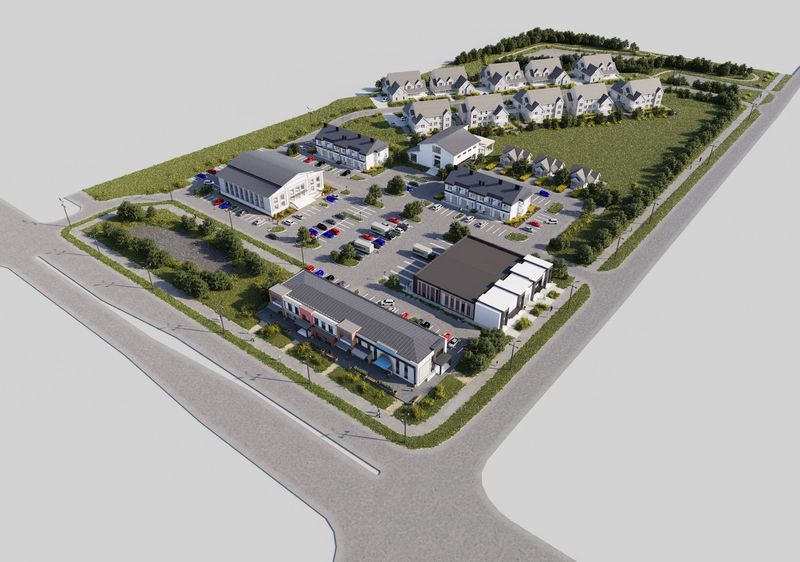
Harvest Academy has broken ground on a 20-acre campus located south of Des Moines that will help expand its capacity to up to 50 students. The first phase includes residential units and a community center. The organization plans to expand more in the future with housing for students after they complete the program.

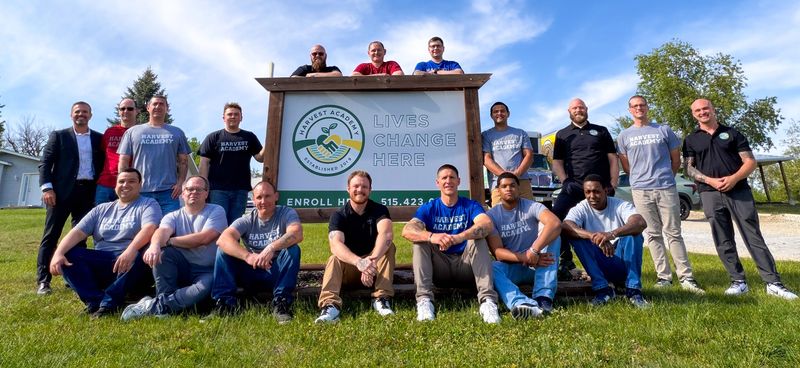
The no-cost academy is run by those who have firsthand experience with the issues their students face. The academy currently has 13 enrolled students and has graduated 14 students since opening in 2020.
Through the expansion, the nonprofit’s leadership hopes to make an even greater impact on those they serve, their families and society at large.
What’s included in Harvest Academy’s expansion?
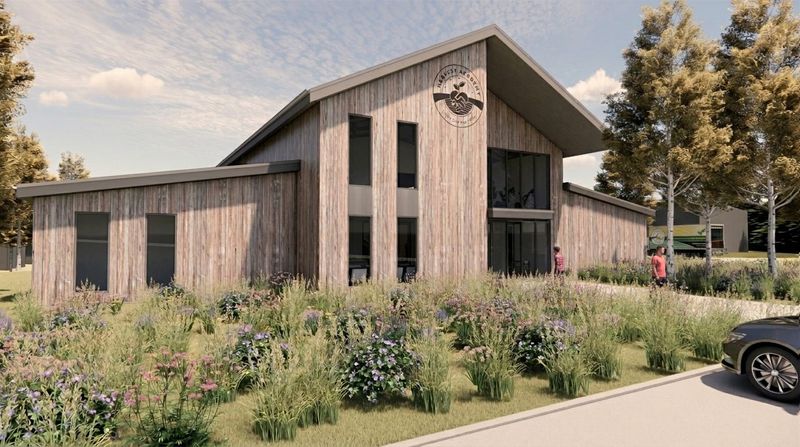
The overall campus project is broken down into smaller phases, with phase one consisting of two houses with capacity for 50 men in total as well as a community center, said Derek Johnson, the organization’s chief operations officer and chief financial officer.
The houses are slated to be complete by spring 2027, and the community center is expected to be finished in fall 2027, Johnson said. The housing portion of phase one will cost $7 million, and the community center is around $2.5 million, he said.
The expansion will allow the academy to accept more men into its programming, giving the nonprofit a chance to more than double its current capacity of 15 to 18 students, according to its website. The community center will add kitchen and office spaces, a fitness center and a hub for students.
In the academy’s five- to 10-year master plan, goals include expanding programming to women, building more on-site housing for students and graduates, and creating retail and vocational opportunities for students to get real-world working experience on campus.
The funding for the project and the academy as a whole comes from private donors as well as the organization’s own moving company, Johnson said.
How will Harvest Academy expansion impact the program and the community?
For those who complete the minimum two-year program, around 50% do not return to their old lifestyle, Johnson said. The program allows students to stay as long as they’d like, and around 80% of those who choose to stay three years or more stay away from the choices that led them there, he said.
For Harvest Academy employees Jay Newcomb and Troy Roberts, the expansion project means more opportunities to turn people’s lives around.
Both Newcomb and Roberts are graduates of the academy who now work for the nonprofit. Both described the impact the program had on their own lives, turning them from the “black sheep” of their family into contributing members of society with restored connections to their loved ones.
Roberts said those who come to the academy typically have a long line of family members who also struggled with the same issues. Programs like Harvest Academy can help break generational cycles, he said.
“The more individuals we have in the program, the more effective it is,” Roberts said. “So we need more guys to work on, and then we give them the opportunity to pass on what we learned so they can go out there and pay it forward to the next guy.”
Harvest Academy also gives back to the broader community by keeping people out of jail — saving taxpayers’ money — and turning them into taxpayers themselves, Johnson said.
But most importantly, the academy helps give students their lives back, said Nicholas Andersen, the academy’s program director.
“For me, on a personal level, what Harvest Academy gives me is my family. It gives me my life,” Andersen said. “I have a wife who loves me, I have children that I’m responsible for, I have a house payment that I have to pay every month, and I never thought that I could have that.”
Isabelle Foland is a communities reporter for the Register. Reach her at ifoland@registermedia.com.
This article originally appeared on Des Moines Register: Harvest Academy expansion doubles capacity for men in recovery
Reporting by Isabelle Foland, Des Moines Register / Des Moines Register
USA TODAY Network via Reuters Connect
By Isabelle Foland, Des Moines Register | USA TODAY Network