The Des Moines metro is again under a mandatory lawn watering ban, the second time in two years that rising temperatures, spiking demand and high nitrate levels are straining the regional authority’s ability to treat sufficient supplies of drinking water.
Central Iowa Water Works in a statement Monday, June 8, said the ban will reduce demand and enable “treatment facilities… (to) maintain safe drinking water standards” for the region’s 600,000 customers.

The ban, effective immediately, affects residents, businesses and governments served by the CIWW’s network of water utilities, including Des Moines Water Works. Enforcement last year was carried out by local governments, with penalties varying depending on their specific rules.
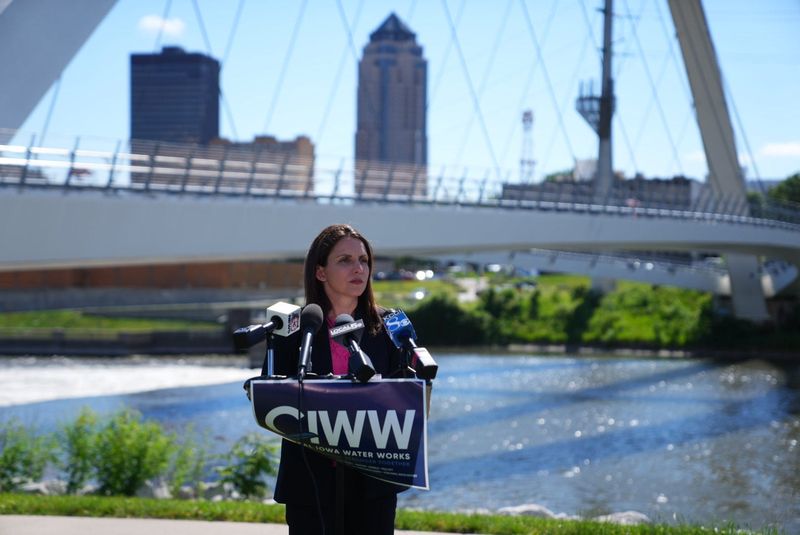
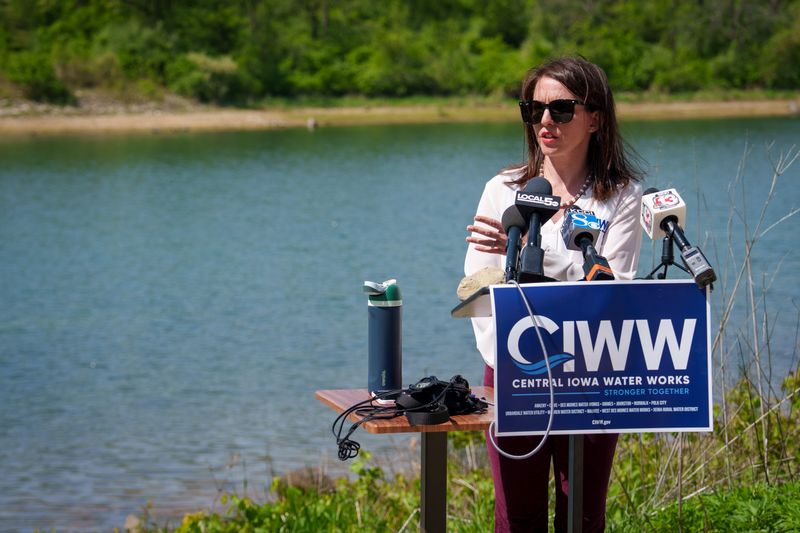
“Conditions have reached a point where mandatory conservation is necessary to protect reliable water service,” CIWW Executive Director Tami Madsen said in a statement. “We are using every available tool in our system to maintain safe drinking water. Now we now need every customer’s help in reducing demand to maintain safe drinking water standards.”
Amy Kahler, CEO of Des Moines Water Works, said in a news conference Monday that demand on Tuesday had been expected to reach 98% of treatment capacity without the ban.
“The capacity margins are very narrow,” Kahler said, adding that said the utility’s nitrate removal facility is operating “at full throttle.”
Madsen, also speaking in the news conference, said, “The most effective thing that customers can do right now is to stop watering lawns.”
The ban comes two weeks after CIWW on May 27 asked customers to cut their outdoor water use by 50% because of high nitrate levels in the Raccoon and Des Moines rivers, the metro’s sources of drinking water.
At the time, Madsen said central Iowa utilities continue to “face significant water quality and operational challenges” and conservation efforts were needed to “help reduce stress on the system and support reliable drinking water service for the region.”
She and other CIWW officials had warned that an outdoor watering ban like the one last June and July was likely after high nitrates in the rivers continued through the winter months. Des Moines Water Works said it was tapping the mostly nitrate-free water in its Maffitt Reservoir to dilute the high nitrate concentrations in water from the Raccoon River.
Water levels at Maffitt were 5 feet lower than normal in early May and have since dropped an additional 2 feet, officials said Friday.
Des Moines Water Works — one of 12 Central Iowa Water Works members — has run its nitrate removal facility, among the world’s largest, for 148 days so far this year to keep nitrate levels below the federal limit of 10 milligrams per liter.
Nitrate levels in the Raccoon River were 15.16 milligrams per liter Monday and 11.88 in the Des Moines River, Des Moines Water Works said.
Nitrates, even at low levels, have been tied to some cancers and to serious illness in infants. The federal government requires water utilities to alert consumers when nitrate levels rise above the standard.
The lawn watering ban comes after Gov. Kim Reynolds announced in May the state will give CIWW a $25 million grant to expand and upgrade its nitrate removal facilities, part of a statewide overhaul of Iowa’s water quality funding. However, the state so far has declined to impose measures to reduce nitrates from agricultural runoff, with Reynolds saying in July 2025 that regulation “is hardly ever the answer.”
While the ban is in place, the operation of splash pads and splash grounds in metro parks will be at the discretion of local municipalities. Many had already cut hours in response to the call for voluntary water-use reductions. The ban does not preclude watering of newly installed sod and seeded areas planted in the current growing season. Watering on golf courses and sports fields is also permitted, as is hand watering of gardens and flowers.
CIWW encouraged residents to conserve home water use, as well, including running dishwashers and washing machines only with full loads and fixing leaky faucets and toilets.
In addition to those served by Des Moines Water Works, the affected communities are Ankeny, Clive, Johnston, Norwalk, Polk City and Waukee and areas served by Urbandale Water Utility, West Des Moines Water Works, Warren Water and portions of the Xenia Water District.
Donnelle Eller covers agriculture, the environment and energy for the Register. Reach her at deller@registermedia.com.
This article originally appeared on Des Moines Register: For second consecutive year, watering ban imposed in Des Moines metro
Reporting by Donnelle Eller, Des Moines Register / Des Moines Register
USA TODAY Network via Reuters Connect
By Donnelle Eller, Des Moines Register | USA TODAY Network