Iowa has a caregiver crisis that is escalating even faster than its population is graying: Cases of dependent adult abuse, increasing for decades, have skyrocketed in the last five years, with a growing number of people found by the state to be abusive and charged criminally.
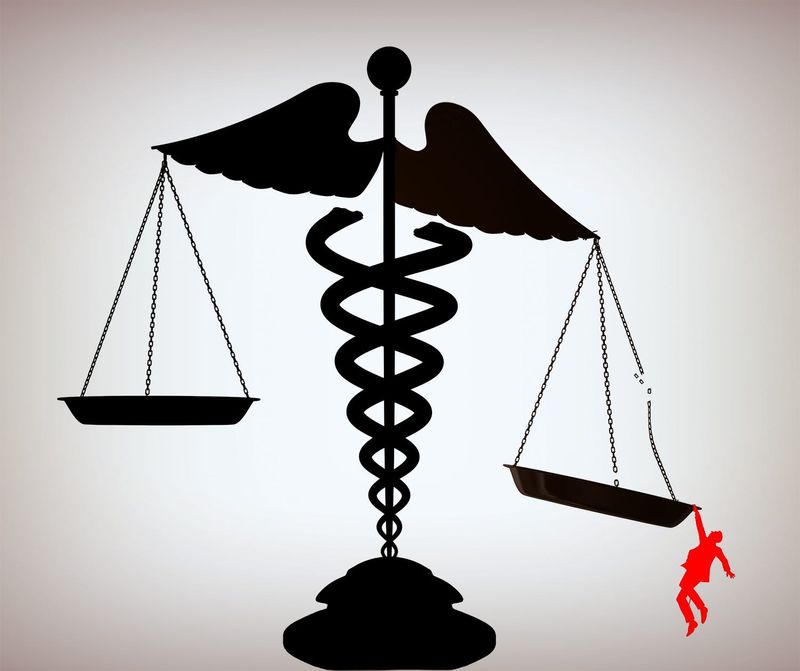
The findings, documented in statistics Watchdog obtained under Iowa’s open records law, comes amid a deepening direct-care provider crisis nationally and as all states brace for historic Medicaid cuts under President Donald Trump’s “One Big Beautiful Bill” law. The up-to $1 trillion to be slashed from the state-federal health care program for the poor is widely expected to further gut services and programming for Iowa’s most vulnerable, which have shrunk under the state’s Medicaid privatization, Watchdog’s probe found.

Individuals with intellectual disabilities in Iowa already on a wait list for services increased more than 334% since Medicaid was privatized, to 8,046 in January 2026 from 1,852 in 2016, records obtained from Iowa’s Department of Health and Human Services show. Those services help families pay for adult day care, nursing, respite and other care so people with intellectual disabilities do no have to live in institutions. Without them, people who cannot care for themselves are at greater risk for their own safety, and neglect and abuse.
Iowa’s congressional delegation and leaders at the state level “really need to realize that things are already very, very difficult for people with mental illness and disabilities, and it’s getting worse,” said Ryan Crane, who heads NAMI Iowa, an advocacy organization for people with mental illness and their families.
Iowa’s services, he said, already are threadbare and the effects of last year’s federal budget cuts, which continue until 2034, haven’t yet hit the state, Crane said. With Medicaid being the largest funder of mental health services in the United States, “we are deeply concerned and worried about these potential cuts.”
The existing crisis means vulnerable Iowans often are left in the care of people unwilling or unable to take care of their needs, he said.
The DHHS declined to discuss the surge in abuse, how Iowans are being affected and what the agency may be doing to address the problem. When asked in writing about the agency’s abuse substantiation rate, which is lower than the national average, and Iowans’ complaints of the loss of coverage for direct support under Medicaid, DHHS Director of Communications Danielle Sample said she would provide responses but did not.
Iowans made more than 60,000 dependent adult abuse reports to DHHS from 2021 to 2025, Watchdog found. The number of reports increased 50% in that span ― to 13,925 in 2025 from 9,559 in 2021. Most of the cases reported last year involved allegations of caretaker neglect and self-neglect, but the state has seen many more reports of exploitation, personal degradation and physical abuse, too.
Statewide, 416 people were added last year to a state registry after the DHHS or the state Department of Inspections, Appeals and Licensing found them responsible for dependent adult abuse. Five years earlier, in 2021, the number was 278.
The number of people accused of felony intentional dependent adult abuse causing injury also has greatly increased: Last year, 62 people were charged, data obtained from the Iowa judicial system shows. In 2022, there were only 11 cases.
Doug Cunningham, executive director of The Arc of Iowa, which advocates for people with intellectual and developmental disabilities, said the state already has a critical shortage of caregivers capable of handling the complex needs of that population.
The cuts to Medicaid promise to create many more crises like that experienced by Todd and Bonnie Beaman, a disabled couple from Menlo featured in an upcoming Watchdog series. With four adult children who have intellectual and other disabilities and living in poverty, they could no longer access assistance in rural Iowa from providers who were supposed to be covered by Medicaid. With no outside help, the family was found last year living in deplorable conditions.
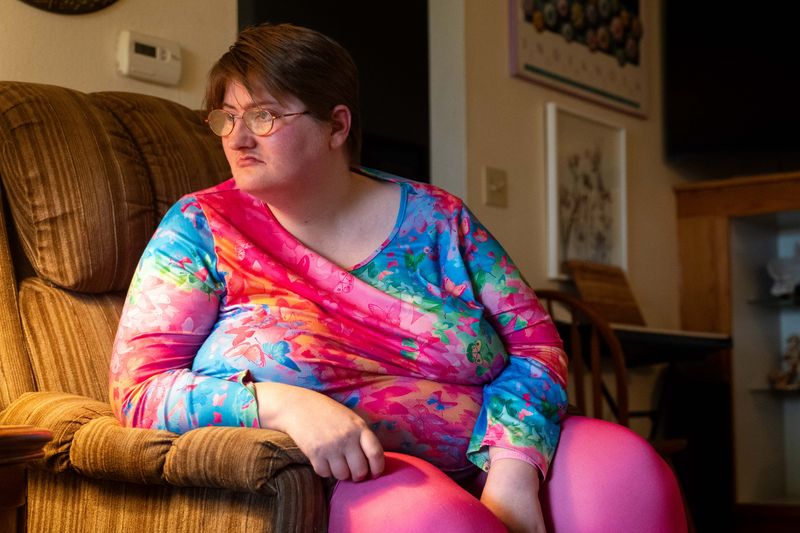
Now, the parents are accused of dependent adult abuse and their 33-year-old daughter, the most dependent of their children, has been taken by the state, which has struggled over the past nine months to find a place to permanently care for her. That’s been even more traumatizing to her.
Since her removal from her family, Sarah Beaman, who suffers from cerebral palsy, narcolepsy and several mental health and behavioral issues, has been moved from a hospital to group homes to jail and back to a hospital as authorities seek a long-term solution.
Banned by the court from seeing or talking to her parents or siblings, the disabled woman once deemed in need of protection by the state has been isolated from all who knew her, arrested for violently acting out and jailed.
“I want to go home,” she said. “I’ve been crying so much, I’m out of tears.”
‘We are all aging into disability’
Cunningham believes with the Medicaid cuts coming, the lack of appropriate care elderly, disabled and needy Iowans already are experiencing is just the tip of an iceberg.
“One of the things I love about Iowa is we help our neighbors. But this doesn’t feel like that. And it’s going to get worse,” Cunningham said. “Hospitals are going to get overrun. … And this can affect you, too. We are all aging into disability.”
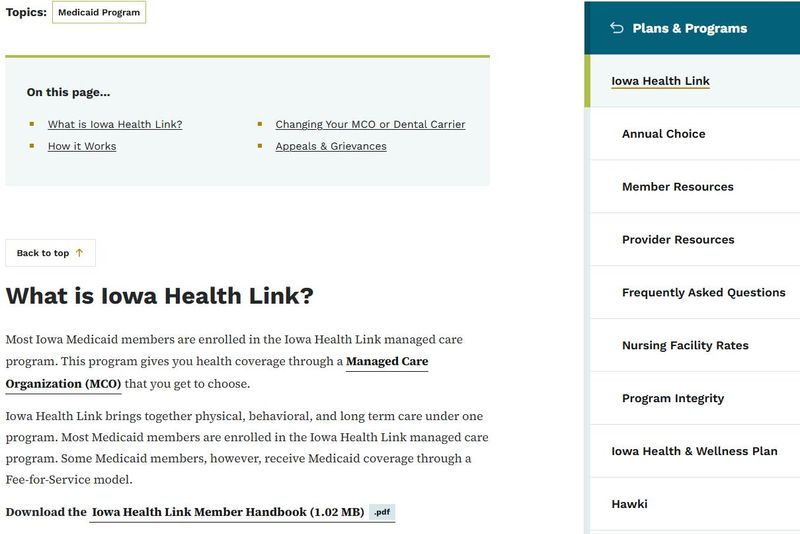
Families across the state have been complaining for years that the for-profit, managed-care companies Iowa began hiring a decade ago to administer benefits under Medicaid, the federal-state insurance program for the poor and disabled, are too often denying coverage for the care and supervision for people who can’t live safely without it.
The huge surge in people on the state’s waiting list for intellectual disability waivers under Medicaid privatization underscores how many Iowans are already going without.
This spring, Gov. Kim Reynolds signed into law a measure that attempts to cover an immediate Medicaid shortfall by retroactively raising premium taxes on HMOs — a type of Medicaid plan offered by private companies.
Kim Musheno, senior director of Medicaid policy for The Arc of the United States, said members of Congress have tried to assure her organization the cuts coming over the next decade from the “One Big Beautiful Bill” act will not further degrade services to Iowa’s most vulnerable.
“But you can’t have a cut of that magnitude and not have it affect that population,” Musheno said.
She said Medicaid coverage of home and community-based services is largely considered optional, meaning states are not required by the federal government to provide them. Advocates fear the changes ahead in funding will mean a return to more people with disabilities being sent to unnecessarily restrictive ― and costly ― institutional settings, while others living in communities receive less-effective care that leaves them vulnerable to abuse.
“When you cut Medicaid funding, what often gets cut are rates to pay direct-support professionals,” Musheno said. “That reduces quality and that sometimes leads to abuse and neglect.”
Iowa rejecting far more abuse reports than other states
More than 400,000 people with disabilities live in Iowa, roughly half of them 18- to 64-year-old adults. Around 150,000 have intellectual disabilities and may need care for much of their lives, according to state statistics.
By 2060, roughly 729,292 people ― one in five residents of the state ― are projected to be age 65 or older, according to the Iowa Data Center, up more than 100,000 from a 2024 U.S. Census estimate.
Three researchers who examined more than four decades of dependent adults abuse data for the University of Iowa Carver School of Medicine found that abuse grew more common as a larger swath of the state’s population aged and became more vulnerable. But a spike in dependent adult abuse far surpassed the growth in Iowa’s aging population.
From 1984 to 2023, Iowans age 65 and older increased from 19.5% of the adult population to 24.1%. During the same period, investigations per 100,000 people in that population increased 264% and substantiations of that abuse increased 124%, they found.
Comparing Iowa statistics to 2021 data from the National Adult Maltreatment Reporting System, Iowa accepted 48.9% of abuse reports for investigation compared with the national acceptance rate of 59.1%. Iowa had a substantiation rate of just 13.6% versus the national rate of 34.2%.
More recent statistics obtained under open records law from the state showed the state rejected investigating almost 57% of abuse reports last year, the most in recent year available.
“There is no reason to think that there is less adult abuse in Iowa than in other states. However, it is difficult to compare abuse reporting data across states as the population covered, state’s legislative abuse definitions, and available resources are different,” the U of I researchers’ report said.
“Iowa physicians believe Iowa does not have enough resources to meet the needs of mistreated older adults, which may impact their reporting of abuse,” the report said.
Interviewed in April by the Watchdog, the researchers said while reporting abuse is often mandatory for many professionals, screening isn’t. And if the state is inundated with reports but lacks workers to screen, investigate and take action, that eventually becomes a disincentive to report potential cases.
Privacy, confidentiality and possible damage to doctor-patient relationships may play into some lack of reporting to medical professionals, the study found. “The lack of feedback or insufficient communication from adult protective services and the impacted on the wellbeing of the dependent adult” also was a concern.
The study’s authors also said other research suggests increasing criminal penalties for those who abuse dependent adults does not act as a deterrent.
The DHHS in recent years has maintained a dedicated unit, separate from child protection, for adult protection. Last year, there was one worker for every 173 reports accepted for investigation, data from the agency shows.
More dependent Iowans are dying from abuse
In Iowa, a dependent adult is anyone over 18 who requires assistance because they’re unable to protect their own interests or obtain services necessary to meet essential needs. Most often, they have a physical, intellectual or mental disability.
By law, dependent adult abuse allegations must be investigated either by the DHHS or the Iowa Department of Inspections and Appeals. Self-neglect also can be investigated and is one of the leading sources of Iowa complaints.
Last year, the DHHS accepted for investigation 6,057 reports of abuse. Of those reports accepted for investigation, abuse was unsubstantiated in 78% of cases, far more than roughly 50% reported nationally in 2023, the most recent year for which data is available from the National Adult Maltreatment Reporting System.
Dependent adult abuse also is reported in facilities overseen by DIAL, but the numbers are much smaller.
While about 37 caregivers a year are found responsible for dependent adult abuse in state-monitored facilities like nursing homes, the vast majority of allegations involve at-home caregivers. And more Iowans have been dying from abuse in their communities ― 31 last year, up from 18 in 2022, the most recent data made available by the DHHS.
The stories arising from criminal levels of abuse across Iowa are as disturbing as they are tragic.
In Burlington, a 26-year-old live-in caregiver failed to feed or provide medication to the dying, bedridden woman who hired her. Authorities discovered her neglect only after the disabled woman’s bed caught fire.
Audrey Engler pleaded guilty in February to dependent adult abuse by a caretaker causing serious injury. She was sentenced to 10 years at Iowa Correctional Institution for Women in Mitchellville.
Witnessers told detectives that Engler, an employee of a home care company, lived for free with the woman, took her money, scaled back her nursing care, left her in soiled bedding with multiple bed sores, and ignored her texts for food and pain medication for hours at a time. A bath aide reported that the disabled woman asked her for food and got “skinnier and skinnier,” a criminal complaint said.
The woman, unnamed in the court case, died less than a month after the fire.
The criminal complaint in the case said that when a detective spoke to Engler, she “admitted that she could have taken care of the dependent adult better and could have checked on her more and could have had more compassion for her.”
In Clinton, a 52-year-old man living with his father left the 77-year-old at home covered in ulcers, lying in his own waste, until just before he died from pneumonia.
On July 27, John Frank Elder Jr. is scheduled to go to trial on two charges of dependent adult abuse. His father, who had Alzheimer’s disease, was found at home barely breathing in May 2025, with a gaping wound, ulcers and lying in a large amount of his own feces, a criminal complaint said. He also had blunt force trauma to the scalp, face and limbs, court records show.
The son told investigators his father resisted medical care and had not seen a doctor in decades. But he allegedly withdrew his father’s Social Security and pension checks quickly after they were automatically deposited in a joint account, court records show.
Neither his nor Engler’s attorneys responded to messages seeking comment.
Clinton County Attorney Mike Wolf said it would be unethical for him to comment on that case while it is ongoing. But Wolf did say he has been pleased with efforts by the state to help county attorneys work with adult protective workers and supervisors to intervene in court on behalf of dependent adults.
The DHHS, through a dependent adult abuse regional coordinator, works with his office when it seeks court intervention. Resources, including legal templates available through the Iowa Attorney General’s Office, increased training and improved access to dependent adult abuse information also are helping, he said.
“While I don’t have a perspective on this issue statewide, I can share what I see locally: Effective intervention relies on coordination among multiple agencies,” he wrote in a statement. “There are always challenges in providing services, but overall, I see a very distinct atmosphere of care and concern for those in need.”
Where to get help
Iowans can find contact information for an advocate in their local AAA ― area agency on aging ― at LifelongLinks,org. Those agencies serve older people and those with disabilities and can talk with Iowans about abuse whether they are the victim or are concerned about someone who is or may be at risk. They can help people make a report to the DHHS and can also talk about available resources and assistance.
The Iowa Victim Service Call Center helps victims and survivors of crime in Iowa. The Call Center can provide support and can connect callers with a local domestic violence or sexual assault advocate. It can be reached by phone 24/7 at 800-770-1650 or by texting IowaHelp to 20121.
A report of dependent adult abuse can be made to the DHHS 24/7 at 1-800-362-2178. If there is an emergency, call 911. Additional information can be found on the DHHS website at hhs.iowa.gov/family-community/adult-protective-services.
Lee Rood’s Reader’s Watchdog column helps Iowans get answers and accountability from public officials, the justice system, businesses and nonprofits. Reach her at lrood@registermedia.com, at 515-284-8549, on Twitter at @leerood or on Facebook at Facebook.com/readerswatchdog.
This article originally appeared on Des Moines Register: After Iowa Medicaid goes private, abuse rises, wait for services soars
Reporting by Lee Rood, Des Moines Register / Des Moines Register
USA TODAY Network via Reuters Connect