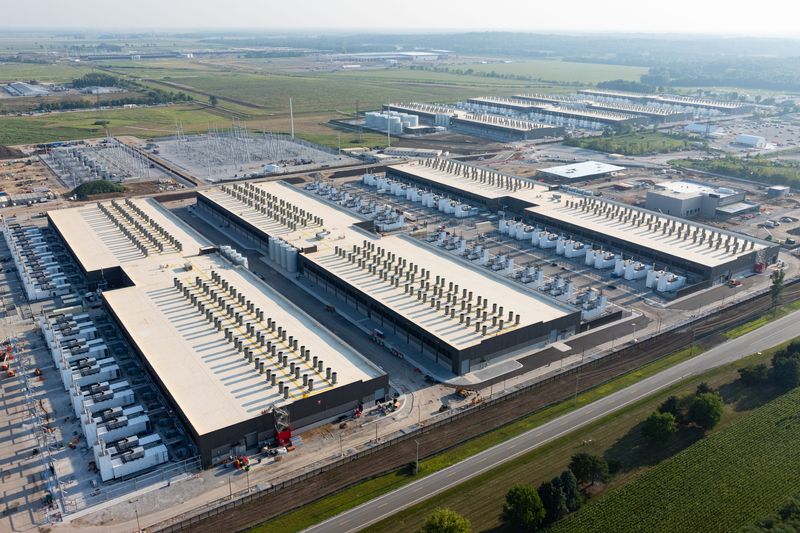
The words “data center” trigger a lot of different thoughts in those who hear or read them.

Repeatedly, critics have voiced concerns about things like how much power and water they might use, and how they could impact future electric bills.
As the Amazon Web Services (AWS) and Microsoft projects take shape in our community, those concerns are being voiced more loudly. It’s a healthy conversation to have, but it’s important that it be grounded in facts.
It’s no secret that data centers use electricity and need water. But that isn’t unique to data centers — it’s also true of hospitals, manufacturers and many facilities we’ve long welcomed because they create jobs and investment. County officials have gone to great lengths to understand the water and power needs of any potential users eyeing our area.
Our water comes from an underground aquifer. Scientists studied how much water naturally flows into it each year and how quickly it refills. Based on that, they calculated a safe daily limit on how much water everyone can pump without draining the aquifer faster than it recharges.
With that knowledge, the county has capped the amount of water that can be drawn daily from the aquifer by all users, including the data centers. That cap is ½ of the daily safe yield. Systems have been designed and will be built to ensure the daily draw doesn’t exceed that limit.
Indiana Michigan Power has done the same on the power side, and protections have been put in place at the state level. Under House Enrolled Act 1007 (2025), major electricity users, such as data centers, are required to pay at least 80% of the costs of new generation or infrastructure needed to serve them, rather than shifting those expenses onto households and small businesses.
Also, in 2024, a settlement between I&M, AWS, and Microsoft establishes new contract and payment requirements designed to prevent rate hikes for existing customers. I&M will present a rate case to the Indiana Utility Regulatory Commission this summer to reduce electric rates. That should go into effect sometime in 2027.
Large customers like AWS and Microsoft work with utilities years in advance, and in our case, will help fund grid upgrades, substations and system improvements that strengthen reliability for everyone.
In addition to the protections that have been put in place, we have two great data center partners who share many of our community’s goals.
Both want to protect the aquifer and the power grid; their businesses depend on them. Both have strong track records with other projects they’ve developed across the country. And both operate with ambitious, public sustainability commitments that shape how their facilities are designed and run.
AWS operates the largest portfolio of renewable energy projects of any company in the world. Its goal is to power operations with 100% renewable energy, a milestone it reports reaching ahead of schedule in recent years. On the water side, AWS has also committed to being water-positive by 2030. That translates into aggressive efficiency benchmarks and investments in local watershed restoration and water reuse projects.
Microsoft has committed to being carbon negative by 2030 and water positive by the same year — meaning it will return more water to the environment than it uses globally. Those goals drive real decisions on cooling technologies, infrastructure design and local water stewardship investments. Newer Microsoft data centers increasingly rely on advanced cooling systems that dramatically reduce — or even eliminate — continuous water use, including air‑based cooling during much of the year in cooler climates like ours.
None of this is to say questions shouldn’t be asked. They should. Responsible growth requires transparency and accountability. But it also requires recognizing that the companies investing here are not ignoring environmental impact — they’re leading on it.
Jeff Rea is the president and CEO of the South Bend Regional Chamber (jrea@sbrchamber.com).
This article originally appeared on South Bend Tribune: What to know about water and power use by data center
Reporting by Jeff Rea, Guest columnist / South Bend Tribune
USA TODAY Network via Reuters Connect