Indiana has a rich biodiversity with thousands of species in unique habitats, but growth and development have changed some of those fragile ecosystems and threaten the wildlife they support. IndyStar is highlighting some of these endangered species and documenting the work being done to conserve them.
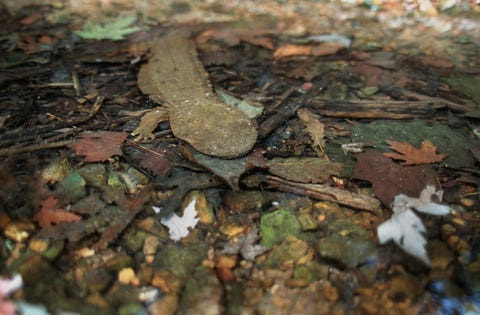
This Indiana endangered species goes by some not so attractive nicknames like snot otter, lasagna lizard and Alleghany alligator, but the most common name used to denote Indiana’s largest salamander conjures a more demonic air.

The story goes that the amphibian derives its name from the fact that it looks like a creature from hell and is bent on going back there, thus the name hellbender.
While the Eastern hellbender might not be particularly cute and fluffy, it is an indicator species for the health of waterways, the slimy version of a canary in a coal mine. These salamanders prefer clear high quality, quick-moving water that is well oxygenated. Such conditions typically indicate a healthy ecosystem that supports biodiversity.
The large salamanders that can reach up to two feet long also fit well into the aquatic food chain. They mostly prey on crayfish, culling the crustacean population to keep it healthy. Although hellbenders may occasionally feed on fish, the conventional wisdom that they negatively impact trout populations is a misconception since they far prefer diets of crawdads.
Despite Eastern hellbenders’ size, they are a rare sight since they prefer to spend the day hiding under large flat rocks and do most of their hunting and feeding at night.
These elusive salamanders are found only in the Blue River watershed, which stretches across Clark, Crawford, Floyd, Harrison and Washington Counties. Hellbenders used to have a broader range in the state, however, and efforts are underway to help the amphibians regain habitat.
Hellbender populations have had a difficult time coexisting with European settlers. In the early 1800s, articles suggested killing hellbenders by “shooting them three times with a musket.” When hellbenders were not being hunted, they faced other challenges that the Industrial Revolution brought to their pristine habitats, such as pollution, dams and logging. These stresses caused populations to decline until the 1970s when the U.S. passed the Clean Water Act.
Today, a statewide effort called Help the Hellbender is underway. Housed under Purdue University, the effort partners with DNR, the Nature Conservancy and others to breed the species in captivity and release them into the wild since hellbenders appeared to be unable to naturally reproduce in the wild.
The program proved to be a success in 2023 when Indiana researchers found a larval hellbender in the wild, showing that the species can once more successfully procreate in the wild.
Help the Hellbender efforts include educational programming for anglers, homeowners, farmers and anyone interested in conservation.
Anglers are the most likely Hoosiers to encounter a hellbender, and researchers encourage them to report sightings to natural resources professionals in the state, such as DNR conservation officers.
Homeowners and farmers can help contribute to the health of the hellbender population by reducing the amount of nutrients they use on their properties to improve soil health. Land management techniques like these can keep excess nutrient pollution from reaching the aquatic habitats hellbenders rely on to stay clean.
IndyStar’s environmental reporting project is made possible through the generous support of the nonprofit Nina Mason Pulliam Charitable Trust.
Karl Schneider is an IndyStar environment reporter. You can reach him at karl.schneider@indystar.com. Follow him on BlueSky @karlstartswithk.bsky.social or X @karlstartswithk.
This article originally appeared on Indianapolis Star: These endangered creatures aren’t from the underworld despite their name
Reporting by Karl Schneider, Indianapolis Star / Indianapolis Star
USA TODAY Network via Reuters Connect