SOUTH BEND — Almost two months after the Indiana State Board of Accounts released two reports from its recent audit of the South Bend Community School Corp., a supplemental compliance report has been made public that details, among other issues, more than $767,000 in questioned costs from the district during the audit period.
The report, which covers July 1, 2022, to June 30, 2023, outlines several instances of alleged noncompliance and breakdowns in SBCSC’s internal controls, ranging from the use of referendum money to the controversial Brown Administration Building renovation project. The auditors say the report has been forwarded to the Office of the Indiana Attorney General and St. Joseph County Prosecuting Attorney Ken Cotter.

“Deficiencies were identified in the School Corporation’s internal control system over financial transactions and reporting,” the report reads. “The School Corporation had not implemented an effective framework of internal controls to ensure the separation of incompatible duties … As a result, weaknesses in the internal control environment allowed instances of noncompliance to occur and remain undetected during the audit period.”
But in the report, SBCSC Chief Financial Officer Ahnaf Tahmid says the district has taken steps to address the issues the audit finds, adding that he sees it as a way to increase transparency.
When reached for a comment, SBCSC spokesperson Blair Yankey provided The Tribune a statement via email:
“The State Board of Accounts supplemental compliance report addresses financial activity and internal control practices connected to the 2022–2023 operational period. Since that time, the South Bend Community School Corporation has implemented and continues to strengthen internal controls, financial oversight measures, documentation standards, contract review procedures, and compliance practices across departments.
“The Corporation remains committed to accountability, transparency, responsible stewardship of public resources, and continuous operational improvement.”
Brown project
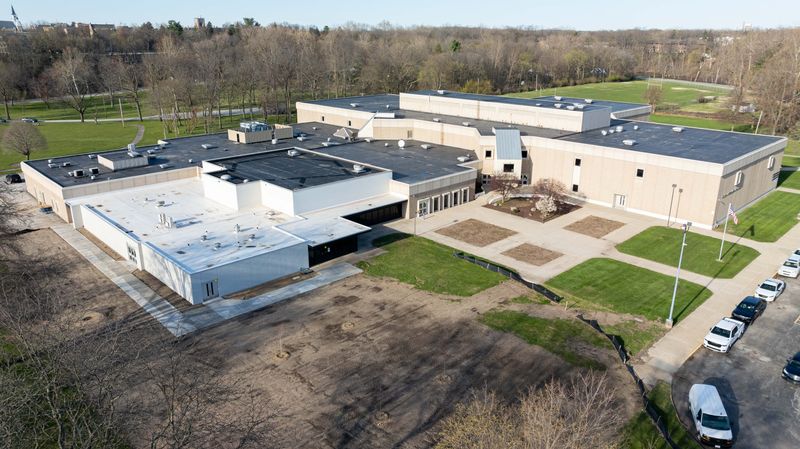
Auditors found that SBCSC did not adhere to “statuatory bidding and quoting procedures” when engaging vendors for the Brown project, and board meeting minutes did not include an emergency declaration or special process that would exempt the project from those requirements.
In April 2025, board attorney Pete Agostino told The Tribune that the state has a pre-approved list of qualified contractors who have already submitted a competitive bid for a particular job function. Districts can select a contractor from this list to avoid having to undergo a bidding process, which can help expedite the project, he said.
The procurement procedure is legitimate, Agostino said at the time, but the question remained whether the procedure was followed all the way through the project. He added that he and the investigators needed to continue looking into what happened before he could draw any conclusions regarding legality.
But the audit says the process SBCSC used violates the Indiana Code.
The report also includes several third-party vendors SBCSC engaged during the Brown project, but auditors found no formal contracts or bidding processes. One vendor, Alignment Ventures, was hired to paint at Brown beginning in January 2023.
According to the findings, SBCSC paid Alignment Ventures roughly $507,000 as of the end of September 2024, but no formal contract was established for the painting services.
The total cost also exceeded the $300,000 threshold that requires the project to be bid out, per the Indiana Code, auditors say. The report also finds that invoices were issued before purchase orders were entered into the accounting system.
SBCSC’s Tahmid previously alleged the Brown project was millions of dollars over budget. But Kareemah Fowler, who served as CFO during the Brown move, maintains the project was legal and under budget.
Dick Nussbaum, Fowler’s attorney, previously told The Tribune that Tahmid worked under Fowler as SBCSC’s budget director and “the number two CFO” during the Brown project and therefore should have been aware of the project’s details and procurement process.
“He should have been aware. If he wasn’t, that’s a problem,” Nussbaum said. “And if he was aware, and he’s out there saying it’s illegal, that’s more of a problem.”
Financial issues
The report outlines several instances of alleged noncompliance in SBCSC’s financials during the audit period. For example, as of June 30, 2023, five funds had cash balances that were overdrawn, auditors say.
One fund, listed as “Zone School,” presumably referring to SBCSC’s now-dissolved Empowerment Zone, was overdrawn by around $9.8 million. The audit attributes this to a lack of a formally adopted budget for the fund.
The auditors also report problems in payments to vendors. Of 48 vendor claims, the report says, 41 lacked documentation showing the invoice was audited or approved by a fiscal officer, and 37 did not include evidence that the goods or services were received or verified.
The report says that during a three-month credit card testing period, 22 claims, totaling around $14,000, were submitted without a complete line-by-line breakdown of goods or services and included only the summary total. And of 48 claims, auditors found that 39 were paid before receiving board approval, despite not meeting the criteria for prepayment.
Additionally, the report outlines an alleged issue with an agreement made between Fowler and Karen White of nonprofit corporation Reaching Higher Grounds. According to the audit findings, SBCSC agreed to pay the nonproft $25,000 in federal Elementary and Secondary School Emergency Relief Fund (ESSER) money.
However, the audit finds no evidence that the agreement between Fowler and White was presented to or approved by the school board. The audit adds that the check was made payable to White, not Reaching Higher Grounds, despite the organization’s status as a nonprofit.
“The SBOA is not aware of any policy authorizing Fowler, as the Assistant Superintendent of Schools, to negotiate and enter into contracts or purchase services for the School Board,” the report reads, “and the SBCSC did not provide any policy authorizing Fowler to do so.”
Credit cards
During the audit period, the report says, SBCSC incurred around $635,000 in credit card expenditures.
The school board had adopted a policy to “streamline payments and improve financial recordkeeping while maintaining internal controls,” the auditors say, but the policy was not properly implemented during the audit period. The report says this resulted in issues, including some staff members retaining credit cards rather than signing them out per transaction, and no available credit card log.
SBCSC credit cards were also used to pay for alcohol and personal items, the audit finds, which violates policy and allowable use standards.
In July 2022, the report says, a SBCSC credit card was used to purchase $190 in alcoholic beverages “for an event of undetermined purpose” coordinated by Milton Lee, Director of Communication Program and Athletics. The expenditures were charged to ESSER III funds, the audit finds.
Auditors add that 72% of the transactions reviewed lacked sufficient supporting documentation to justify the expenditure.
Conflicts of interest
The audit reports two alleged conflicts of interest from the audit period.
The first involves Chekesha Donaldson, who, the report alleges, was employed by SBCSC as an office intern from February 2023 to January 2024. Auditors say Donaldson is also listed as the registered agent, president and treasurer of Alignment Ventures, the company hired to paint at Brown.
Alignment Ventures allegedly received 20 payments totaling around $272,000 while Donaldson was employed by SBCSC, and some invoices indicate that the services were completed prior to Alignment Ventures’ formation in February 2023.
Auditors also find that nonprofit organization the Indiana Parenting Institute of St. Joseph County allegedly received around $1.2 million from the district between July 2022 and December 2024. Leslie Wesley, who served as a SBCSC board member from 2017 to 2024, was listed as the organization’s incorporator and chief executive officer.
According to the report, Welsey completed conflict of interest disclosures and submitted them to the board in 2021, 2022 and 2023, which the board vote to approve, with Wesley abstaining. However, no disclosure was submitted for 2024, the report says.
Referendum money
The report outlines several issues with SBCSC’s use of referendum money, finding that one out of 10 transactions tested was not compliant with the Indiana code.
According to auditors, SBCSC used almost $2,700 for “boulevard banners” and banner pole bracket sets at Riley High School, but they weren’t included in the controlled project referendum voters approved. The report also found that $65,000 in referendum money was used for expenses like staff parking fees, utility expenses and bottled water purchases for teacher lounges, none of which were included in the resolution the board passed or the referendum presented to voters.
SBCSC responses
At the end of the audit report, SBCSC’s Tahmid said the district accepts the auditors’ findings and comments. He adds that the district does not “perceive the audit process as a threat, but as a collaborative scope for self-improvement.”
“While the audit period (concluding June 30, 2023) predates my appointment as Chief Financial Officer in October 2024,” Tahmid writes, “our administration perceives this report as an invaluable diagnostic tool and a ‘stepping stone’ toward our goal of absolute transparency.”
Tahmid outlined several actions he says the district has taken to directly address the issues in the audit report, including implementing a comprehensive internal control manual, establishing more training and oversight, delegating duties and addressing financial inaccuracies and discrepancies.
SBCSC has also taken “decisive action” to address funds with negative cash balances like the Zone Fund, he said, and all assets valued at $5,000 or more have been documented.
Tahmid added that SBCSC has made significant changes to its credit card procedures. The district has withdrawn all credit cards from department heads, reducing the number of cards from over 15 to two, held by Superintendent Mansour Eid and Tahmid. Employees must also submit pre-authorization forms stating the intended purpose, and cards must be returned immediately with the proper documentation and itemized receipts.
“Regardless of which administration is in place, when SBCSC makes poor decisions, our taxpayers and students are the ones who suffer,” Tahmid said. “Therefore, our purpose is to correct systemic flaws, inefficiencies, and past failures to strengthen the Corporation.
“By doing so, we can prevent these issues from recurring and serve our community to the best of our ability.”
Email South Bend Tribune education reporter Rayleigh Deaton at rdeaton@usatodayco.com.
This article originally appeared on South Bend Tribune: State audit outlines problems with South Bend schools 2022-23 finances
Reporting by Rayleigh Deaton, South Bend Tribune / South Bend Tribune
USA TODAY Network via Reuters Connect