When the Rev. Jesse Jackson visited his mentor Rev. Andrew J. Brown in Indianapolis in 1970, he came looking for support for the Black Expo that he had started in Chicago three years earlier. While Brown, pastor of St. John’s Missionary Baptist Church, and a group from the Indianapolis chapter of the Southern Christian Leadership Conference attended the Chicago event later that year, Brown had a different vision for what an Indianapolis version of the expo might look like.
Rather than focusing on entertainment, as the Chicago expo did, Brown said, he wanted to focus on the many strides Black people had made.

“You have to give Black folks an outlook and help them remember the things that have brought them such a long way,” Brown said in a July 15, 1990, Indianapolis Star article, recalling Indiana Black Expo’s beginnings. “I want folks to appreciate being Black, and you can’t achieve that by just bringing in a lot of artists.”
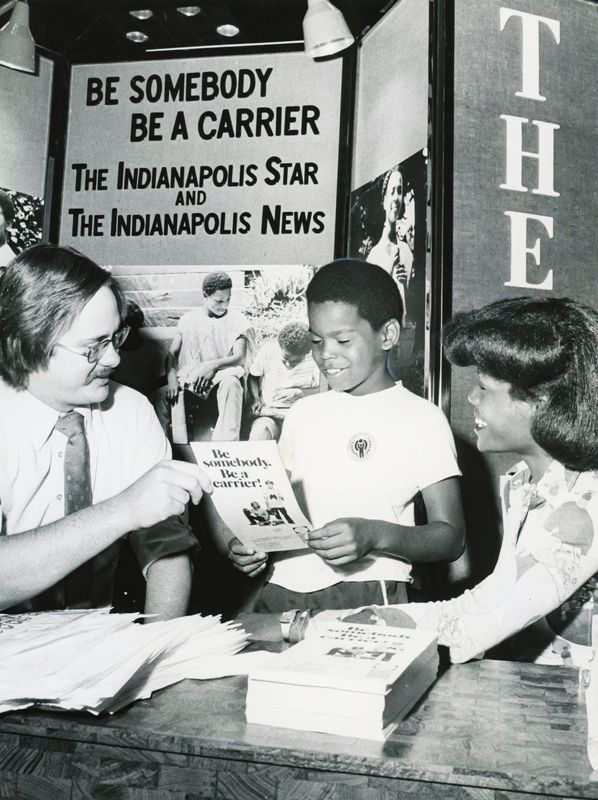
Brown recruited lawyer Willard Ransom and real estate mogul James Cummings. They borrowed $20,000 on their own credit and found additional volunteers. At first White-establishment corporate Indianapolis balked at renting the booths that would help pay for the event. Once the Indianapolis Newspapers Inc. company and Eugene Pulliam signed on, however, others followed.
An April 24, 1971, Indianapolis News story promised that the first Indiana Black Expo would “be unlike anything that the state has seen before in that its scope is broader than past efforts.” Eventually more than 75 vendors and businesses bought booth space.
The first year the emphasis was on jobs – specifically job opportunities in large firms and how to start one’s own business even without a college degree.
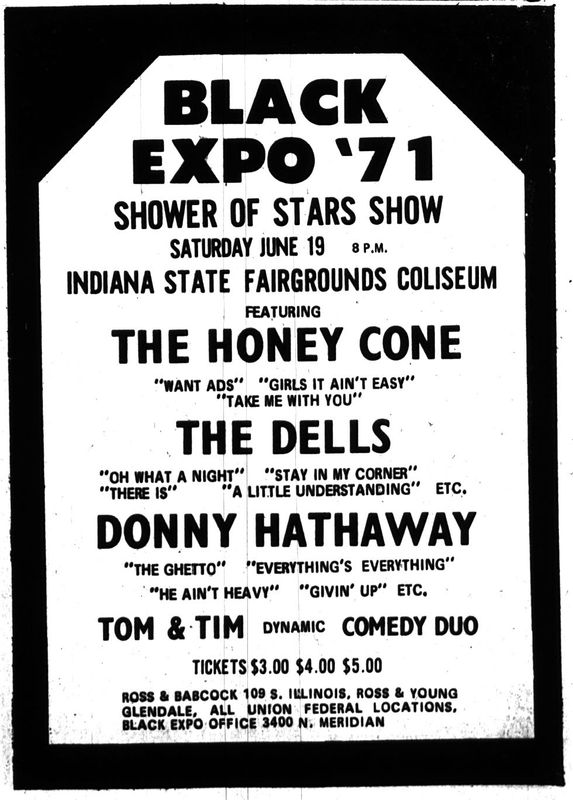
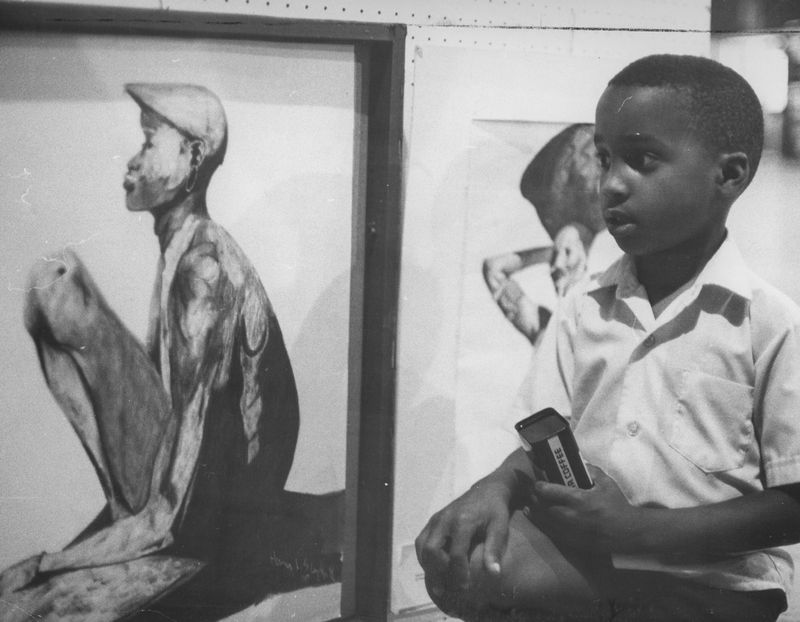
But the first Expo was not all business. A Miss Black Expo contest preceded the event and the two-day celebration at the Indiana State Fairgrounds featured exhibits on history, entertainment, a luncheon and a basketball game. Jackson and Rev. Ralph Abernathy, president of SCLC, made appearances. Admission was $1 for adults and half that for youth.
“What we’re trying to do is to insure that that segment of the structure that has been designated Black will be included in the mainstream of American society,” Cummings said. “The affair is planned by Blacks exclusively to promote the Black message.”
Coverage revealed the racial tensions at play at the time. An Indianapolis Star story the day after Expo concluded assured readers the event was “a positive expression of what blacks [sic] can do in the community, not a Black power rally.” A few paragraphs later, Cummings explained that one thing he hoped the event accomplished was to show that “Black people want to come together with white people and participate in the whole society.”
The first year raised almost $70,000 from more than 50,000 attendees, according to a July 7 article in the Indianapolis Star. After expenses, the event made more then $8,300, which was donated to the Indianapolis chapter of Operation Breadbasket, a program that aimed to improve the economic status of Black communities. The nationally televised basketball game made $12,000 that was donated to the Martin Luther King Foundation for scholarships.
In its second year, the Expo moved to the Civic Center downtown and drew nearly 100,000 people. Booth sponsors included a Black sports magazine and a Soul Brand scotch booth, a Black-owned business. That year the event added a golf tournament and Smokey Robinson and the Miracles performed.
The Chicago Black Expo was discontinued in 1976 but the Indianapolis version persevered and grew even though money problems plagued the event almost from the start. Just a few years earlier, its popular “Shower of Stars” concert that drew about 14,000 people had helped defray debt but by the late 1970s even the allure of that event had dimmed. By 1980, it owed $106,000, according to an article 10 years later in the Star.
In 1983 longtime volunteer Rev. Charles Williams resigned from his job in city administration to become Black Expo’s first paid president. The following year IBE hosted its first Circle City Classic football game, between teams from two Historically Black Colleges and Universities.
By the late 1980s, the annual event had grown to four days, was known as Summer Celebration and drew around 400,000 people. The following year IBE decided to mark its 20th year by expanding to a weeklong extravaganza. By the late 1990s, Indiana Black Expo was the largest and longest-running event of its kind in the nation, the Indianapolis Star reported.
Today the two-day event started 55 years ago has blossomed into Summer Celebration, which lasts 10 days, this year running from July 9 to 19.
This article originally appeared on Indianapolis Star: Retro Indy: For 55 years Indiana Black Expo has showcased community
Reporting by Shari Rudavsky, Indianapolis Star / Indianapolis Star
USA TODAY Network via Reuters Connect
By Shari Rudavsky, Indianapolis Star | USA TODAY Network