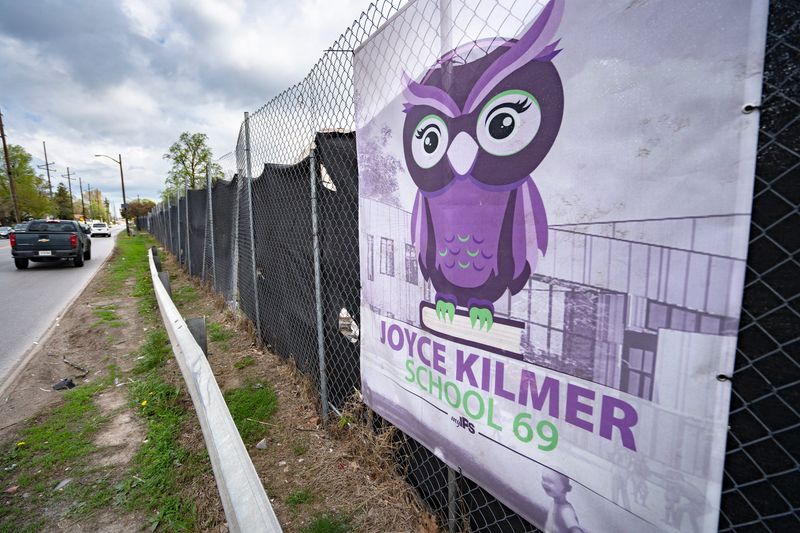
One of the most traumatizing acts of local government is closing schools. Indianapolis experienced that three years ago, when the city’s largest school district shuttered six.
Now, as the new Indianapolis Public Education Corp. prepares to ask voters this November for more money to fund traditional public schools and charters, the shadow of closings looms once more.

If voters reject the referendum, which will seek a yet-to-be-determined amount, Indianapolis Public Schools faces a budget catastrophe. If voters approve it, then IPS still faces an existential mismatch between its enrollment and open buildings.
No matter what, the district has to close more schools — perpetuating a cycle of trauma, instability and disenrollment.
Rebuilding Stronger did what it promised
When I wrote that IPS’ Rebuilding Stronger campaign failed, this was the crux of my argument. IPS drained its political capital on a reorganization that displaced some families, caused many others to flee and postponed an even more painful round of school closings that will lead to more families leaving.
IPS Superintendent Aleesia Johnson responded to my column in a social media post, countering that Rebuilding Stronger was about equity and increased opportunity — and that it succeeded on those grounds.
Johnson noted that IPS magnet schools had many more arts classes and advanced courses than neighborhood schools, and students of color had less access to them. Now, all sixth through eighth graders can take art, algebra and a foreign language, and IPS plans to fix every school building rated in poor condition within five years.
Johnson is right about that. She’s also a clear-eyed leader who acknowledges “expanding opportunity for students has not been cheap.”
She’s not exactly refuting my points about the state of IPS. She’s saying that Rebuilding Stronger’s mission was to ensure all IPS students have access to the same classes, activities and functional buildings as children in Meridian-Kessler.
That’s fair. But someone’s mission needs to be ensuring IPS becomes financially sustainable — or the district will eventually cease to exist.
An unelected board gets the hard job
That’s now the job of the Indianapolis Public Education Corp.
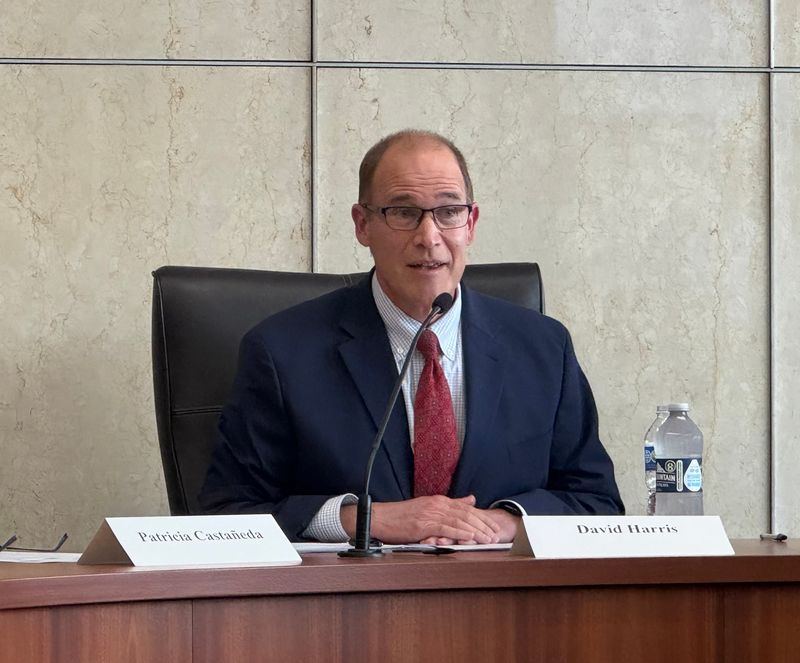
IPEC is a nine‑member board, appointed by the mayor, that manages money, buildings and transportation for all public schools — district and charter — inside the IPS boundary. It will decide which schools survive the next round of cuts.
The mere existence of IPEC evokes emotional reactions. You can understand why. It is a governing body created by the Republican-led Indiana General Assembly to oversee public schools in a blue city. That’s not exactly a formula for popularity.
State takeovers of troubled city school systems have, at best, a mixed record. But IPEC occupies a middle ground between state takeover, a fully autonomous school district and the all-charter system some reform advocates are pining for.
That separation, from both the Statehouse and IPS’ loudest critics and allies, gives IPEC a real opportunity to improve the landscape for public schools, including IPS.
Consider Rebuilding Stronger again.
After pushback, IPS softened some of the most disruptive parts of its original Rebuilding Stronger plan, per Chalkbeat Indiana. It kept Center for Inquiry School 2 open instead of closing and merging it, shelved the idea of bringing in a charter operator for a dual-language program at Harshman Middle School and saved the Montessori 56 building from demolition by moving Sidener Academy to a different, already-vacant campus.
You can say that’s an example of local school leadership listening to people and acting on feedback. But you could also argue those are examples of IPS trying to thread a needle between too many groups — parents, staff, charter partners and neighborhood advocates — advocating for narrow interests over what’s best for all students.
IPEC can ignore the politics
IPEC has the political insulation to make decisions that many parents and educators will dislike. That is the board’s opportunity — and also its hazard.
The unelected board met for the first time April 14, stepping into its assigned role of villain. It will determine IPS’ future while operating at arm’s length from families affected by its decisions. It’s not ideal. But neither is the situation in which IPS finds itself.
In a best-case scenario, IPEC makes painful short-term choices that bring financial stability to IPS, while also fairly allocating resources between IPS-run and charter schools. In a worst-case scenario, IPEC acts like an icy HR department, making thoughtless draconian cuts with no accountability and hastening disenrollment to a pace that leaves IPS in shambles.
The most suspicious traditional public school advocates are convinced IPEC exists to serve the latter purpose, wiping out IPS to make room for whatever the state cooks up next. It’s doubtful, though, that Democratic Mayor Joe Hogsett filled the board with members set on obliterating IPS. The state legislature could have done that on its own.
IPEC has incentive to succeed and leverage to implement long-term solutions. It can absorb the political backlash while IPS leaders, teachers and staff — some of the truest public servants I’ve encountered — focus on classes and activities.
“I would never claim that we’ve gotten it all right in IPS, but I will not accept a characterization of failure because that is untrue,” Johnson said in her response to my column.
She has succeeded in the areas where she set out to succeed. But IPS still needs a bridge between Johnson’s admirable objectives and financial sustainability. IPEC is the district’s last best shot.
Contact James Briggs at 317-444-4732 or james.briggs@indystar.com. Follow him on X at @JamesEBriggs.
This article originally appeared on Indianapolis Star: IPS’ new oversight board is here to play the villain | Opinion
Reporting by James Briggs, Indianapolis Star / Indianapolis Star
USA TODAY Network via Reuters Connect