While my job as a food writer and my competence as a home cook means I typically eat pretty well, I am still extremely capable of consuming some truly grim meals from time to time.
That’s especially true at lunch, when I am often merely another pawn in the pocket of Big Tupperware. For this reason, I can appreciate the artistry in any convenient pre-packaged meal that yields more than utility-grade nutrients. Take, for example:

The next dish you should try in Indy
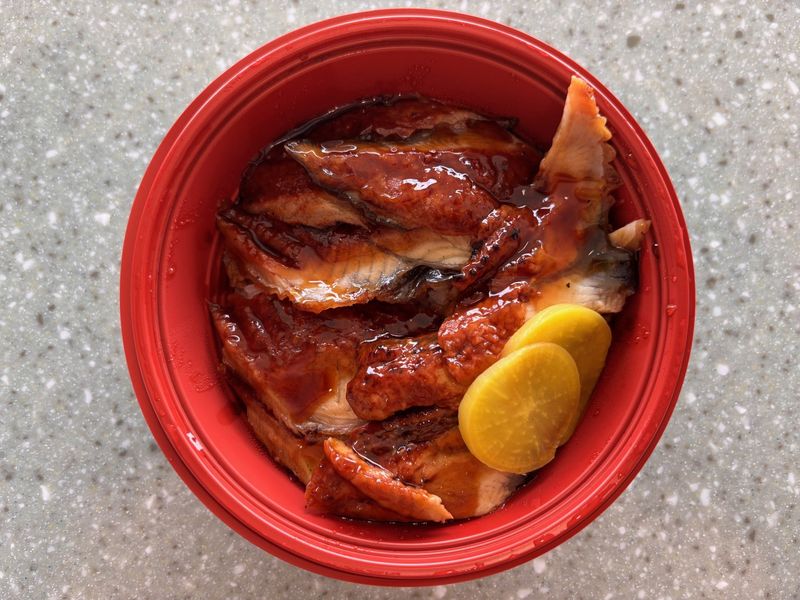
There’s a lot of good stuff going on in the prepared foods section of One World Market in Castleton, including sushi rolls for $4 to $17 and assorted meat-and-rice dishes for less than $15. But if you’re willing to spend a little in the name of maximizing your lunch enjoyment, it’s hard to beat the Japanese grocery’s unadon ($18.95).
This dish gets its name from the Japanese words donburi, a broad term for a rice-bowl dish, and unagi, meaning freshwater eel. Unagi has been a staple of the Japanese diet since the turn of the 19th century, and historians widely agree unadon was the first rice-bowl dish sold on the island nation during the late Edo period.
Prized for its relatively high fat content, eel stars in several hot and cold Japanese dishes. In this iteration, a quick stay on a grill gives the fish a lovely char while killing toxins in the eel’s blood, leading to a much more desirable flavor-to-poison ratio. For unadon, the eel strips are doused in a sticky-sweet sauce before and after grilling then served over rice.
That sauce is arguably the dish’s finest quality. The loosely defined combination of thickened soy sauce, sake, fish stock, rice wine vinegar and sugar is known by a handful of different names, most commonly nitsume or unagi no tare. Stateside, it’s simply referred to as “eel sauce.”
The almost malty tare wonderfully balances the richness of the eel atop One World Market’s unadon, producing bites that feel luxurious but not excessively so. Hearty flakes of unagi easily break apart between a pair of chopsticks, bound together only by a thin layer of skin that supplies additional flavor along with a nice snap of texture. And if you’re someone who is put off by seafood tasting like it came from a body of water, you’ll be comforted to know unagi tends to rate low on the fishiness index.
Because One World Market prepares its packaged meals the same morning it sells them, the unadon was more than fresh and soft enough to eat cold, even though the dish is traditionally eaten hot. I’ll admit I have grown up in a society that seems to place microwaving seafood on par with some war crimes, but you do you. It will taste just fine either way.
The dicey part of eating unagi is that freshwater eel is not exactly thriving as a species. The Monterey Bay Aquarium’s sustainable seafood advisory list Seafood Watch rates most eel eaten across the globe in the red, meaning it is farmed or caught via means that pose significant long-term risk to the environment.
As with many animal products, humanity’s early appetite for eel drastically outpaced our ability to responsibly cultivate it. Dams, climate change and illegal fishing in the wild, as well as the introduction of parasites and invasive species in freshwater farms, all make procuring unagi a difficult proposition.
It doesn’t help that many freshwater eels have to go to great lengths to reproduce in the first place. Members of the Anguilla genus family are catadromous, meaning they spend most of their lives in fresh water but must migrate to specific saltwater regions to reproduce (and then, notably, die). These voyages generally take months and thousands of miles.
Unsurprisingly, we haven’t quite cracked a way to make all of that happen safely in what are essentially oversized ponds. Once considered a fairly cheap and accessible foodstuff in East Asia and later England and the United States, many species of eel have since become endangered or critically endangered.
And while American eel usually rates as one of the more sustainable species, the outlook still isn’t great. Such is the ongoing dilemma for those who eat any animal meat regularly.
Evidently, my qualms are not enough to prevent me from enjoying the very rare luxury of some well-prepared unadon like the version at One World Market. Granted, I’ve always been heavily motivated by a good lunch.
What: Unadon, $18.95
Where: One World Market, 8466 Castleton Corner Drive, (317) 842-3442, one-world-market-indianapolis.square.site
In case that’s not your thing: One World Market’s to-go section features a rotating array of sushi rolls ($4 to $17), nigiri (vinegared rice topped with fish, egg or vegetable, $2 to $3), ramen and other noodle dishes (around $15) and assorted donburi ($14 to $19). You can also order hot miso soup or white rice at the front counter ($2.50).
Contact dining reporter Bradley Hohulin at bhohulin@indystar.com. You can follow him on Instagram @BradleyHohulin and stay up to date with Indy dining news by signing up for the Indylicious newsletter.
This article originally appeared on Indianapolis Star: INdulge: This Japanese eel is the next dish you should try in Indy
Reporting by Bradley Hohulin, Indianapolis Star / Indianapolis Star
USA TODAY Network via Reuters Connect