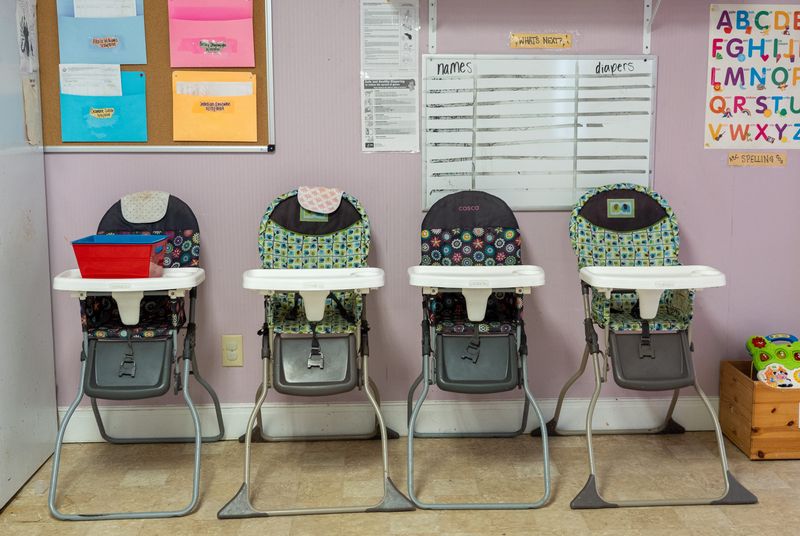
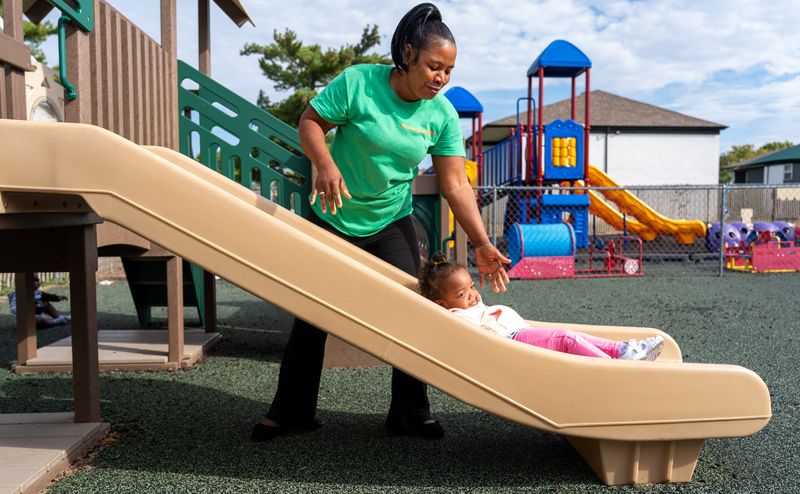
Katie Brooks has been searching for new day care options for her 1-year-old son for months, but everywhere she looks, the cost for any options close to her are unattainable for her family.
“Across the board, we’re looking at like anywhere between $1,200 and $1,600 per month,” Brooks told IndyStar. “Which is astronomical.”

Right now, she pays a close family friend to watch her son at home, but can only afford two days a week.
Brooks and her husband work full-time, and even with her husband getting a recent pay bump, they still can’t afford any full-time options near them.
“I’m just at the point now where I don’t even know if we can afford to have another kid,” Brooks said.
Parents across Indiana are having to make the same difficult decisions due to rising child care costs spurred on by a drop in state child care vouchers.
Families who heavily relied on the vouchers, or the Child Care and Development Fund program, which helps low-income families pay for child care, are also now seeing their vouchers be cut, sometimes as little as $1.
With day care enrollment down, and child care centers seeing less reimbursements for the vouchers, centers have resorted to price increases or be at risk of laying off staff or closing altogether.
Now, families like the Brooks’, who don’t even qualify for the vouchers, are having to pay for these increased costs.
The cuts to vouchers and reimbursement rates were announced mid-2025 when state officials said cuts were necessary to address a $225 million budget shortfall.
Recent survey results from Early Learning Indiana report that from mid-August to the end of November, 197 child care centers have had to close, and only 12% of providers reported full enrollment, according to their November survey of 442 providers across the state.
Child care workers also impacted by rising costs
More than 500 open positions were also reported by child care providers, with 61% of classroom-based programs having at least one teaching vacancy. Marion County has the most open positions in the state, according to the survey results.
Early childcare workers have historically faced low wages, and now, with these continued cuts, it could shrink the workforce even further.
April Lucas, a former day care worker, has seen the toll that these strained working conditions have placed on child care workers.
“Some of (the teachers) were working two jobs, sometimes three, and when you’re being overworked and you’re emotionally spent, it can take a toll on you,” Lucas said. “…having to witness people lose themselves to this job was really hard.”
Lucas said it was this exhaustion that eventually led her to quit being a day care worker, even though she loves working with children.
In the end, Lucas thinks it’s unsustainable to be a child care worker right now, especially if they have their own small children.
“Teachers and parents are juggling so much, and when it comes down to it, administration really pushes for numbers and daycares, they want to fill all the spots, and that’s their big thing,” Lucas said, which then leads to teachers burning out.
Some parents, like Brooks, are also worried about the strain the system is under and are cautious about how the devaluing of early child care learning overall will affect quality.
“It’s kind of like, if I go with the cheaper option, I feel like I’m almost putting my son in danger,” Brooks said after recently seeing high turnover in nearby day care centers.
Relief for families may be far off, as state officials announced in October that the freeze on any new vouchers will continue through the end of 2026.
Possible tax referendums to fund early child care?
A new group, the Preschool Choice Alliance, might have an idea to mitigate the state’s child care crisis, if lawmakers can agree.
The newly established group, headed by Patrick McAlister, the former executive director for the Indianapolis Mayor’s Office of Education Innovation, is proposing allowing communities to vote on their own referendums to support local preschool programs.
In a process similar to what traditional public schools go through to raise more money for operational costs, or construction costs, communities could vote on whether to raise property taxes to support paying for preschool.
Then an independent community organization, like a local United Way or Community foundation, would administer the program and is selected by the city or county government by contract.
However, getting lawmakers on board with a proposal that could mean raising taxes for some, especially during an election year, may be a hard sell, according to Axios.
Contact IndyStar K-12 education reporter Caroline Beck at 317-618-5807 or CBeck@gannett.com. Follow her on Twitter (X): @CarolineB_Indy.
This article originally appeared on Indianapolis Star: Indiana parents priced out as child care costs soar, vouchers cut
Reporting by Caroline Beck, Indianapolis Star / Indianapolis Star
USA TODAY Network via Reuters Connect