The city of Indianapolis brought in the bigwigs of hydrologic research to Eagle Creek Reservoir this week after facing months of pushback against plans to supply area water to Lebanon and the LEAP district, which will include an Eli Lilly manufacturing plant and Meta data center.
The controversial water supply program isn’t the city’s project — it was largely orchestrated, financed and designed by a web of agencies, including the state’s economic development arm, the Indiana Finance Authority and two utilities. But as water uptake and discharge plans involved Eagle Creek Reservoir, locals began calling on the city to take action. In a March letter, 21 city-county councilors called on Citizens Energy Group, Lebanon Utilities and the mayors of Indianapolis and Lebanon to slow the project down.

The councilors and Eagle Creek Park advocates noted the city, which owns the reservoir, retains one key facet of control: a longstanding water contract between Indianapolis and Citizens that dictates how much water the utility can withdraw from the reservoir. The contract expires July 1st, 2026.
As the city prepares for renegotiations, it is undergoing a comprehensive review of the water use agreement with Citizens, a spokesperson said in an emailed statement.
Negotiations “are not active,” said Emily Kaufmann, the assistant director of communications for the Office of Mayor Joe Hogsett, in a text to IndyStar. “The water evaluation of Eagle Creek Reservoir will not begin until data is received from the USGS survey.”
And this week, a massive survey of the reservoir began.
Bathtub math and water budgets
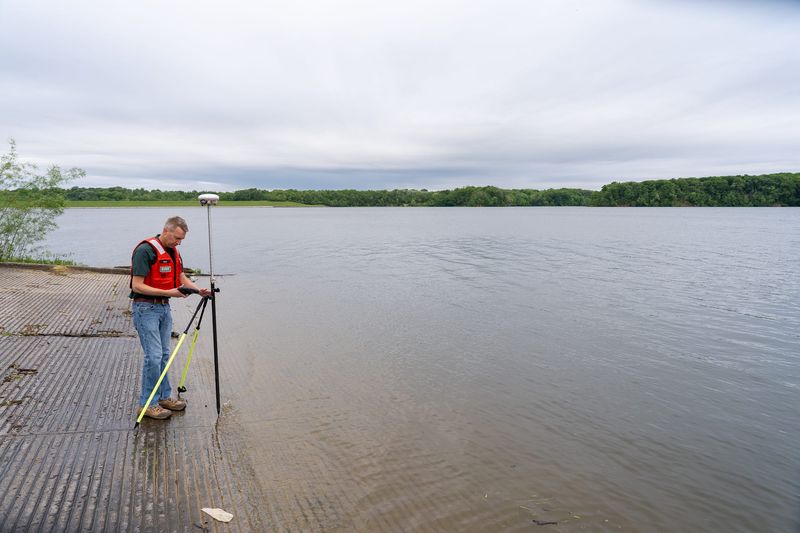
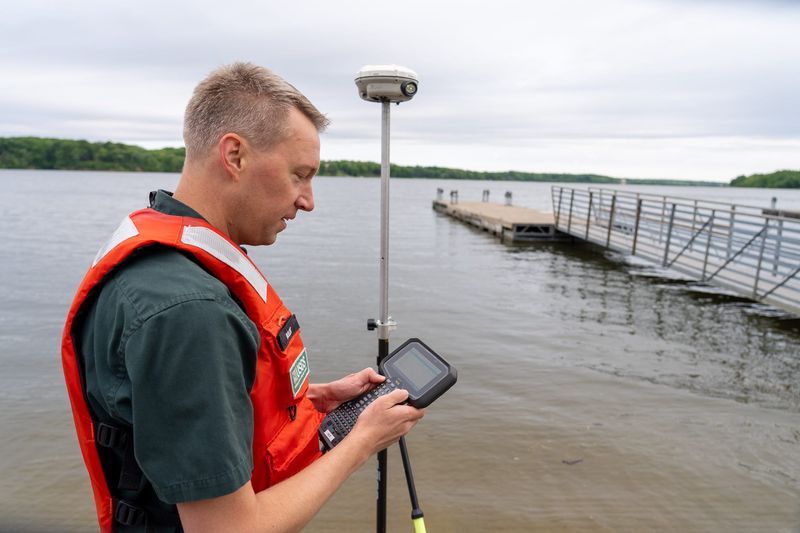
Early in the morning of May 18, a team of four scientists from the United States Geological Survey boarded two boats moored to a dock near the southern end of Eagle Creek Reservoir. They set out to create a map of the water body’s floor.
The Indianapolis Department of Public Works collaborated with the federal research agency to “better understand water levels and reservoir capacity,” department spokesperson Kyle Bloyd wrote in an email.
The crew spent three days scouring the reservoir’s surface, eating lunch on the water and, in the case of the researchers on the bigger boat, braving the rain. Equipped with devices that released beams of sound into the murky depths, the boats traveled back and forth, not unlike lawnmowers, over the surface to create a detailed image of the reservoir floor. The study, formally called a bathymetric survey, can help researchers understand how much water a reservoir can hold.
But the bathymetric survey is just one piece of the puzzle, said Martin Risch, a retired hydrologist and current member of the Eagle Creek Park Foundation Advisory Committee.
Risch wants to see the city gain a better understanding of how much water passes through the reservoir before officials finalize the new water use contract.
“Having a budget is a good way to predict what’s going to happen when demand increases and supply is limited. And we got to look at this reservoir long term,” he said.
Imagine the reservoir as a bathtub, said Jason Boldt, one of the USGS hydrologists conducting the survey. Figuring out the bathtub’s capacity will help bathers know how to avoid overflow.
In addition to a bathymetric study, understanding the reservoir’s inflow and outflow can help guide resource management, Boldt said.
“It’s just trying to get a picture, kind of like a financial budget, of what’s coming in, what’s going out and what do I have left to use,” Boldt said. “I always think data can help inform decisions and having more data is useful for understanding any situation.”
However, it is not clear whether the city will also create a water budget, which would require reservoir inflow and outflow data. Bloyd did not immediately respond to an IndyStar query about whether the city planned to create one. However, in an earlier email Bloyd said once the city receives the bathymetric data, which could take months, it “will be prepared to renegotiate the terms of the water withdrawal agreement in line with its findings.”
IndyStar’s environmental reporting is made possible through the generous support of the nonprofit Nina Mason Pulliam Charitable Trust.
Sophie Hartley is an IndyStar environment reporter. You can reach her at sophie.hartley@indystar.com or on X at @sophienhartley.
This article originally appeared on Indianapolis Star: Amid LEAP water outcry, Indy turns to scientists for Eagle Creek survey
Reporting by Sophie Hartley, Indianapolis Star / Indianapolis Star
USA TODAY Network via Reuters Connect