The robber pulled a handgun, waved it at the bank tellers and ordered them to fill a bag with cash. After they complied, the man hid the gun under the bag and walked out of the Chase Bank on West 56th Street.
Police later received a tip that led them to John Earl Turner Jr., an Indianapolis man with prior robbery convictions. The bank tellers subsequently picked Turner out of a photo lineup. He was convicted and sentenced to 35 years in prison.

The investigation into the 2007 heist — as described in court documents — seemed like a textbook case of a bank robbery solved with the help of eyewitnesses and an anonymous tip.
But more than 15 years later, attorneys representing Turner contend police and prosecutors got the wrong man. In court filings seeking a new trial, they claimed the investigation was riddled with mistakes and misconduct that led to their client’s wrongful conviction and imprisonment.
Turner’s attorneys approached the case from a unique perspective. They’re former Marion County prosecutors — lawyers who spent years of their legal careers working to send criminals to prison.
In Turner’s case, the attorneys contend the agency they once served put the wrong man behind bars. Because of that belief, they’ve spent countless, unpaid hours re-investigating what happened in a push to overturn Turner’s conviction.
But their efforts have, so far, been unsuccessful.
A Marion County judge earlier this year rejected their bid for a new trial. Turner is now appealing that ruling with the assistance of a state-appointed public defender.
Despite their recent setback, the lengths the former prosecutors went to free an imprisoned man is “incredibly powerful,” said Valena Beety, an Indiana University law professor. “Prosecutors don’t do that very often.”
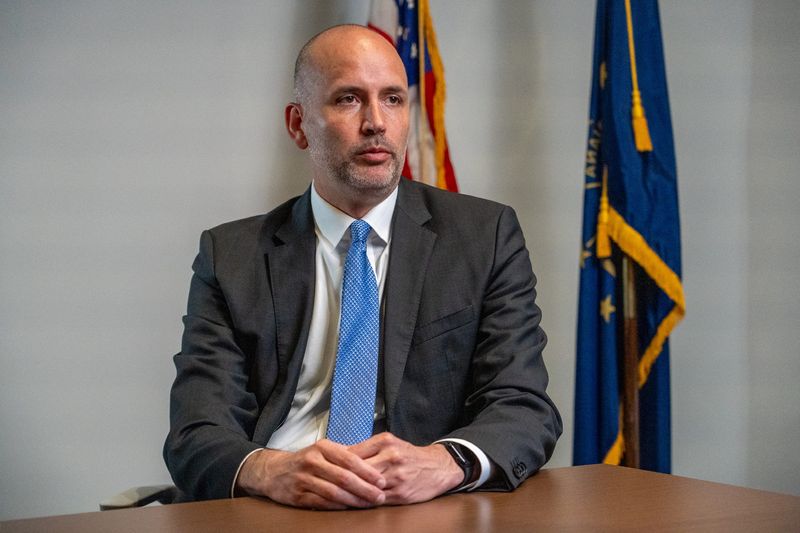
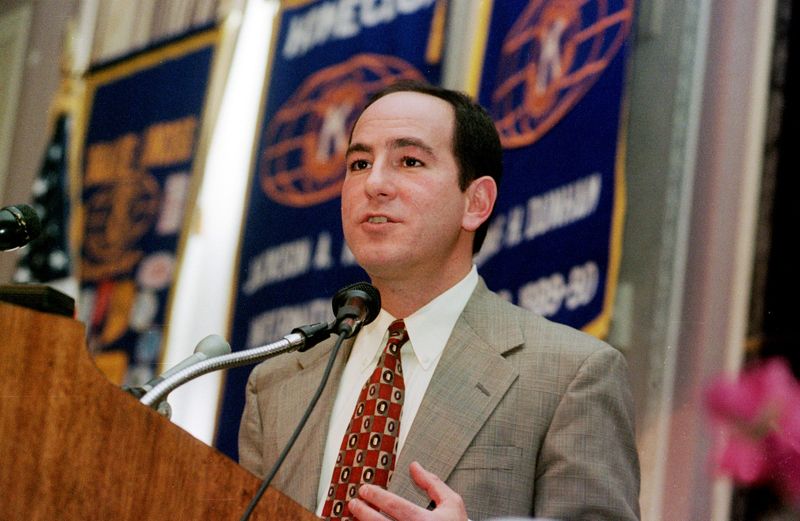
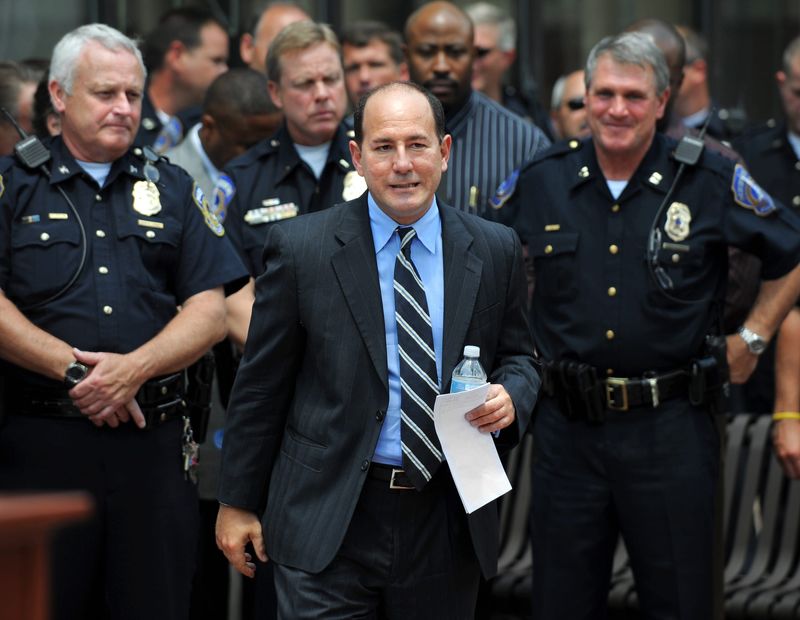
In their effort to reverse Turner’s conviction, Scott Newman, who led the Marion County prosecutor’s office for eight years, and two former deputy prosecutors, Toby Gill and James Edgar, argued the botched case was the product of a perfect storm:
At the crux of their case are what they contend was the eyewitnesses’ misidentification of Turner — and an anonymous Crime Stoppers tip mishandled by police and misrepresented at his trial.
In a probable cause affidavit, an Indianapolis police detective noted the tip identified Turner “as the person who robbed the bank.”
There was one problem: That’s not what the tipster told police.
In fact, the tip wasn’t even about the same robbery Turner was convicted of committing.
Man proclaiming innocence: ‘I’m living a nightmare’
Turner’s attorneys brought the case back to court last year, armed with what they believe was new evidence of his innocence.
They had discovered the discrepancy about the tip. They had obtained a new affidavit from one of the eyewitnesses claiming she felt pressured to identify Turner as the robber.
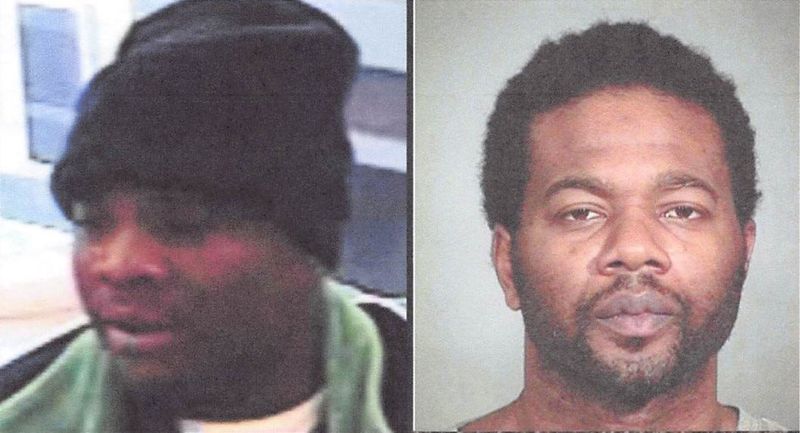
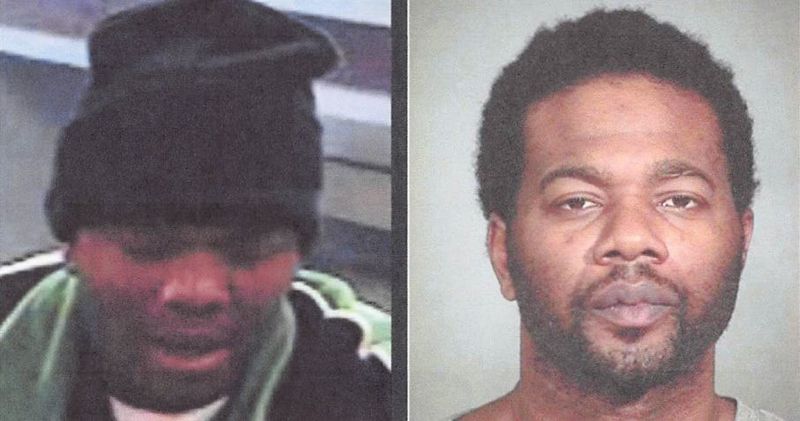
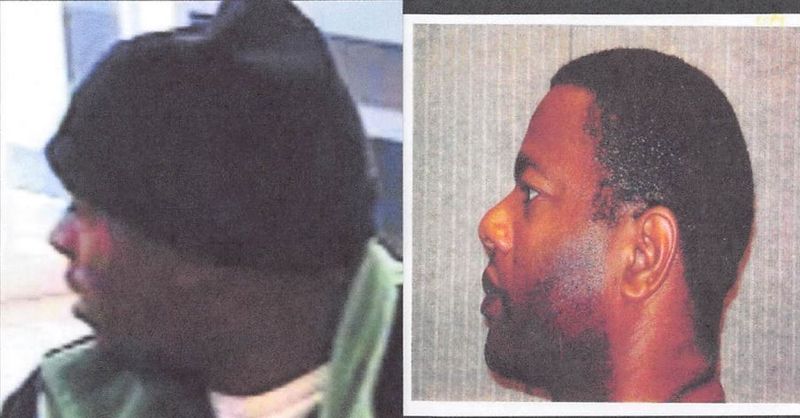
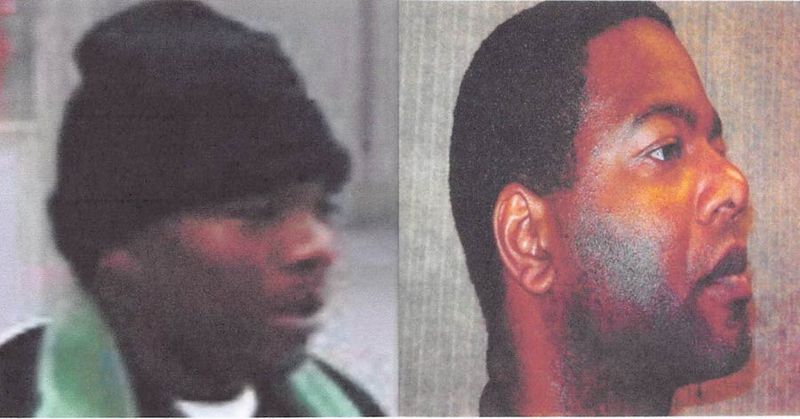
They also had secured an expert who compared photographs of Turner with images from the bank’s surveillance cameras and found several differences in facial features.
In his more than 30 years as an attorney, Newman said he remembers only two cases in which he was 100% convinced of a person’s innocence.
One of them, he told IndyStar, “is John Turner in this case.”
The criminal justice system “implores” people to believe in it, Newman said, but what Turner’s case has shown is it “can’t be trusted.”
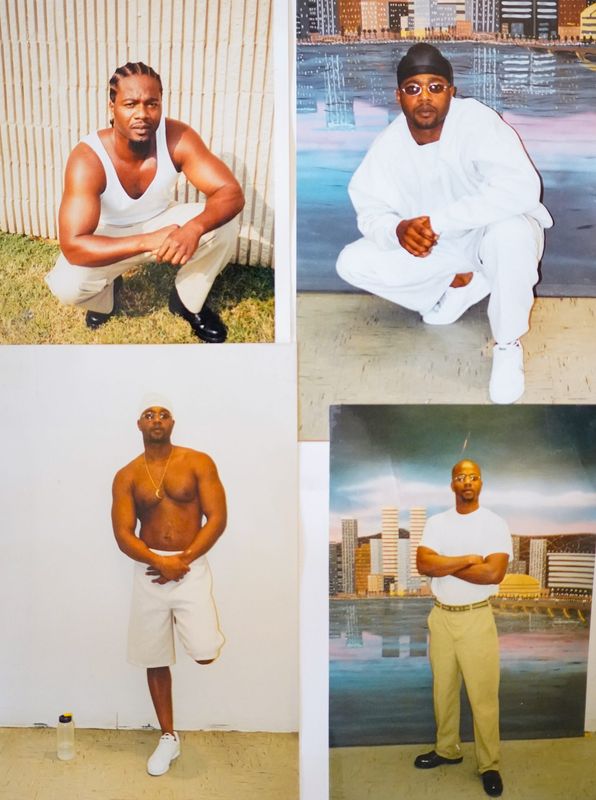
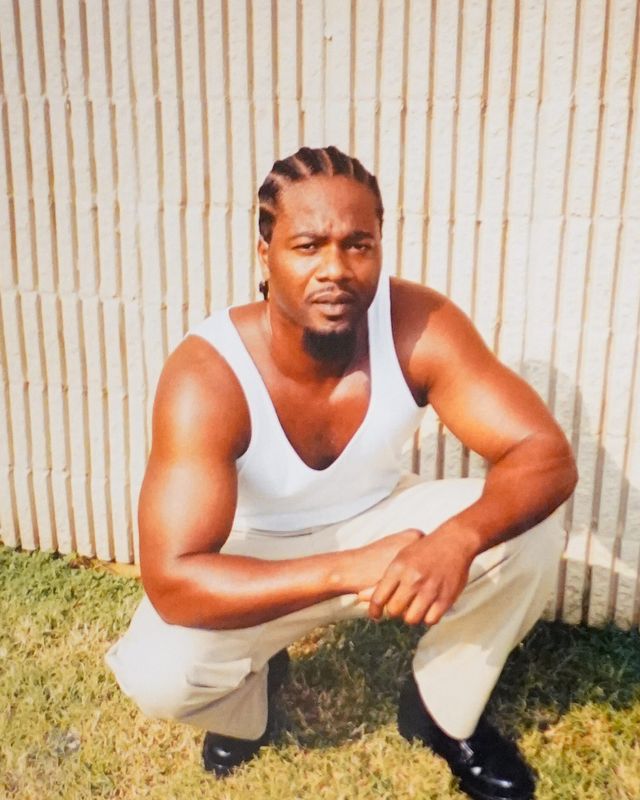
Turner, now incarcerated at the Miami Correctional Facility, does not claim to be free of any wrongdoing. The second oldest of eight siblings admitted being a problem child. He rebelled, jumped from school to school, and was shoplifting by the time he was 13. He left home at age 15 and was convicted of robberies as a young adult.
But, Turner insists, he didn’t commit the crime that sent him to prison in 2008.
“I’m living a nightmare,” he told IndyStar.
Current prosecutors fought to uphold conviction
The Marion County Prosecutor’s Office fought to uphold the conviction, despite the new claims Turner’s attorneys raised.
The agency argued in court filings that the expert’s report about the photographs was not definitive, that Turner’s conviction was not based solely on the tip, and that the eyewitness identifications remain intact.
The agency’s Conviction Integrity Unit, formed in 2021 to examine cases of possible wrongful conviction, also declined to take up the case. A spokesman said in a statement the unit conducted a “thorough review” and determined there was “insufficient evidence” to challenge Turner’s conviction.
In an email to Turner’s attorneys after they asked the unit to review the case, co-director Kelly Bauder acknowledged the man in the video “does not really look a lot like” Turner, but added 12 jurors who saw the footage believed he was the robber and convicted him.
Marion Superior Court Judge Kevin Snyder ultimately denied Turner’s request for a new trial. He wrote in his ruling that jurors had “ample evidence” to decide whether or not the person in the footage is Turner despite “confusion” over the tip.
Gill, one of Turner’s attorneys, said the ruling was a numbing disappointment.
“We wouldn’t have taken the case,” Gill said, “if we didn’t feel he’s innocent.”
The tip — and the ‘confusion’
Two bank robberies happened in the same northwest-side area within an hour of each other on Oct. 22, 2007.
The first was reported at 9:08 a.m. at a Chase Bank on Lafayette Road, according to a police report.
The second — the one Turner was convicted of committing — happened at 9:50 a.m. at another Chase branch about three miles away on West 56th Street.
Indianapolis Metropolitan Police Department Det. G. Leon Benjamin released surveillance footage from inside the West 56th Street bank to the media to try to identify the robber. A week later, the tipster called. She told police she saw the video on television and named Turner and another person as the robbers, according to a written record about the tip.
Benjamin, a 22-year IMPD veteran, initiated an investigation into Turner for robbing the West 56th Street bank based on the tip.
The problem: The tipster did not tie Turner to that robbery.
Instead, the female caller accused Turner of committing the other bank robbery on Lafayette Road — for which someone else was already charged. Days before the tipster called, police arrested another man for the Lafayette Road robbery, according to records the attorneys obtained. That person was swiftly convicted.
Still, according to the affidavit, Benjamin put together a photo array that included Turner’s picture. Two tellers from the West 56th Street bank identified him.
Turner, who said he was shopping on the other side of the city with his then-girlfriend when the robbery occurred, was arrested in 2008. He recalled seeing the surveillance footage during a meeting with his original attorney.
“I just burst out laughing,” he said. “I said, ‘that’s not me.'”
Turner said he was not worried.
He expected the prosecutors and a jury of his peers would look at the video and “see the difference between two Black people.”
Prosecutor: ‘Everyone is wrong?’
Turner was tried twice for the robbery.
During the first trial, the two bank tellers testified they were 100% certain he was the robber, according to court records. A third witness, a customer, could not identify Turner.
The jury couldn’t reach a verdict and the judge declared a mistrial.
During the second trial, the customer changed her testimony. She, too, was 100% certain Turner was the robber. Years later, she would recant.
Rodney Cummings, a deputy prosecutor at the trial, told jurors during his closing argument that to find Turner innocent, they had to believe that everybody — Benjamin, the three witnesses and the tipster — were all wrong.
“Does that really make sense?” Cummings asked jurors, according to court records. “Does that make sense to you that everybody involved in this case has made a mistake?”
Instead, Cummings added, “the evidence is powerful, overwhelming, uncontroverted and undisputed. The person that robbed the Chase Bank on Oct. 22, 2007, is the defendant.”
The jurors — not knowing the tip was about a different robbery — found him guilty of all charges.
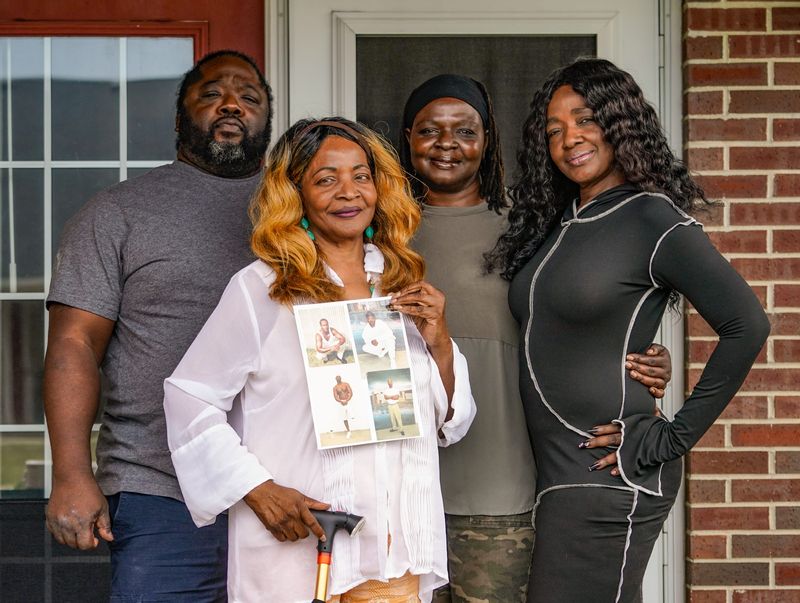
Still, his mother believed he would come home.
“I’ve always had hope,” Jacqueline Turner said, “that somebody would have the common sense and would see this is not the same person.”
Turner’s older sister wasn’t as optimistic.
“I figured that once they deliberately locked in on John, he was going to have to fight for his life to come home,” Sandee Turner said. “And that’s exactly what he’s been doing for almost 20 years.”
Unlikely allies: Former prosecutors and convicted robber
Turner began writing to Newman after learning from news reports about a case in which one of Newman’s clients was cleared of charges. He wrote several letters urging the former prosecutor to look at the evidence in his case, including photos from the surveillance footage.
Eventually, Newman was moved to respond. What he saw troubled him.
“It didn’t look like it was the right person,” he recalled.
The case continued nagging at Newman, who had served as Marion County’s elected prosecutor from 1995 through 2003, as they continued to talk.
“How can this be?” he remembered asking. “How could you have been convicted?”
In 2021, he decided to help Turner.
“It was a turning point in my emotional state,” Turner said. “At that time, I was very angry … Very dissuaded by the system. To have somebody really believe … gave me a reason to live.”
Newman enlisted Gill, one of his former deputy prosecutors. Another former deputy prosecutor, Edgar, later signed on to represent Turner.
Gill, who took the lead on the case, said she became convinced of Turner’s innocence after seeing the surveillance video.
“I know that my mouth dropped,” she said. “This is not the same guy.”
‘This was not the right thing’
In their quest for a new trial, Turners new attorneys took special aim at the prosecutors, accusing them of eliciting testimony that misled jurors about the origin of the tip, according to court filings.
They singled out Cummings’ closing argument in which he connected the tip about the wrong robbery to Turner. Newman called it “beyond the pale.”
The “beauty” of being a prosecutor is having “the discretion to do the right thing,” Gill said. “And this was not the right thing.”
Cummings, now the elected prosecutor of Madison County, said he has no memory of the case — one of 44 criminal cases he tried as a deputy prosecutor in Marion County. Cummings, who has known Newman for years and considers him a “good friend,” added: “I respect Scott … I appreciate his passion.”
But Cummings also described the effort to overturn Turner’s conviction a “desperate attempt to advocate zealously” for Turner.
“Had I had any doubt that this man was guilty,” Cummings said, “we wouldn’t have tried him.”
The fact the tip was about a different robbery seemed to matter less for the current prosecutor’s office because the tipster had named Turner.
Clarke Campbell, a Marion County deputy prosecutor who handles post-conviction petition cases, argued in court filings that even if Cummings’ comments, which were a rebuttal to the defense’s closing arguments, were “objectionable,” they were “brief” and “very minor” compared to the “totality of the evidence” against Turner.
Campbell also dismissed the third eyewitness recanting her testimony, saying there’s no evidence of tampering during the trial.
And he raised another possibility: That the caller was actually referring to the West 56th Street robbery but gave police the wrong location because she “was confused.”
Bauder, of the prosecutor’s Conviction Integrity Unit, described Cummings’ comments as “prejudicial” and “inappropriate,” according to her email to Turner’s attorneys. The problem, she said, was Turner’s trial attorney did not object.
T.R. Fox, Turner’s public defender at that time of his trials, said he did not realize the tip was about a different robbery, according to an affidavit. He also acknowledged having a high case load when he was representing Turner, trying up to a dozen jury trials around that time.
Turner’s new attorneys have also been critical of Benjamin, whom they accused of “embellishing and exaggerating” the robber’s physical characteristics to more closely match Turner, according to court records.
Benjamin testified during the first trial that the robber was between 5’8″ and 5’10” with a medium build. He testified during the second trial that the robber could be as tall as 6’0″, the same as Turner’s height.
In August 2008, a few months after testifying at Turner’s trial, Benjamin retired from the police department following allegations of drunk driving. Prosecutors had charged Benjamin with a felony and five misdemeanors for crashing his police cars during two separate incidents.
They were the latest in a string of alcohol-related incidents throughout the former detective’s career. A police department spokesman told the Indianapolis Star in 2008 that officials took “swift action” by placing Benjamin on administrative leave. But according to news reports around that time, the agency did not act as aggressively following similar incidents years earlier.
Benjamin first crashed his police car in 2002. He was neither arrested nor disciplined, according to news reports. Four months later, he was promoted to detective. He was suspended for 10 days two years later after he was found drunk in his stopped police car. Again, he was not arrested — this time because no one saw him driving, although his blood alcohol level was three times the legal limit.
Benjamin died in 2014.
‘Not what I had hoped the outcome would be’
Turner’s attorneys also presented evidence they believe should’ve been presented at trial: an expert who could’ve shown jurors the eyewitnesses were mistaken.
Lora Sims, whose work involves conducting facial analysis and providing expert testimony, did side-by-side comparisons of Turner’s pictures with images taken from the surveillance footage. The director of the Face Center of Excellence at Ideal Innovations Inc. said she compared several facial features and concluded there were differences.
In the video, for example, the nose looks wider, the nostrils flare more, the cheekbones are more prominent, and the jawline appears rounder, Sims explained.
The structure of the mouths are also “very different,” explained Sims, who testified during a hearing last year. In Turner’s photo, the upper lip is more well defined, with a “deep valley” at the center, she said. That didn’t exist in the image from the footage.
And the right ear in the footage appears to have an attached lobe that connected to the head, Sims said. Turner does not have an attached lobe.
Sims’ opinion is that the images are — “to some extent” — not of the same person. She said she couched her opinion that way because of the low quality of the video and the fact that the robber’s head covering blocked some facial features, such as his eyebrows and parts of his ears. Because of this, Sims explained, she was unable to reach a “stronger decision.”
Campbell, the Marion County deputy prosecutor, argued Sims’ report and testimony didn’t exonerate Turner.
“The most that could be said is that it is possible the person in the surveillance video mightnot be … Turner,” Campbell wrote in court filings.
In his ruling denying Turner’s request for a new trial, the judge found Sims’ testimony is not likely to lead to a different result at trial.
“I respect the judge’s decision. He made it based on what he felt was correct and legal,” Sims said. “It’s not what I had hoped the outcome would be.”
A renewed focus on eyewitness misidentifications
The fight to overturn Turner’s conviction came as Indiana officials debated and ultimately passed reforms intended to ensure more accuracy in eyewitness identifications.
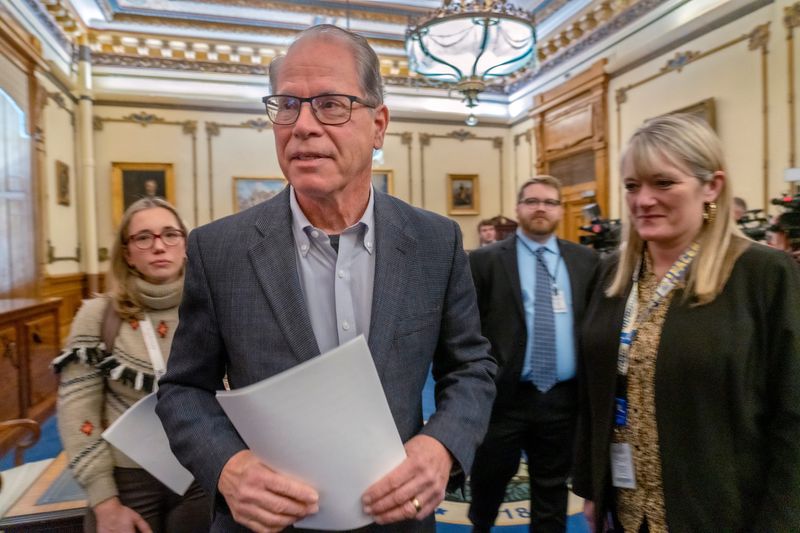
Last month, Gov. Mike Braun signed a bill adding more rules on how police conduct photo lineups, including prohibiting talking to witnesses about anything that might influence their identification.
Beety, the IU law professor and a founding member of the Indiana Innocence Project, which submitted court briefs supporting Turner’s appeal, said the new law shows officials recognize the inherent weaknesses of eyewitness identifications. A review of exoneration cases reveals that eyewitness identifications, which are often relied on by law enforcement, is among the leading causes of wrongful conviction.
Eyewitness misidentification was a contributing factor in nearly 1,200 out of more than 4,000 exonerations nationwide, according to the National Registry of Exonerations, a database put together by the University of Michigan, Michigan State University and UCI Newkirk Center for Science and Society.
In Indiana, eyewitness misidentification was a factor in 22 out of 57 exonerations.
The new law passed with wide support from members of both parties, including some who acknowledged existing rules needed to be strengthened.
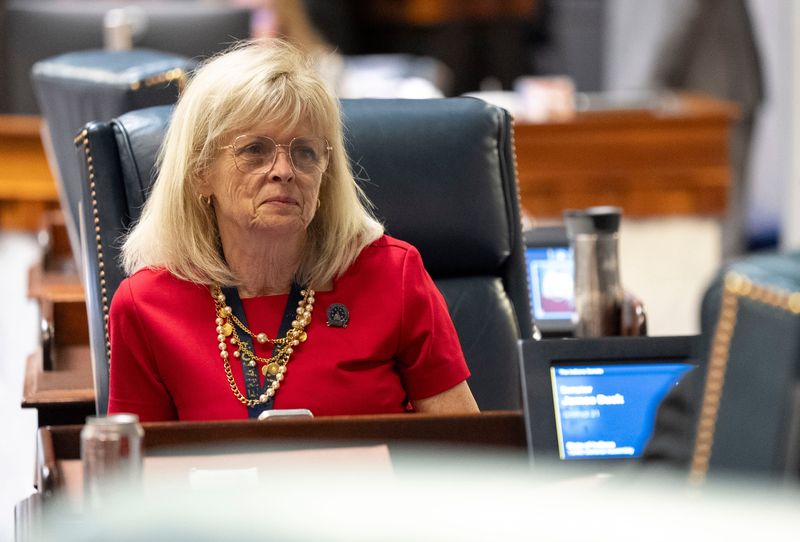
“In talking to law enforcement about this … some of them have said to me, ‘We have standard operating procedures. Why do we need this?'” Sen. Liz Brown, R-Fort Wayne, said during a committee hearing in February. “But … when there’s a mistake, it’s a horrific mistake.”
Family speaks out: ‘My heart hurts’
To Turner, the judge’s ruling keeping his conviction in place was more shocking than the jurors’ guilty verdict nearly two decades ago.
“The Indiana judicial system is making it known that we don’t accept the truth coming from a Black man and Black families,” Turner said.
“It’s not justice,” he added. “Because the people entrust the judicial system to bring the right person to justice.”
Turner’s incarceration amounted to nearly 20 years of missed holidays, birthdays, dinners, footballs games, his older sister said.
“My heart hurts …. Because me and John were just super close,” Sandee Turner said. But more than that, Turner’s imprisonment has led to deep resentment against the justice system. “How do you just do that to somebody?”
Turner has less than a year left in his sentence. But to his family, especially his elderly mother, they shouldn’t have to wait.
“I’m getting older,” Jacqueline Turner said. “I have to count my days when my son comes home. I’m counting my days.”
IndyStar sports columnist Gregg Doyel contributed to this story. Contact IndyStar reporter Kristine Phillips at (317) 444-3026 or at kphillips@indystar.com.
This article originally appeared on Indianapolis Star: ‘I’m living a nightmare:’ An anonymous tip helped convict him. It was about the wrong crime
Reporting by Kristine Phillips, Indianapolis Star / Indianapolis Star
USA TODAY Network via Reuters Connect