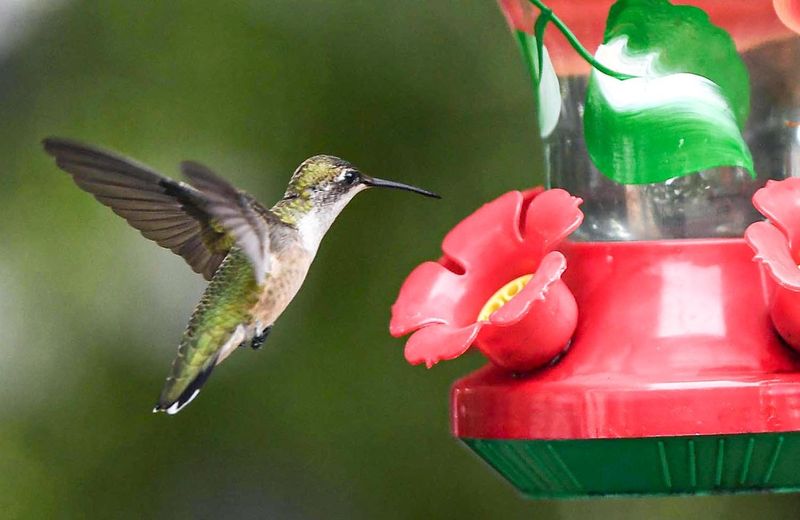
Indiana’s tiniest and perhaps most charismatic birds are on the brink of returning in full force from their winter down south.
Dozens of sightings have been uploaded recently on citizen science websites, documenting birds likely passing through toward summer residences farther north. A male ruby-throated hummingbird was spotted at a feeder in Whitestown last week, and in late March, folks at a luncheon party reported feeling a little teary-eyed after spotting four hummers buzzing through Greenwood.

Most of the hummingbirds that summer in Indiana are still migrating north, following the trail of spring blooms and insect explosions from Central America up to the Midwest.
“Right now is about the time, these last two weeks of April, that we start seeing them here in Indiana,” Lina Rifai, an ornithologist at Indiana University Kokomo, said. “In a week or so, we should start seeing them coming to our feeders.”
Once they’re back, the hummingbirds aren’t easy to ignore.
“They’re tiny birds with the attitude of a T-rex,” Rifai said.
Even in urban areas like Indianapolis, hummingbirds will soon be seen buzzing through water fountains, feeders full of nectar and front yards stuffed with native plants. Because they rely on creepy crawlies for fat and protein, hummingbirds frequent areas that don’t control insect populations with chemical sprays.
After their arrival, ruby-throated hummingbirds — Indiana’s only nesting species — will get busy. The birds quickly find mates, build nests and rear their young. A handful of other hummingbird species have been spotted inside Indiana, but the sightings of Black-chinned and Rufous hummingbirds, while exciting for birders, are rare.
Adult males will begin their migration back south in early August, while adult females stick around a few weeks after hatching their last brood of chicks to fatten up for the long journey.
“These are my favorite hummingbirds to band during migration in the fall,” Rifai said. “I call them little chunky nuggets. When I release them, they sound more like a helicopter trying to take off because they’re pretty fat at that point.”
Rifai, who will study hummingbird movement across urban and rural areas this summer, said that scientists rely on reports from citizens to better understand the birds’ migration habits.
“That’s what keeps us going,” she said.
Hoosiers who spot the tiny creatures can report sightings on Hummingbird Central or eBird.
IndyStar’s environmental reporting is made possible through the generous support of the nonprofit Nina Mason Pulliam Charitable Trust.
Sophie Hartley is an IndyStar environment reporter. You can reach her at sophie.hartley@indystar.com or on X at @sophienhartley.
This article originally appeared on Indianapolis Star: Hummingbirds are migrating back to Indiana. When you can see them
Reporting by Sophie Hartley, Indianapolis Star / Indianapolis Star
USA TODAY Network via Reuters Connect