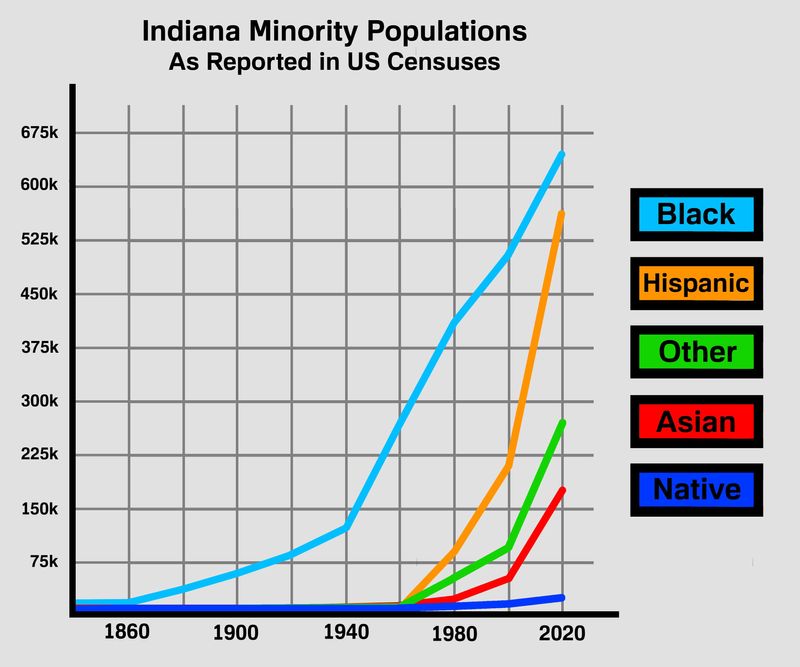
LAFAYETTE, IN — The United States has historically been a diverse nation made up of immigrants from around the globe. Yet the state of Indiana seemed largely untouched by non-European immigrants in the late 1800s and early 1900s.

It wasn’t until the mid-1950s when the Hoosier state began to see notable increases in immigrant populations.
According to 1940 census data, Indiana was about 96% white with a total population of 3.4 million. Today the Hoosier state is around 77% white with 4.6 million residents, making it the 18th least diverse state in the nation, according to census data.
As Indiana’s demographics have shifted over the years, more Hoosiers have begun to look inward at their own family tree. Some want to know how they fit into the evolving identity of Indiana; others feel the need to learn more about forgotten family history.
No matter the reason, experts say the first step in any genealogy journey begins right at home.
Amy Vedra, the director of reference services at the Indiana Historical Society, claims the best way to start is by starting with what you know.
“I always start with myself and work back from there,” Vedra said.
Writing out a basic family tree and knowing the area your family lived in is a good starting point, she said. It also helps identify your specific family, especially if you have a common last name.
“Then start talking to the oldest living members of your family, see what … has been passed down,” she said.
Continue to fill in the family tree and write down important information like birthdays, death dates and secondary names.
Above all else, two of the most important features for discovering your family are names and locations, the director said. With that knowledge, most people can be found in databases like the national census.
From there, Vedra encourages researchers to look at a variety of sources like national census data, birth and death records, and any online records. Although some of these sources may be difficult to find or navigate, libraries and organizations like the Indiana Historical Society often hold local family records that can be used for genealogy research.
“Then once you have that information, you can start looking at newspapers and local records,” the director said. “Then go on to more specific records on the county, city or state level.”
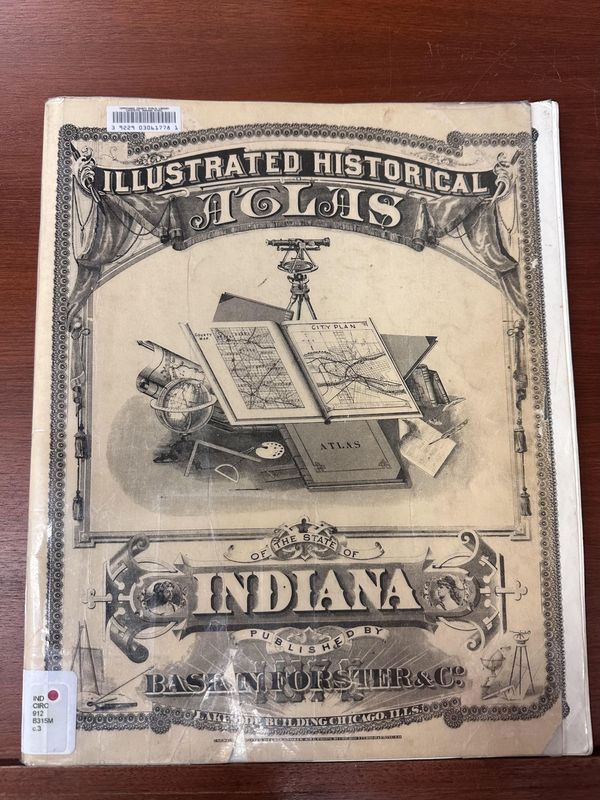
If a branch of the family tree has a strong connection to a specific town, contacting the local library is a great way to learn more. Many of these libraries will hold atlases of past landowners, newspapers and marriage records for the surrounding area, she said.
Many of these sources are available for free in libraries and historical centers across the state, including in Lafayette.
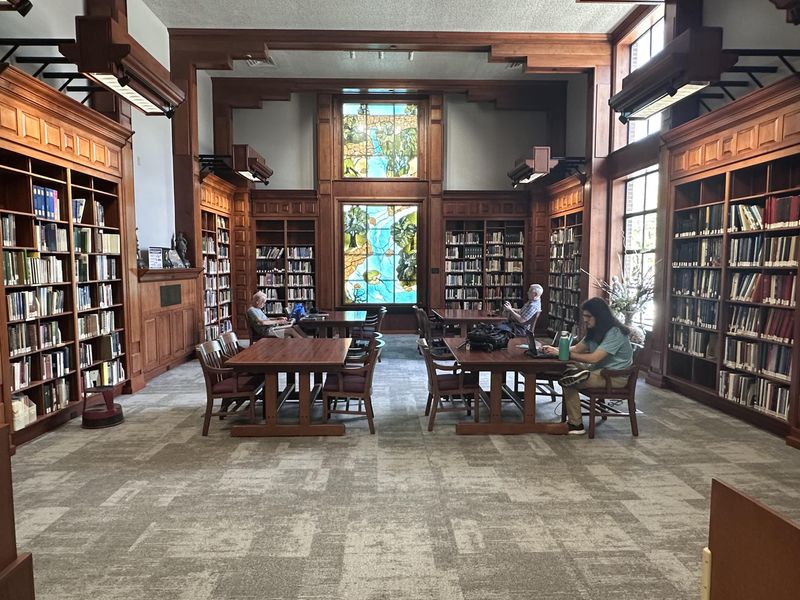
The Swezey Room of Indiana History of the Lafayette Library holds many useful records for someone beginning their genealogy journey.
Researchers can find a variety of Tippecanoe County newspapers, birth and death indexes, obituaries, census records, high school yearbooks, county directories, and more at the Lafayette Public Library.
The library also offers free subscriptions to online databases like ancestry.com and newspapers.com, according to Clayton Higby, a local librarian.
Although some databases have flaws and imperfections that can make research frustrating and time-consuming, he said.
Higby pointed out older information can often be inaccurate because of poor recordkeeping quality and incorrect spellings.
Finding the right person can be difficult “in older records because people have all sorts of weird spellings of their names,” he said. “Almost anything before the 1800s was handwritten, and spelling back then was just a vibe.”
Yet Higby doesn’t want people to get discouraged during their search. Instead, he advises to take a step back and retrace your steps, starting from information that you can be sure is accurate.
“I think all this sort of stuff is really interesting. Understanding your past and the lives your people used to live is important,” he said. “Sometimes the answer is, ‘Well, they were just the milkman.’ But sometimes it’s more interesting — you’ll never know if you don’t look.”
Although some past relatives may have been the town milkman, others might find their heritage has roots in a different type of beverage.
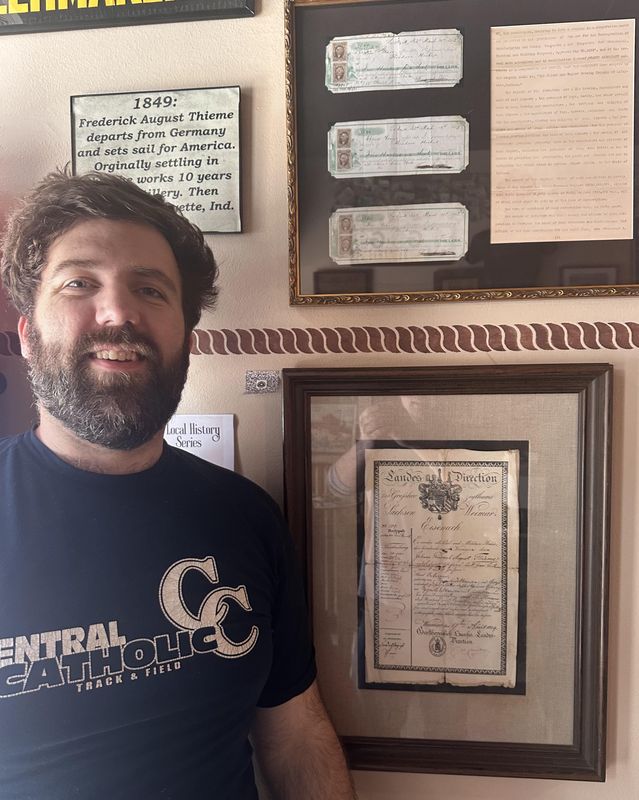
David Thieme of Lafayette rediscovered his family’s brewery and reopened the family business in 2017, after a 100-year hiatus.
Thieme and Wagner Brewery opened its doors again with a focus on serving drinks and telling the story of the brewery’s past.
Closed during Prohibition, Thieme claims he rediscovered the importance and passion for the business after his grandfather passed.
“I always knew about the original brewery, but I kind of got more into the specifics of it all later in life,” he said. “I learned the most from my grandfather and the stuff he kept, confirming specific dates and names.”
Through much research, Thieme concluded that his great-great-grandfather, Frederick J. Thieme, was the last family member who worked at the brewery before its close. Now the brewery is lined with artifacts from the original brewery and the people it employed.
Thieme said he’s a big advocate for discovering your family history and learning more about your personal past.
“Let your passion and desire drive you,” he said. “It may be daunting to try to find out the entirety of your family history, but whatever you find is an important piece of the puzzle.”
This article originally appeared on Lafayette Journal & Courier: For America’s 250th, discover your family history with these tips
Reporting by Quint Holguin, Lafayette Journal & Courier / Lafayette Journal & Courier
USA TODAY Network via Reuters Connect