SOUTH BEND — For the first time in five years, Potawatomi Zoo has a new infant red panda, but the cub could still face challenges.
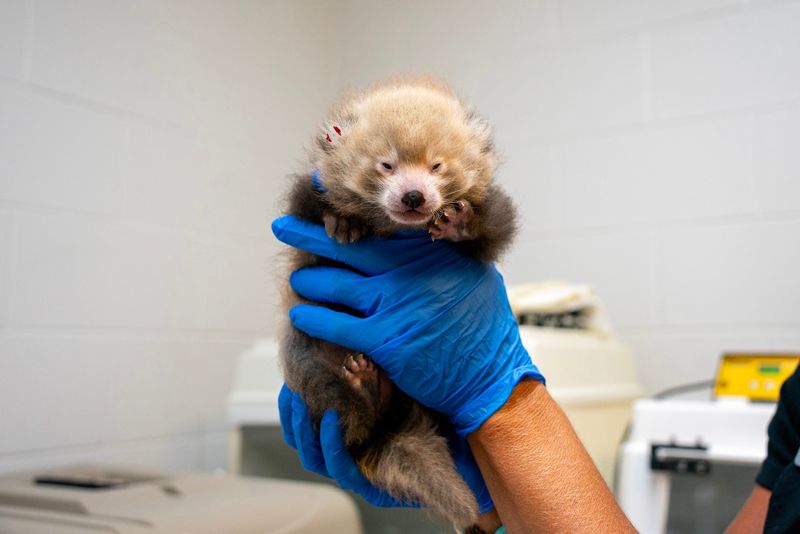
Born on June 13 to mother Raya and father EJ, the baby red panda, now named Big Red, was one of five cubs Raya gave birth to.

The zoo’s staff was surprised when they found the cubs, General Curator Jami Richard said, because Raya was unsuccessful at getting pregnant last year.
“The excitement level is pretty unbelievable,” Richard said. “This year, when we didn’t see them breed, we were kind of like, ‘OK, well, maybe they can’t be successful.’”
But because Raya had an “incredibly rare large litter size,” according to a press release sent to local media by the zoo, the cubs were born very small, and several failed to live longer than a couple days. But that isn’t unusual, and the mortality rate for red pandas is nearly 50% in the first year of life.
Breeding Raya and EJ was recommended by the Association of Zoos & Aquariums (AZA) Red Panda Species Survival Plan (SSP), a program that manages endangered species populations with the interest and cooperation of AZA-accredited zoos and aquariums.
Red pandas are considered endangered by the International Union for Conservation of Nature (IUCN) Red List. It is estimated that there are fewer than 10,000 wild red pandas, according to the press release, and their population is decreasing due to threats like habitat loss, habitat fragmentation and poaching.
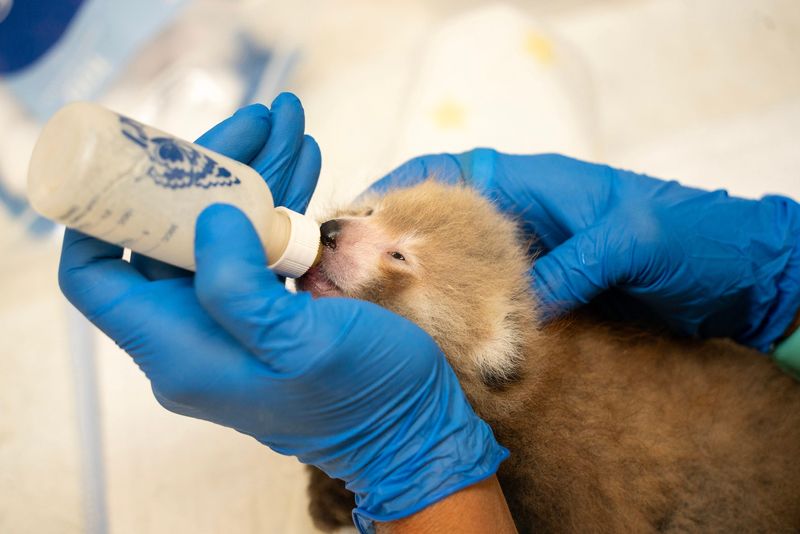
Originally, the goal was to let Raya raise her cubs without intervention, but Richard and Zoo Veterinarian Dr. Allison Dianis determined that Raya wouldn’t be able to care for her cubs because she had so many, Richard said. After discussion with the Red Panda Species Survival Plan, staff members began to hand-rear the two surviving male cubs, although one of the cubs still didn’t survive.
“If you’re having to hand-raise, they’re already not being raised by their mom,” Richard said. “We do our absolute best to try to allow the mom to do it, but there are just some chances that they can’t. If we would’ve kept this cub with Raya, it wouldn’t have survived.”
Raya was also hand-raised by Richard in 2021, Richard said, after she contracted pneumonia a day after she was born.
For the first few weeks of his life, Big Red had to be fed puppy formula every three hours through a small syringe, Richard said, including overnight. The zoo staff is currently slowly discontinuing night feeds as Big Red grows stronger and older.
Big Red is still receiving 24-hour care, like a newborn baby, Richard said, but the zoo is cautiously optimistic.
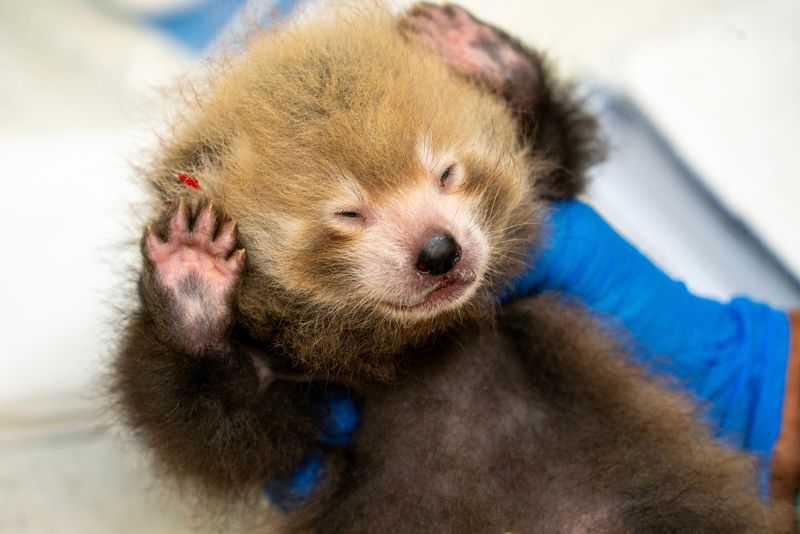
Red panda cubs are born with their eyes and ears closed; they open at around three weeks of age, according to the press release.
“He’s strong. He’s doing well,” Richard said. “He’s meeting milestones, like his eyes are open. He’s starting to explore a little bit in his tub.”
At just 37 days old, Big Red is on a steady incline to great health, but, Richard said, the possibility of him being shown to the public anytime soon is uncertain.
Email South Bend Tribune business reporter Jessica Velez at jvelez@usatodayco.com.
This article originally appeared on South Bend Tribune: Five red panda cubs born at Potawatomi Zoo, but only one survives
Reporting by Jessica Velez, South Bend Tribune / South Bend Tribune
USA TODAY Network via Reuters Connect
By Jessica Velez, South Bend Tribune | USA TODAY Network