While the grease-blotted paper bag and the near-bursting Styrofoam clamshell have become crucial and treasured components of the modern dining experience, restaurants remain more than just their food.
As chain restaurants pour millions of dollars into branding, decorating, rebranding and redecorating their seemingly infinite locations, independent eateries tend to get a bit more creative. For many Indianapolis restaurateurs, their businesses are not just places to eat but reflections of their identity.

When in doubt, trust the pros
One option for restaurants is to call in professionals like Joey and Sara Jean “SJ” Potts. The husband-wife duo has operated the creative studio Guide and Anchor out of the Near Eastside since 2018, a stretch during which they’ve provided design- and branding-related services for Indy businesses including Kismetic Beer Co., Solely Wine and Natural State Provisions, among others.
The Potts’ projects typically begin with a conversation with their clients to better understand the people whose vision they are trying to make a reality. Then, SJ said, “We start to do what we think is cool.”
The specific demands of each project often lead to deep-diving Facebook Marketplace. Before Kismetic opened in 2022, SJ recalled borrowing a van from Lapel-based Pax Verum Brewing to collect 1970s Chromcraft chairs from four different sellers between Indy and Detroit.
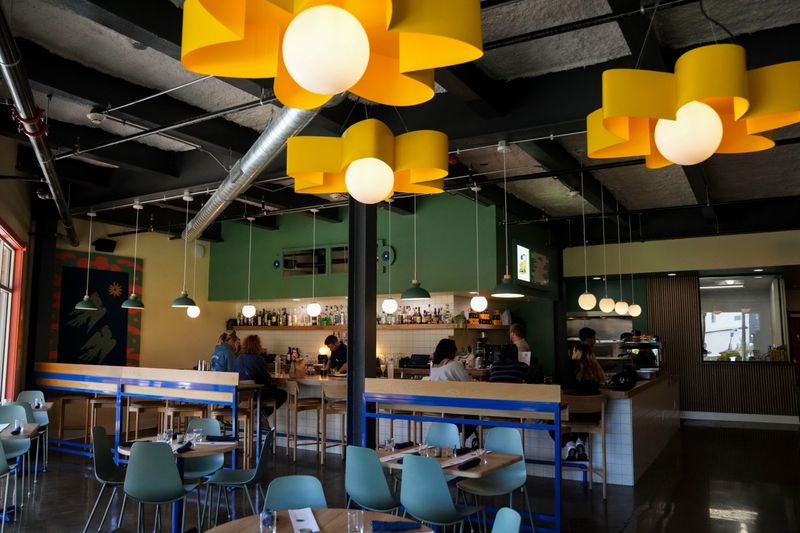
Sometimes, the venue dictates the design. To make the section of a former automotive factory that houses globally inspired Windsor Park eatery Daisy Bar feel less cavernous, SJ and Joey hung large custom blankets that simultaneously function as artwork and noise absorbers. Even the bulbous daisy-shaped pendant lights that dot the rafters are made of soundproofing foam.
As people increasingly view dining out as a luxury, Joey said Guide and Anchor’s work only grows more important.
“Especially nowadays, if you’re going out and you’re spending money, that means a lot,” he said. “We want people to enjoy the time that they’re there, and if they can do that through visual and environmental stuff that we’ve done, that’s even better.”
Design as an ongoing evolution
Of course, it helps to have someone with design expertise already on the payroll. Adam Reinstrom, co-owner of Gather 22 on the Near Northside, studied interior design at Ball State and what was then IUPUI before his foray into the hospitality industry.
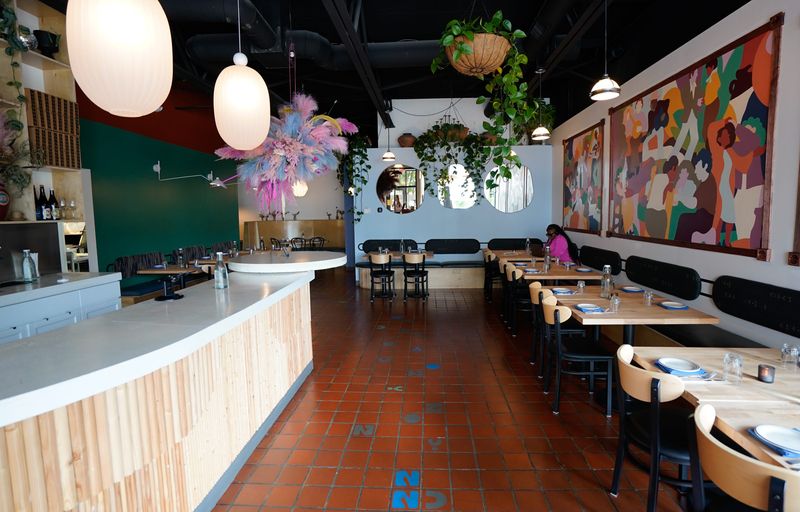
Gather’s sleek, West Coast-inspired atmosphere is an eclectic assembly of quarry tile, limestone and honey-colored wood, all dripping with the greenery of, as Reinstrom put it, “hella plants.” Reinstrom affixed handmade ceramic shades to the building’s existing light fixtures and worked with a contractor to create Gather’s eye-catching bar, whose surface is speckled with dozens of smooth multicolor crystals. The restaurant even had a makeshift wood shop in its basement during remodeling so that its booths and tables could literally be made in-house.
Few restaurants engage in as much creative expression as Gather, which since opening in 2023 has expanded with a rear veranda that has hosted multiple themed pop-ups such as a Christmas tiki bar, springtime high tea and a summer African-inspired safari outpost.
“The space is always kind of developing,” Reinstrom said. “We’re always adding finer details here and there.”
How a restaurant tells its owners’ story
Dozens of restaurant owners around town employ another strategy: Throw a bunch of your own stuff in there. That’s basically what Rachel Firestone Mohammad and Samir Mohammad did in the historic brick venue that houses the 9th Street Bistro in downtown Noblesville.
“We realized that we would be spending a lot of time at the restaurant, so we wanted to make sure that things that meant something to us were there where we could see them every day,” Rachel said.
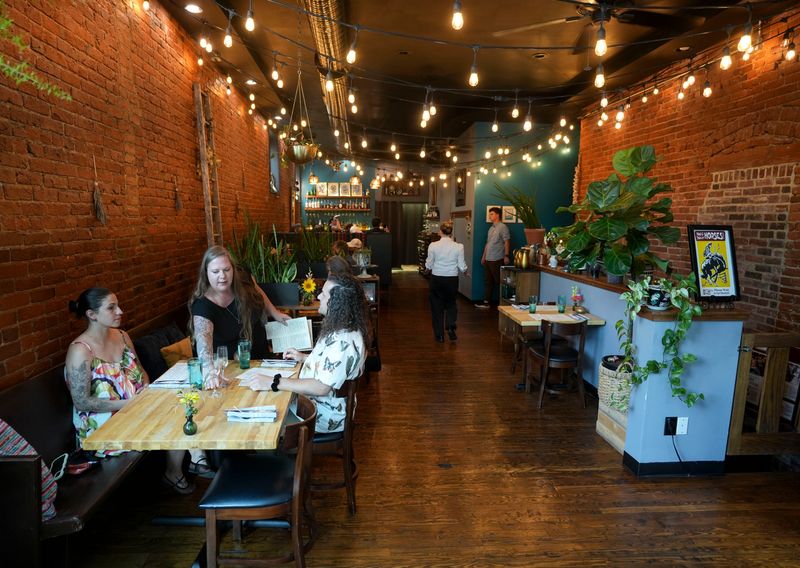
In addition to saving money, lining the 35-seat bistro with personal belongings obtained on the Mohammads’ worldwide travels over the years has created a dining experience where no two tables have the same view. One diner might gaze at a wooden cat statue from the Maldives, while another sits beneath a winged dairy cow that Samir purchased at a yard sale in his home town of Taos, N.M., almost 20 years ago.
The Mohammads estimate that more than a dozen countries are represented in 9th Street Bistro’s myriad trinkets, tapestries and cookbooks. A jar on one bookshelf contains roughly 30 different world currencies from the restaurateurs’ travels.
These manifold approaches to restaurant décor result in a visually heterogeneous landscape that SJ Potts argues is crucial for Indianapolis to stand out relative to its peers. The more restaurateurs lean into their personal experiences and chase their imagination, the more likely a diner at any given table is to see their city’s food scene through fresh eyes.
“We lived in Chicago for a really long time, and we don’t want Indy to be like Chicago,” she said. “Indy is its own unique environment, and it can really be whatever it wants to be.”
Contact dining reporter Bradley Hohulin at bhohulin@indystar.com. You can follow him on Instagram @BradleyHohulin and stay up to date with Indy dining news by signing up for the Indylicious newsletter.
This article originally appeared on Indianapolis Star: Dining in style: What goes into designing a restaurant
Reporting by Bradley Hohulin, Indianapolis Star / Indianapolis Star
USA TODAY Network via Reuters Connect
By Bradley Hohulin, Indianapolis Star | USA TODAY Network