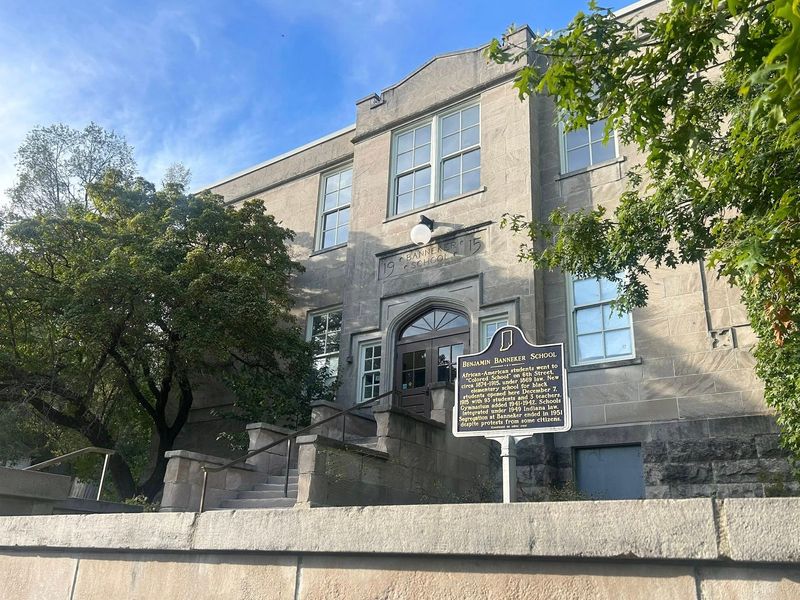
To say that Banneker Community Center is a hidden gem seems like an oxymoron. If you take a drive on West Seventh Street, you’ll see a grand historical building, surrounded by family homes, large oak trees and locals strolling the sidewalks.
Perhaps what’s hidden from the mass public isn’t Banneker’s physical presence, but that it’s changed the lives of thousands. For instance, did you know Banneker was once a school for African American children a century ago? Did you know that its name honors a Black man who accomplished impossible odds in America? Many Hoosiers don’t know its history — and, unfortunately, aren’t aware of the ecosystem of resources dedicated to supporting the community.

“We’re Bloomington’s best-kept secret, though we’re trying to be the home for everybody,” said Kevin Terrell, program director of Banneker Community Center. “We want everyone to see that Banneker is their place.”
But before we discuss Banneker now, we must talk about where it all began.
The beginning of Banneker
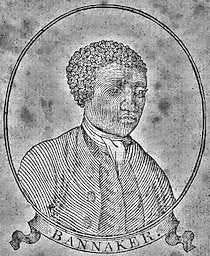
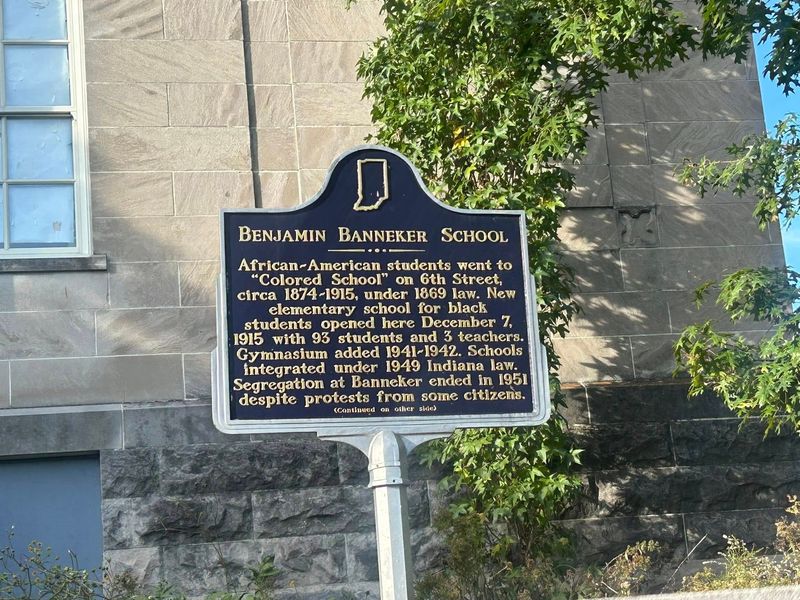
In 1915, during the era of segregation, the center was established as the Benjamin Banneker School for African American children. The school’s name honored Benjamin Banneker, a man of many firsts: the first Black American appointed by a president, the first Black American to surveyor Washington, D.C., and the first person to create a wooden clock in the country, as celebrated in Stevie Wonder’s hit, “Black Man.” His name set a tone of empowerment, challenging America’s narrative that people who were Black didn’t matter.
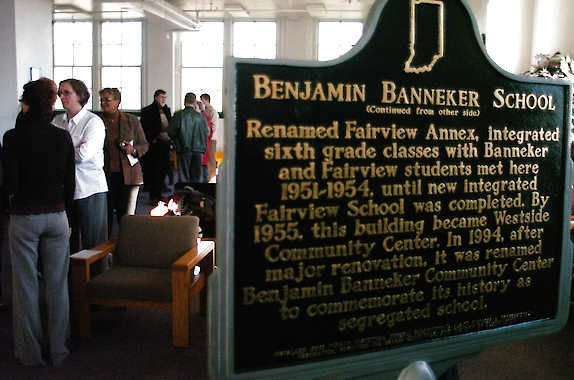
After the school desegregated in 1954, Black children were integrated into other districts, and Banneker was sold to Bloomington for a symbolic $1. Later in 1994, it was renamed the Banneker Community Center, to honor its past.
“Banneker represents freedom, legacy, and culture. It is a cornerstone of Black history in our city,” said Gloria Howell, director of the Neal-Marshall Black Culture Center at Indiana University Bloomington. “Access and opportunity have consistently been a part of the Banneker story, so children and families of various backgrounds can engage in the programs and initiatives that Banneker has to offer.”
Studies show that children who experience global perspectives and diverse opportunities early in life develop stronger cognitive and personal skills, leading to greater success. However, Banneker staff and volunteers understand that these experiences aren’t accessible to everyone.
“The world is a big place, but due to the socioeconomic situations that some of the children face, the world can get small for them,” said Terrell. “Any way we can grow [the youth’s] outlook is a big thing.” That’s why access is at the heart of Banneker’s mission: to give children a chance to dream bigger than their ZIP codes.
Banneker Afterschool Program
One of the keyways Banneker fulfills that mission is through the Banneker Afterschool Program, a free initiative operating at nearby Fairview Elementary School. This program, made possible by the dedication of various partnerships, selfless volunteers and staff, is an example of Banneker’s commitment to accessibility and equity.
Renee Bridgewater Hill, the program specialist for over a decade, brings her academic expertise as a former educator, along with her childhood connection to Banneker, which has been invaluable in shaping how she runs the program. Hill treats the program as an opportunity for each child to reach their full potential — as scholars and as human beings.
As Martin Luther King Jr. said, “We must remember that intelligence is not enough. Intelligence plus character — that is the goal of true education.”
Hill shares this philosophy, “I want them to learn self-regulation and the tools to better help them build self-control over their actions,” she said. “This goal is met by ensuring that every student understands what they’re being taught at school.”
Banneker staff and volunteers pay attention to detail. Every student gets the attention they need to ensure they understand what’s being taught at their respective schools. In a 1984 study by educational psychologist Benjamin Bloom, it showed that more than 90% of students who are tutored experience increased academic and personal confidence, especially when the tutoring program offers more one-on-one sessions. “Many children fall through the cracks in the educational system because schools move quickly,” Hill said.
The Banneker program allows time to identify any learning issues for each student, while making the learning process fun, so the information sticks. This personalized approach ensures that no child is left behind and that each student’s unique learning needs are met.
“When (children) understand their schoolwork, their feelings of inferiority shed away,” Hill said. “I’ve watched kids come in so shy and leave bold as a lion. I’m amazed at each student’s self-growth.”
Hill’s dedication to the students and community gained local acclaim with the Toby Strout Lifetime Contribution award in 2024. It wasn’t a surprise to anyone, other than to Hill. “I was very humbled and honored (when I learned I won),” she said. “I just give. It’s a lifestyle. [My actions] are really for God, and I love my kids.”
To Hill’s sentiments about Banneker’s inclusivity, Elizabeth Keith, lead behavioral technician in Bloomington, highlights how the center serves anyone, including her students with sensory disabilities. “They enjoyed the variety of programming at the facility,” she said. “It truly is a welcoming place for anyone.”
This underscores Erin Freese-Posthuma’s reason for working at the center: “No matter your age or background, Banneker’s a place for everyone. It’s a place where everyone can enjoy their time and feel safe.”
To that end, people at Banneker understand that a large part of feeling safe is knowing, no matter what happens in society, there’s a place that aims to support all aspects of a person’s life.
At the beginning of November, millions of Americans were affected by the end of SNAP benefits. In Monroe County, residents are facing a 16% food insecurity rate, which is higher than the state and national averages, according to a report from the United Way of South Central Indiana.
Banneker center combats hunger and food insecurity in various ways. They have a food pantry accessible during working hours. They rent out a commercial kitchen, where hot meals can be prepared for people who need them. In the spring, a charity prepared home-cooked meals for the unhoused, and inside Banneker is where they could enjoy the food.
“I was proud to help with that,” Terrell said.
Additionally, the center houses a community garden, named the Benjamin Banneker Urban Farm. The garden provides more than just food — it’s a resource to empower people.
“We give the food in the garden away,” Terrell said. “Also, the garden acts as an educational class for people to come and learn how to garden themselves.”
Since its inception, Banneker Community Center has been a place for anyone who needs somewhere to go. Many places are labeled as a community center, but community is baked into each brick that built Banneker.
“It’s a valuable institution in our community,” Howell said. “Bloomington would not be Bloomington without the Banneker Community Center.”
Upcoming events at Banneker
From 5 to 8 p.m. Saturday, Dec. 6, local arts organization Reimagining Opera for Kids (ROK) will host family-friendly activities along with food and two interactive performances by the ROK troupe of singers and instrumentalists. The event will be at no cost. For more information about the event: https://www.facebook.com/share/1ArqeWCfV4/.
That comes just one day before Banneker Community Center officially becomes 110 years old.
To get more information on how to help at the center, email program specialist Erin Freese-Posthuma at erin.freeseposthuma@bloomington.in.gov or program/facility coordinator Kevin Terrell at kevin.terrell@bloomington.in.gov.
This article originally appeared on The Herald-Times: Banneker Community Center is historic gem impacting people and providing hope
Reporting by Britany Talissa King, Special to The Herald-Times / The Herald-Times
USA TODAY Network via Reuters Connect