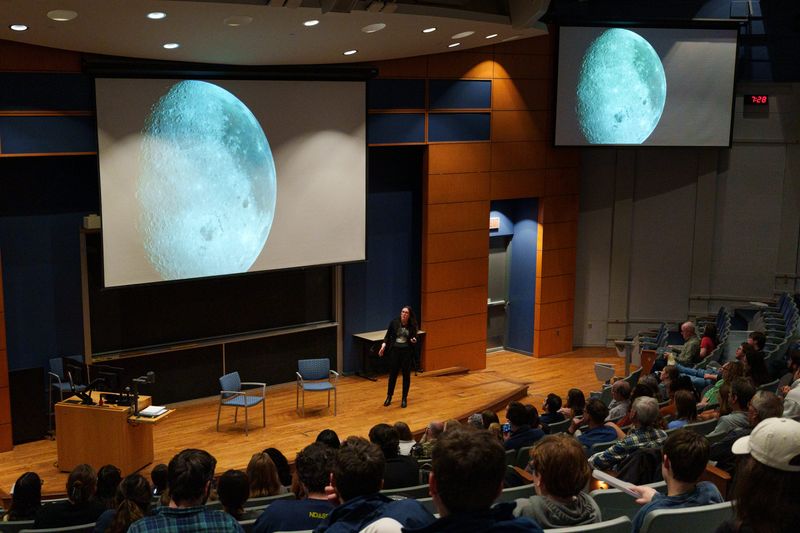
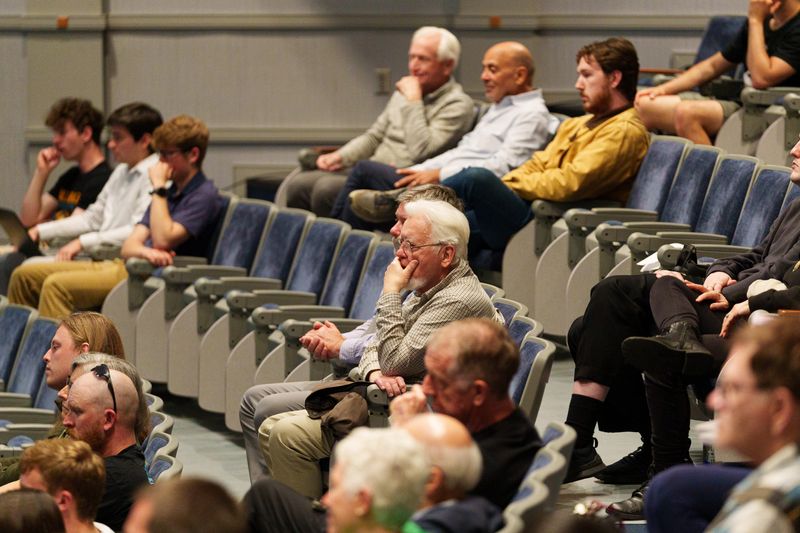
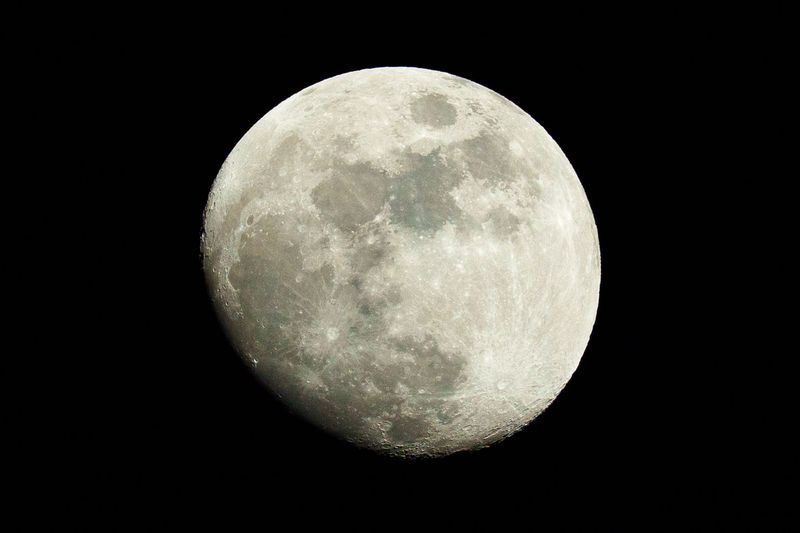
SOUTH BEND — The 100-plus people congregated in the University of Notre Dame auditorium sat transfixed by the moon, hearing with awe the story of its most recent visitors and the people who helped get them there.
The air in the auditorium was almost reverential, as photos taken during the Artemis II mission flashed across the large screens. Audible gasps and sounds of astonishment were heard with each new photograph, and throughout the nearly two-hour-long presentation about the recently-completed lunar mission, attendees’ faces were filled with a sense of contented wonder.

Kelsey Young had another name for it: “Moon joy.”
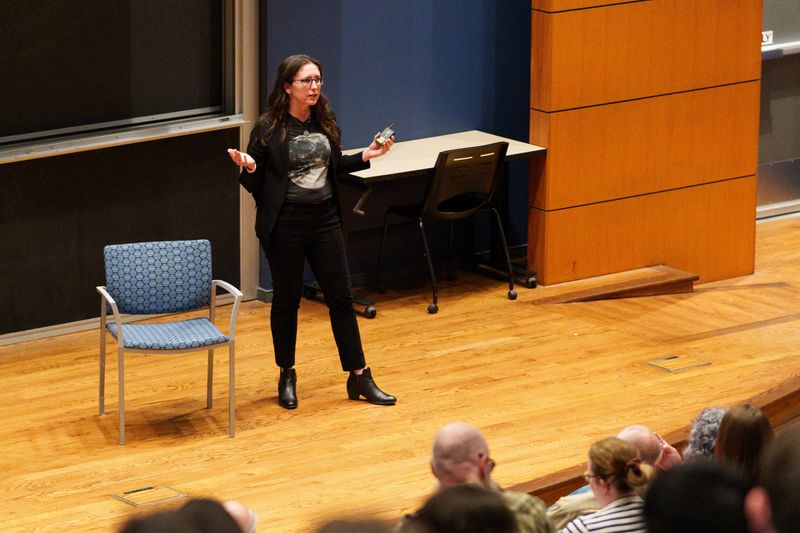
Young, a 2009 Notre Dame almuna, is the Artemis II Lunar Science lead and Artemis Science Flight Operations lead for NASA. She gave a free public presentation, “Artemis Lunar Science: Artemis II and the new era of crewed lunar science operations,” at Notre Dame on Tuesday, April 28.
A recording of the full presentation is publicly available on YouTube.
In her presentation, Young provided an overview of the mission and what the scientific observations by astronauts Reid Wiseman, Victor Glover, Christina Koch and Jeremy Hansen mean for the future of lunar exploration.
But first, she had to set the record straight.
“The toilet is fine — it was the vent line,” Young said with a laugh, referencing a brief issue with the crew’s toilet on spacecraft Orion. “… Fortunately, the moon worked great, so we were able to get a really amazing amount of lunar science out of this mission.”
To obtain that science, Young said, the four astronauts relied on a mixture of images, verbal descriptions and annotations of what they were seeing, along with photos captured by cameras mounted on the spacecraft itself.
During the 10-day mission, she said, the crew members were given a set of science objectives ranging from observations about the moon’s topography to what colors they were able to see in the lunar surface. Young said characteristics like these give scientists a better understanding of the moon’s history and composition, and they also help tell the Earth’s own history.
“A thing we like to also remind both the crew and the public is that what the moon has experienced, our planet has experienced,” she said. “But we have plate tectonics, oceans, trees, all that stuff that’s really great and super important, and we love it, but it’s also obscuring the geologic record of our planet.
“It’s waiting for us at the moon; it’s exposed for us at the moon. So by studying the moon, we actually learn something about how our own planet evolved over time.”
To accomplish that, Young said, the astronauts worked with her and her team to develop a carefully planned and choreographed schedule of 200 science objectives throughout the mission and lunar flyby.
“If you watched even a single second of the mission, I think you will agree: These four people, so amazing,” she said. “I am so privileged. We started training them like literally two weeks after they were selected, so we had three years training them. And they were in, like, they are so in. They are so invested in the moon.”
Another purpose for the Artemis II mission, Young said, was to be a first step in a long line of planned crewed missions and even a lunar base in the future. The program even has another mission planned for 2028, she said, during which astronauts are expected to land on the lunar surface.
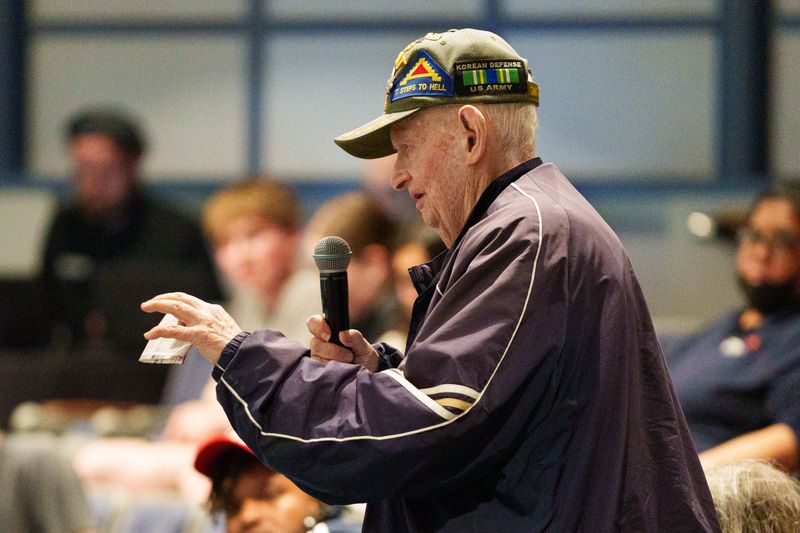
After her presentation, Young opened up the floor for questions and comments from the audience, and even before Notre Dame staff could bring him a microphone, one man, whose name The Tribune was unable to obtain before he left, stood up.
“My Notre Dame geology degree qualified me to be a lunar geologist on Apollo 11,” he said. “So you pretty well answered most of my questions with your excellent presentation.”
When talking with media after the event, Young said each mission from Apollo 1 onward has built on the previous one to arrive where lunar exploration is today. She said that it hasn’t sunk in for her that she may be the next generation’s source of inspiration, just like people like the man from the Apollo 11 mission were for her.
But at the end of the day, Young said, space exploration is a “team sport” made possible by thousands of people working together.
“Who has heard of ‘moon joy?'” she asked attendees, pausing her slideshow on a candid photo of the science team smiling during the lunar flyby. “That is what it is.
“… That’s the joy of seeing people who you know do amazing things, but it’s also the joy of ‘We got what we strove for,’ which is really, really valuable science.”
Email South Bend Tribune staff reporter Rayleigh Deaton at rdeaton@usatodayco.com.
This article originally appeared on South Bend Tribune: Artemis II lead scientist shares wonder of ‘moon joy’ at Notre Dame
Reporting by Rayleigh Deaton, South Bend Tribune / South Bend Tribune
USA TODAY Network via Reuters Connect