After leaving the Capitol two months ago $1.4 billion apart in spending plans, the Florida House and Senate return for a special session to settle a state budget for the year beginning in July.
Lawmakers convene May 12. Work is expected to continue throughout the week, with budget committees ironing out their biggest differences in education, health care, environmental and other spending areas.

Still to be decided are such basics as whether state employees will get a pay raise; how much per-pupil will Florida’s schools receive; whether environmental preservation programs get any money; and dozens of other items which have divided lawmakers this year.
A bottom-line framework was reached late last month. Senate budget chief Ed Hooper, R-Clearwater, calls that “Part 1.” But settling a much wider range of spending conflicts between the House and Senate is a difficult “Part 2,” he added.
“I always count Part 2 as a little tougher than just agreeing on how many dollars we have,” Hooper said.
This year’s goal: A smaller state budget
But while GOP leaders are touting their own spending restraint, they’re clearly not efficient.
It’s the second straight year that Republican supermajorities in the House and Senate have fallen deep into overtime as they try to resolve the one bill the Legislature is required by law to pass each year – a state budget.
But even with the special session starting, don’t expect lawmakers to finish quickly. Or do much in public.
Instead, by May 15, lawmakers intend to break camp again.
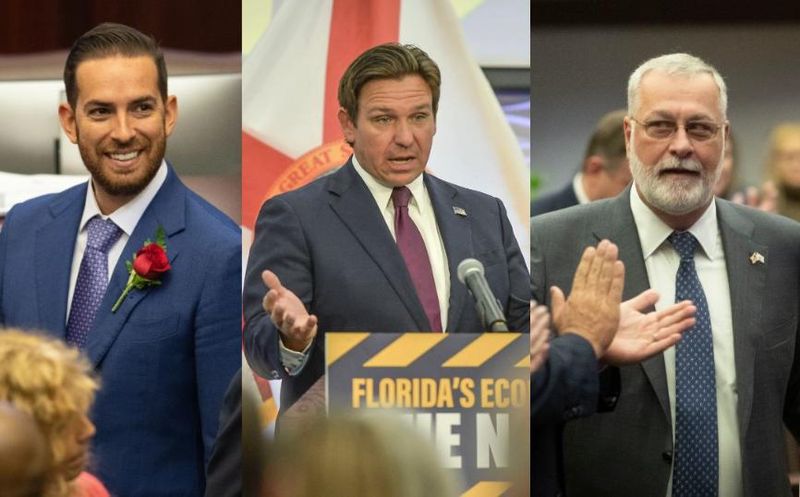
Any final, big-ticket clashes will be settled through negotiations over the phone during the next two weeks by budget chiefs and House Speaker Daniel Perez, R-Miami, and Senate President Ben Albritton, R-Wauchula.
The leaders’ goal is to have legislators back in Tallahassee after Memorial Day to approve the budget by May 29, when the special session is scheduled to end.
Included in that homestretch would be the constitutionally required 72-hour waiting period between when the budget is settled and published digitally and when a final vote can be taken.
A late spring, summer of special sessions
All told, the Legislature is being summoned to Tallahassee a lot this election year, when most lawmakers would prefer focusing on their upcoming campaigns.
Gov. Ron DeSantis pulled lawmakers into a special session at the end of last month for a controversial redraw of the state’s congressional boundaries.
And the Republican governor still plans to call the Legislature back sometime soon to develop a property tax-cutting ballot initiative that he’s been talking about for months but has done little to advance.
But with the July 1 budget deadline bearing down, there’s heightened pressure now to finalize a spending plan.
Rep. Christine Hunchovsky, a Parkland Democrat, said the state’s inaction has a “ripple effect in our communities.”
“There are entities that don’t know what budget they’ll have available to help in the communities that they serve,” she said.
DeSantis has aired frustrations with the Legislature. And even former House Speaker Paul Renner, a Republican running what looks like a longshot campaign to succeed DeSantis as governor, said “Tallahassee looks more like Congress” with its dysfunction.
Lawmakers ended the 60-day regular session March 13 with no sign of agreement on a spending plan.
Last year, the fractious pairing of Perez and Albritton at the helms of the House and Senate forced 44 days of overtime to finalize a budget. This year, it could take 77 days between when the regular session ended and the budget is buttoned up.
Overtime adds up – for taxpayers
The overtime session last year cost Florida taxpayers an extra $259,000 in lodging, travel and daily expenses for lawmakers and staff, according to the Office of Legislative Services.
This year, the meter is still running. The two sides left Tallahassee in March nowhere close to agreeing on a budget. The House had approved a $113.6 billion spending plan and the Senate had a $115 billion blueprint and neither side was willing to move much.
Perez, toward the end of the regular session, said the two sides “have a fundamental disagreement on what the budget should look like for the state of Florida.”
Since then, Hooper, the Senate’s budget chair, and his House counterpart, Rep. Lawrence McClure, R-Dover, talked by phone and came up with an outline for closing out the budget.
While the spending gulf apparently got closer to being bridged, there’s a lot still to settle. Tourism, environmental programs, transportation and economic development amounted to some of the biggest splits between the two sides.
Also, the Senate had wanted double the amount of affordable housing money sought by the House and almost triple what House members earmarked for college and university construction.
The Florida Forever environmental preservation fund drew $35 million from the Senate, and nothing from the House.
A pattern emerged: Senate gives DeSantis what he wants, but not House
The Senate mostly went along with DeSantis’ budget requests. But the House was a no-sale on many of DeSantis’ priority items during the legislative session.
The governor wanted $62 million, a big increase, for the Florida State Guard that he revived, but which has drawn criticism for mismanagement and poor training. The House included no funding for the Guard, and DeSantis appeared close to settling on getting the $33.9 million earlier approved by senators.
Levels of teacher pay, dollars for Schools of Hope, financing the state’s job growth grant fund, and an expansion of food testing sought by DeSantis all looked on track at session’s end to fall well short of what he wanted – mostly because of House resistance.
DeSantis, who has regularly clashed with Perez, the House speaker, over a host of spending and policy issues, showed signs of growing more irritated by the budget delay.
“I think dragging this out is certainly not advisable,” DeSantis said last month.
John Kennedy is a reporter in the USA TODAY Network’s Florida Capital Bureau. He can be reached at jkennedy2@usatodayco.com or on X at @JKennedyReport.
This article originally appeared on Tallahassee Democrat: With deadline closer, Florida lawmakers return to tackle budget
Reporting by John Kennedy, Capital Bureau | USA TODAY NETWORK – FLORIDA / Tallahassee Democrat
USA TODAY Network via Reuters Connect