Two Tallahassee City Commission races are shaping up to be something of a free-for-all, without the power of an incumbent to stifle competition.
Political analysts say anytime a seat is open it draws more candidates, which is why the city races are seeing so many names fighting for a spot on the ballot. While the large number may be expected, it will have consequences that’ll shape results on Election Day and perhaps decide whether progressive or moderate Democrats control City Hall.

So far, seven people have thrown their name in the hat for City Commission Seat 3, which was left vacant by Commissioner Jeremy Matlow who’s opted to run for mayor instead of seek re-election.
The last time a city race saw this many candidates was in 2020 when seven people filed to run for City Commission Seat 1, according to campaign finance data recorded by the Leon County Supervisor of Elections. In 2018, nine people filed to run for mayor — the most candidates a city race has seen in the last 20 years.
Alexander Moore filed to run March 26, making him the latest person to enter the race alongside six others: Talethia Edwards, a longstanding community activist; Norm Roche, a former Pinellas County Commissioner; PJ Perez, a local teacher; Tom Derzypolski, the founder of a local marketing firm; Max Herrle, a local progressive political operative; and Darryl “Dar” Alfred Jr., a rideshare driver and local Realtor.
“The number is not really that much of a surprise,” said Gary Yordon, a local political consultant.
Frustration is at its peak right now, Yordon said, and it’s “created this sort of need to do something” in the face of “gigantic problems” facing the country and world that are much too big to solve.
“This is like maximum government frustration time,” he said. “Well, not really. I guess there’s the Boston Tea Party and there’s now.”
Hyper partisan national politics trickle down to local government, which is reflected in a city commission, made up of all Democrats, that still faces deep divides on most major issues.
Regardless of what’s driving people to get involved, the volume of candidates is setting the stage for a splintered vote in the upcoming primary election, making outcomes harder to predict and election runoffs more likely.
Growing list of candidates makes it harder to crown ‘immediate winner’
In local elections with numerous candidates, the primary election often is just the first stop. It’s common in local races to have the top two candidates face a rematch in the general election because to win a primary outright, a candidate needs more than 50% of the votes.
One of the main issues with having seven candidates in a race is that they steal votes from one another. To win a primary, every vote matters, making candidates who receive only marginal percentages of the votes a threat to the stronger candidates.
This creates an even greater need to stand out and connect with voters.
“The candidates who are the most successful in converting frustration into support in a race with seven people will probably be the candidates who do the best,” Yordon said. “That’s the key.”
But frustrations aren’t always shared.
There was “an enormous amount of angst” over the city selling the Tallahassee Memorial HealthCare campus to Florida State University, but Yordon, who is a paid consultant for the hospital, said the academic medical center “is probably generally supported by most of the community” despite a controversial origin story.
He also argues that someone living in the northside of the county in Killearn Estates isn’t concerned about the happenings at the Capital City Country Club that’s nestled in a neighborhood southeast of downtown Tallahassee.
The once city-owned golf course has become a political flashpoint after the commission voted 3-2 to sell the land to the club’s board. Then months later, the board moved to hand it over to an outside investor group led by a Tampa Bay Rays owners and a megadonor to Gov. Ron DeSantis.
What splits the vote?
Yordon said votes also split when there are multiple candidates that appeal to the same voting groups. For example, the Black community traditionally votes for Black candidates, progressives favor progressives and moderates back moderates.
“They eat off each other’s plates. What you look for is which one of these things doesn’t look like the others,” he said. “In a multi-person race, those are things that stand out.”
Heuristics, or mental shortcuts, such as ethnicity and gender are what voters tend to rely on, Lonna Atkeson said, especially in local races where voters are typically less educated on the candidates and there isn’t political party affiliation to guide them.
Atkeson, an election science expert who is a professor at Florida State University, said it’s a lot harder for people to cast votes in nonpartisan city and county races, which is why it’s common to see voters drop off on the ballot in local elections.
“It’s a matter of information,” she said. “The more difficult it is for people to discern who they should vote for or who the right person to vote for is, the less likely they’re going to vote.”
And the more candidates there are, the “more confusing” it gets.
“It certainly makes it likely that there won’t be an immediate winner,” Atkeson said.
Primary vs general: How voter turnout impacts local races
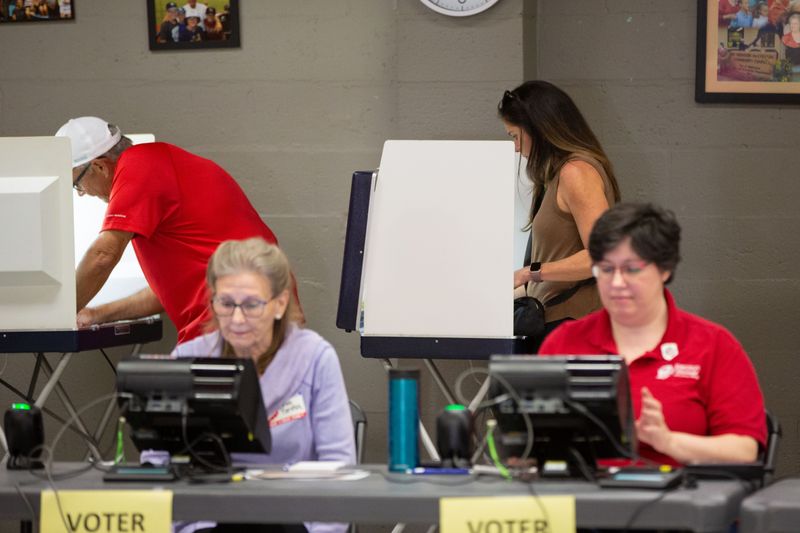
Another caveat that leads to runoffs in the general election is that local races don’t bring people out to the polls during the primary elections, she said. Voter turnout is far lower, especially when there isn’t a big-ticket election like a competitive presidential or gubernatorial election appearing on the ballot.
It’s not uncommon to see very close results in the primary and then a landslide victory in the general because more people tend to vote in the general election. But this is also because the ballot only has two candidates, narrowing the choices for voters and preventing less viable candidates from stealing small percentages of votes that can make or break results in a primary, Atkeson said.
“The dynamic is really changing between the primary and the general for the local races,” Atkeson said. “That’s really a problem for the local races in a way.”
Yordon said he thinks this year’s primary election will see greater turnout because people are more involved, but the outcome of the race for Seat 3 is still “absolutely a wild card.”
Only a couple races in the Tallahassee community “actually bring people to the polls — superintendent, sheriff and mayor.”
“The other races aren’t going to bring people to the polls, they’re going to be victims of what people come to the polls,” he said.
Campaign fundraising makes mayoral race ‘unique’ from other city races
Five people filed to run for mayor, but only four remain in the race after one candidate, Camron “Justice” Cooper, was disqualified under an election ordinance the city passed last year requiring candidates to live within the city limits for a full year before they can run.
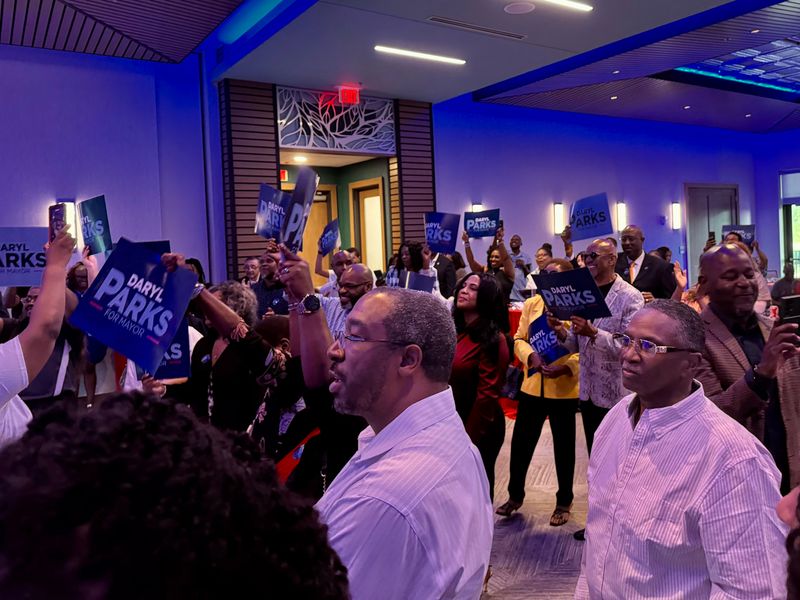
Those still in the running are Matlow, a standing city commissioner; Michael Foust, a political newcomer, Loranne Ausley, a former state lawmaker, and Daryl Parks, a local civil-rights attorney who also ran unsuccessfully for a state Senate seat.
Less people tend to file for mayor, even when there’s an open seat, because people generally think the mayoral race is harder to win, Yordon said. It tends to draw more attention and take more money and local government experience to be a contender in the race, which is why it’s drawn state-level candidates.
The mayoral race is “unique” from the others, he said, because the three leading candidates — Matlow, Ausley and Parks — all have “plenty of funds to start conversations with voters” as the race shapes up to crack the $1 million mark.
Yordon doesn’t anticipate the level of fundraising in the race for Seat 3 to be the same, making it harder for candidates to connect with voters.
“Most of these candidates won’t have enough money to really have the kind of conversation with (voters) that they would like to have,” he said.
As of April 15, Parks’ campaign has raised the most amount of donations in the mayoral race, raking in roughly $244,000. Ausley is close behind with roughly $234,000, and Matlow and Foust take up the rear with Matlow collecting nearly $134,000 and Foust $600.
The candidates running for Seat 3 have secured far less funds, with donations ranging from several hundred dollars to $60,000.
‘Lunch buffet of politics’: Experts weigh in on mayoral candidates
Campaign fundraising is essential for promoting candidates and their platforms, building the recognition needed to win votes.
“Obviously the Ausley name has a lot of name recognition,” Atkeson said. “If I saw the name Ausley, I’d go ‘Oh, that’s old Tallahassee.'”
“This is her area,” she added. “She has a lot of name recognition. I’m going to give the lead to her.”
Ausley’s family has deep, generational roots in Tallahassee making the name well-known. Her years in the state legislature also add to her prominence, which means she’ll have great fundraising throughout the race because she’s done it before, Atkeson said. Parks will do fine raising money, she said, because he has some fame from his time partnering with civil rights attorney Ben Crump and could self-fund if necessary.
Matlow stands to be a strong contender too and seems to be widely known as well, Atkeson said, noting she’s seen more signs up around town promoting his name than other candidates. But he’s an “interesting” candidate, she said.
“He seems like he’s burned some bridges along the way, so that might be a problem for him,” she said. “It seems like he’s trying to atone. I think there is some bad blood there.”
Atkeson said local politics in Tallahassee seem to be wrapped in a lot of conflict because people have really different opinions.
Yordon also pointed to this, saying Matlow, Parks and Ausley all have “such different personalities.”
“I think this mayor’s race is the lunch buffet of politics,” he said. “Just go up there and get whatever you want.”
Elena Barrera can be reached at ebarrera@tallahassee.com. Follow her on X: @elenabarreraaa.
This article originally appeared on Tallahassee Democrat: Why Tallahassee city races are drawing a cattle call of candidates
Reporting by Elena Barrera, Tallahassee Democrat / Tallahassee Democrat
USA TODAY Network via Reuters Connect