PANAMA CITY BEACH − Bright, sunny weather and clear skies does not automatically mean water conditions aren’t dangerous.
Along the coast of the Panama City Beach area, the biggest risk to beachgoers isn’t monstrous waves or even sharks. It’s rip currents. These fast-moving currents can exist even under seemingly calm conditions, catching many tourists off guard.

They also are responsible for almost all beach drownings in the area.
“Rip currents are basically just fast flowing channels of water that pull away from shore,” said Cameron Young, a meteorologist for the National Weather Service in Tallahassee. “Waves come in and as the water starts receding, there’s little channels of water that form. Those are what pull you out.
“They can be pretty fast moving and pretty dangerous to get caught in.”
According to past reports, rip currents can sometimes be identified from shore where there is a gap in the wave break ― areas where the white caps of the breaks are less noticeable.
The best thing a swimmer can do if caught in a rip current is swim parallel to shore, meaning toward the left or right of where they are in distress. If they do this, they can break free from the current, even sometimes landing on a sandbar where they can stand. If they still cannot stand, they will at least be in calmer water where it will be easier to make it back to shore.
“For people who may not be familiar with the beach and rip currents, it’s definitely a new thing because maybe most people are used to being in lakes or pools,” Young said. “The Gulf and any ocean has waves (and currents) that people may not be accustom to.
Despite what some beachgoers might think, calm seas do not mean calm rip currents. In Panama City Beach and Bay County, the color of daily beach safety flags are determined by the strength of these currents, not necessarily wave heights.
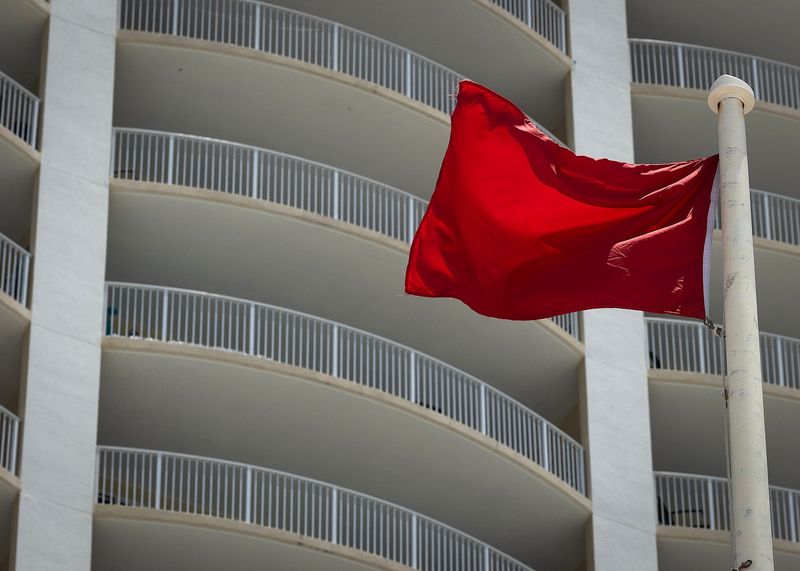
Common colors used in beach flag warning systems include a green flag for low hazard conditions, a yellow flag for medium hazard conditions, one red flag for high hazard conditions and two red flags for very dangerous conditions.
Bay County and Panama City Beach, however, never fly green flags. Local officials say beachgoers should be cautious anytime they enter the Gulf. It also is illegal year round in Bay and PCB to enter the Gulf under double-red-flag conditions. Violators can be ticketed up to $500.
“It’s very important to make sure you talk to the lifeguards (and) make sure you know the beach flags and what they mean before heading out,” Young said. “Sometimes we have a nice, sunny day outside, but the rip current risk may be high.
“People may just think it’s nice outside and great beach weather, and that’s when they get caught in trouble.”
For more information on rip currents, and to check their forecast, visit www.weather.gov/beach/florida.
This article originally appeared on The News Herald: What are rip currents? Here’s how to spot them in Panama City Beach
Reporting by Nathan Cobb, Panama City News Herald / The News Herald
USA TODAY Network via Reuters Connect