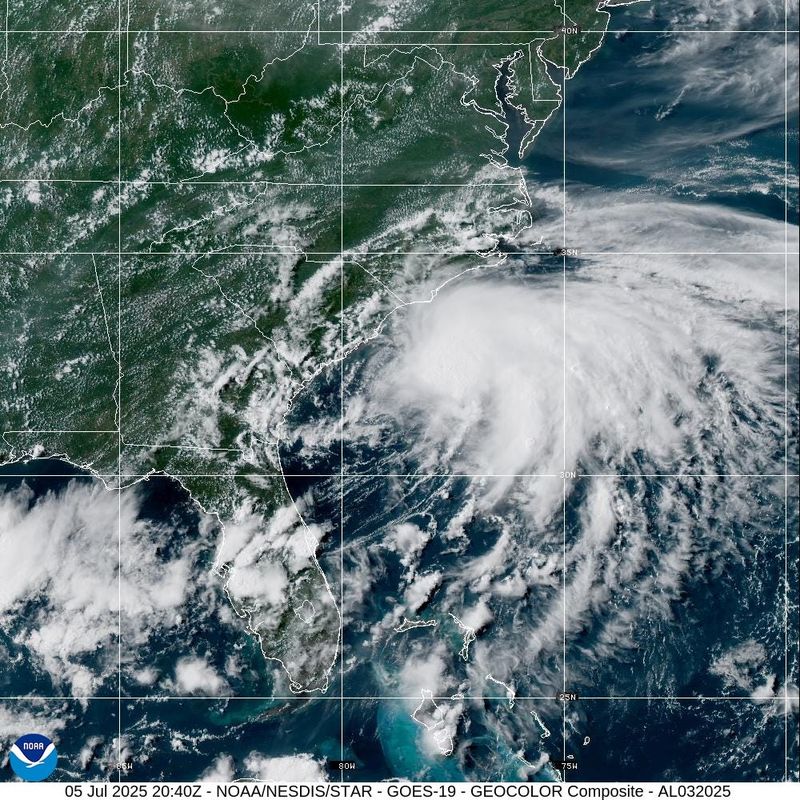
Tropical Depression 3 strengthened into Tropical Storm Chantal on Saturday, July 5, according to the National Hurricane Center.
At 5 p.m., Tropical Storm Chantal was located about 95 miles southeast of Charleston, South Carolina, with maximum sustained winds of 45 mph and higher gusts.

The National Hurricane Center warned that Chantal’s peak sustained winds are expected to reach just 50 mph, with potentially higher gusts before it makes landfall. But to the benefit of the coastal Carolinas, most of the worst winds will remain out over the Atlantic Ocean.
Chantal has picked up speed and is moving north at 7 mph. A motion north-northwest is expected to begin this evening and forecasters expect the center of Chantal to move across the coast of South Carolina overnight or early on Sunday.
Tropical storm conditions are expected to begin in portions of the coastal Carolinas this evening and continue through Sunday morning.
A tropical storm warning is in effect from South Santee River, South Carolina to Surf City, North Carolina. A tropical storm watch was issued for Edisto Beach to South Santee River, South Carolina.
Conditions along the coast within the watch and warning areas are expected to continue to deteriorate.
Tropical Storm Chantal is expected to produce heavy rainfall across portions of the coastal plain of the Carolinas through Monday. Storm total rainfall of 2 to 4 inches, with local amounts up to 6 inches, is expected. This rainfall will result in an elevated risk for flash flooding.
Isolated tornadoes are possible tonight and Sunday across parts of eastern South Carolina and eastern North Carolina.
➤ Weather alerts via text: Sign up to get updates about current storms and weather events by location
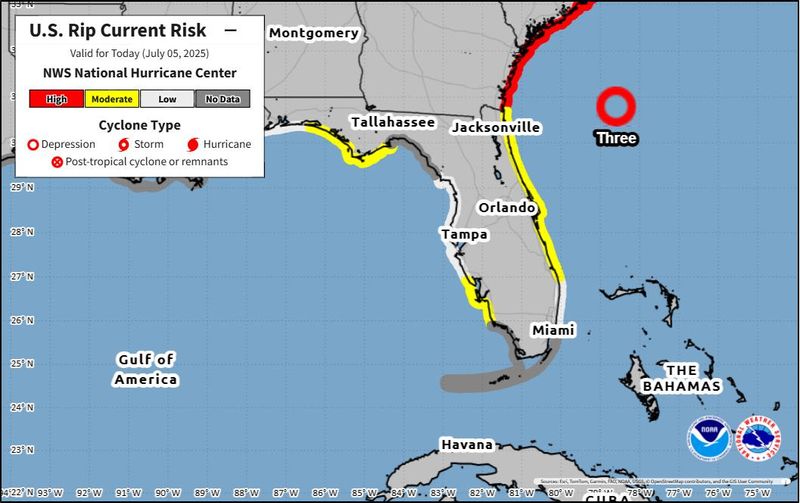
Chantal is expected to bring showers and thunderstorms along Florida’s east coast, as well as rough surf and dangerous rip currents, per the National Weather Service.
“Seas and surf will build from the Florida Atlantic coast to the North Carolina Outer Banks during the extended Independence Day weekend,” AccuWeather reported.
Here’s the latest advisory from the National Hurricane Center as of 5 p.m. on July 5.
Where is Tropical Storm Chantal now?
At 5:00 p.m., the center of Tropical Storm Chantal was located near latitude 31.9 North, longitude 78.7 West.
Chantal is moving toward the north near 7 mph. A motion toward the north-northwest is expected to begin this evening, followed by a turn to the northeast by Sunday night.
On the forecast track, the center of Chantal is expected to move across the coast of South Carolina overnight or early Sunday morning. Maximum sustained winds are near 45 mph with higher gusts.
Some slight strengthening is forecast before Chantal reaches the coast. Rapid weakening is expected after landfall.
Tropical-storm-force winds extend outward up to 140 miles primarily to the east of the center.
Watches and warnings for Tropical Storm Chantal
A Tropical Storm Warning means that tropical storm conditions are expected somewhere within the warning area, in this case within the next 12 to 24 hours.
A Tropical Storm Watch means that tropical storm conditions are possible within the watch area, generally within 48 hours.
Interests elsewhere along the southeast coast of the United States should monitor the progress of this system.
For storm information specific to your area, including possible inland watches and warnings, please monitor products issued by your local National Weather Service forecast office.
Key messages for Tropical Storm Chantal
Tropical Storm Chantal hazards affecting land
WIND: Tropical storm conditions are expected in the warning area beginning this evening and continuing through Sunday morning. Tropical storm conditions are possible in the watch area this evening and overnight.
RAINFALL: Tropical Storm Chantal is expected to produce heavy rainfall across portions of the Carolinas through Monday. Storm total rainfall of 2 to 4 inches, with local amounts up to 6 inches, is expected. This rainfall will result in an elevated risk for flash flooding.STORM SURGE: The combination of storm surge and tide will cause normally dry areas near the coast to be flooded by rising waters moving inland from the shoreline. The water could reach the following heights above ground somewhere in the indicated areas if the peak surge occurs at the time of high tide.
TORNADOES: Isolated tornadoes are possible tonight and Sunday across parts of eastern South Carolina and eastern North Carolina.
SURF: Chantal is expected to bring life-threatening surf and rip currents to portions of the coast from northeastern Florida to the Mid-Atlantic states during the next day or so.
Tropical Storm Chantal spaghetti models
Special note about spaghetti models: Spaghetti model illustrations include an array of forecast tools and models, and not all are created equal. The Hurricane Center uses only the top four or five highest performing models to help make its forecasts.
Tropical Storm Chantal maximum winds
Track active Atlantic storms and disturbances
This auto-updated graphic shows a map of all active storms in the Atlantic.
If the storm trackers are not loading, click here.
NWS radar for Florida, July 5, 2025
Florida rip current map for June 22, 2025
Among the changes the National Hurricane Center announced for the 2025 hurricane season was the addition of a rip current risk map.
➤ National Hurricane Center lays out changes coming for 2025 season. See what to expect
This new addition provided by the Hurricane Center will be provided for the current day, the next day, and as a composite showing the highest risk over both days for areas along the East and Gulf coasts of the United States, Puerto Rico and the U.S. Virgin Islands, and the coast of southern California.
➤ Florida ranks in top 5 states where swimming is most dangerous. How to avoid summer tragedy
Weather watches and warnings issued in Florida
When is the 2025 Atlantic hurricane season?
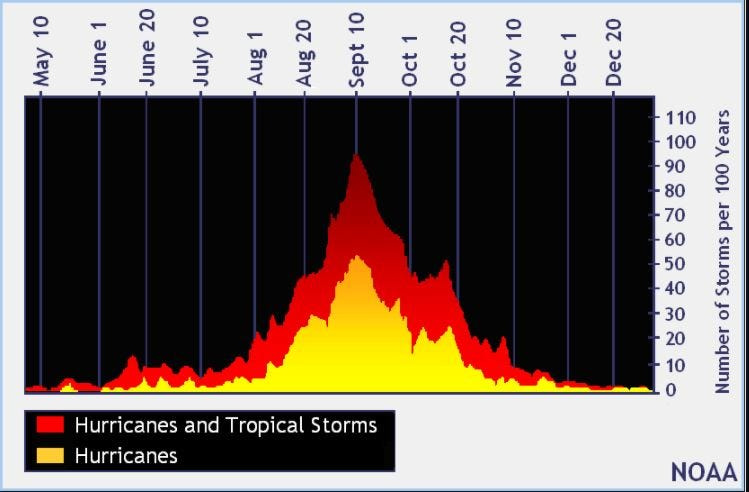
The Atlantic hurricane season runs from June 1 through Nov. 30.
Ninety-seven percent of tropical cyclone activity occurs during this time period, NOAA said.
The Atlantic basin includes the northern Atlantic Ocean, Caribbean Sea and Gulf of America, as the Gulf of Mexico is now known in the U.S. per an order from President Trump. NOAA and the National Hurricane Center are now using Gulf of America on its maps and in its advisories.
When does hurricane season start? When is the peak?
The peak of the season is Sept. 10, with the most activity happening between mid-August and mid-October, according to the Hurricane Center. Hurricane season starts June 1 in the Atlantic basin.
Interactive map: Hurricanes, tropical storms that have passed near your city
Stay informed. Get weather alerts via text
What’s next?
We will update our tropical weather coverage daily.
Download your local site’s app to ensure you’re always connected to the news. And look for our special subscription offers here.
Contributing: Dinah Pulver, USA TODAY
(This story was updated to add new information.)
This article originally appeared on Naples Daily News: Tropical Storm Chantal strengthens. Florida rain, storms, South Carolina landfall expected
Reporting by Kim Luciani and Cheryl McCloud, USA TODAY NETWORK – Florida / Naples Daily News
USA TODAY Network via Reuters Connect