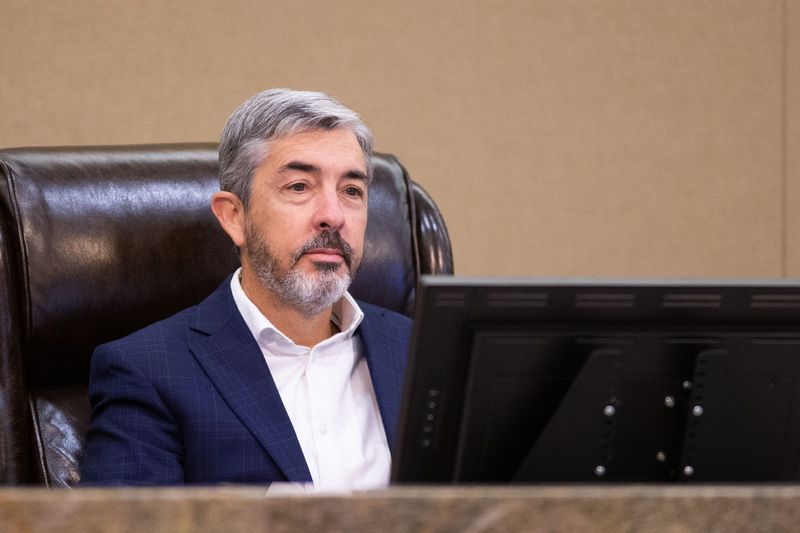
Tallahassee City Manager Reese Goad’s nearly decade long career saw him steer the city during hurricanes, a rare tornado outbreak, a pandemic and more, all amid an increasingly polarized political environment.
His announcement April 28 that he plans to retire didn’t exactly come as a surprise — he hit 30 years of government service, including five years with the state — last December. He called that a “really meaningful personal milestone” that made him eligible to fully retire.

Goad also was the main architect in the city’s recent sale of the Tallahassee Memorial HealthCare campus to Florida State University, a massive step that promises to pump hundreds of millions of dollars into local healthcare over coming years but drew stiff opposition from skeptics and now a lawsuit from the NAACP.
For weeks, rumors swirled that he would step down before the November election, allowing his successor to be picked by the current City Commission, whose bitter 3-2 divide marked much of his tenure.
The commission majority, made up of Mayor John Dailey and City Commissioners Curtis Richardson and Dianne Williams-Cox, have staunchly supported Goad, while the minority, City Commissioners Jeremy Matlow and Jack Porter, have long wanted him fired.
Goad, 54, was hired as city manager in September 2018, roughly a year after he took the reigns as interim city manager following the ouster of City Manager Rick Fernandez. Before his appointment, he served as deputy city manager over the electric utility, the airport and other key departments.
His tenure also overlapped with a major federal public corruption investigation into City Hall that led to bribery convictions and prison time for several people, including then City Commissioner Scott Maddox, who earlier made the motion to appoint Goad city manager.
Goad was never swept up in the FBI probe, but the undercover sting and long-running investigation ushered in a new wave of commissioners and helped fuel distrust that created the intractable and toxic split at City Hall. Since then, the city has often bounced from controversy to controversy.
In this interview, which was edited for space, Goad talks with the Tallahassee Democrat about why he decided to retire, whether politics played any role and which high-ranking city official he thinks should be seriously considered to succeed him.
Q: Why did you decide to retire?
A: “Well as you can imagine, a lot goes into a decision like that, and I’ve been very fortunate to work my career in the city of Tallahassee. I’ve worked in a lot of different areas. As I joke sometimes, I started in the basement of the Gemini building as an analyst, and I’ve just had a lot of opportunities. And at the end of last year, I reached full retirement eligibility, so that was a major milestone for me that really enables me to make a decision like this, kind of consider everything that’s going on in my life, personally and professionally. And the timing is really good. I wanted to make sure that the City Commission has ample time to find the next city manager. I’ve encouraged them to do a national search — I believe they will — and have an orderly transition.”
Q: It’s been in the rumor mill for weeks, that you would retire, allowing the three commissioners in the majority to pick a successor
A: “That’s presumptuous that only three would vote for the successor. I think some of the commissioners’ feelings toward me are clear. But I think it’s presumptuous that they would have the same feelings for a successor that ideally in my opinion would be chosen by a national search.”
Q: Will this current City Commission pick your successor? Should they?
A: “I’ve talked a lot to the mayor, and he asked me to bring an item to the May 13 meeting to kind of outline the process of search. So the timing will be up to them. But I provided a little over five months of notice intentionally before I intend to leave at the end of the fiscal year. I don’t know why they wouldn’t (choose a successor). We know that some may call for it to wait until after the election.
“The election is seven months from now. That’s a long time. My decision is synchronous with the conclusion of the end of the fiscal year in September. That’s a very natural time frame for me personally and also as it relates to our budget year. If we weren’t in an election cycle, that would be a very natural timeline.”
Q: Does the timing ensure you and the majority control the process?
A: “Some would easily point to that, like maybe conveniently point to that. But the City Commission, they can choose to take whatever time they want to take. But that is a role that they have to replace key and critical positions and make decisions however they see fit. I see it only as normal.”
Q: Is this a way to keep the status quo in place basically at City Hall?
A: “I don’t know what that would be. I mean, the mayor, the commissioners, are the policymakers and we do have very capable, experienced staff that that should keep working as they are, in my opinion, and so I can’t imagine that change in any no matter who’s selected as city manager. You have a very, very capable staff running dozens of departments, including the Police Department, the Electric Department, you name it … with seasoned veterans that really make me proud every day.”
Q: Did the city hire a consulting firm during its last city manager search?
A: “Yes the city used (one) and they historically have. There’s a handful for these firms around the United States and they’ll go and gather candidates, make sure people are aware of it and kind of provide that information to the commission so they can make a decision. This is one of the best city manager jobs in the country based on its breadth of operations. The image of Tallahassee around the country and capital city is it’s a very professional government, award winning. We just celebrated another designation as All American City, so you’re not going to have any trouble recruiting candidates.”
Q: The national search could end up picking someone from within City Hall?
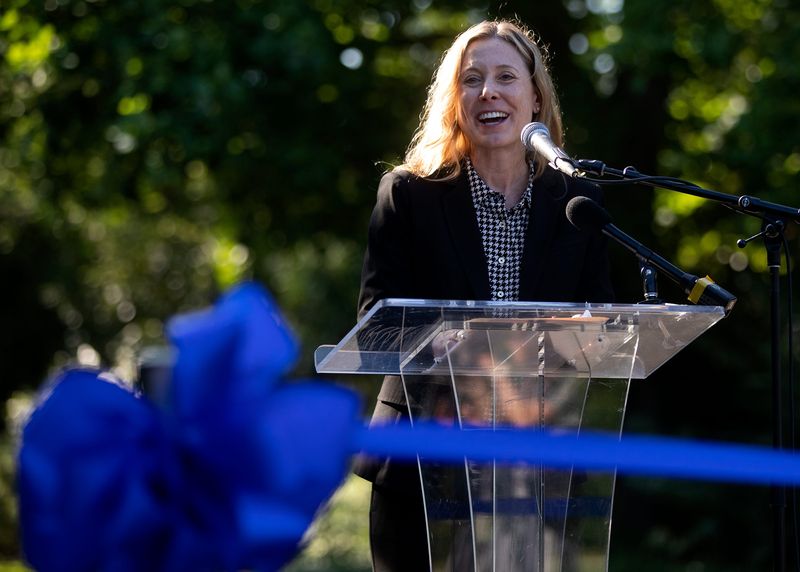
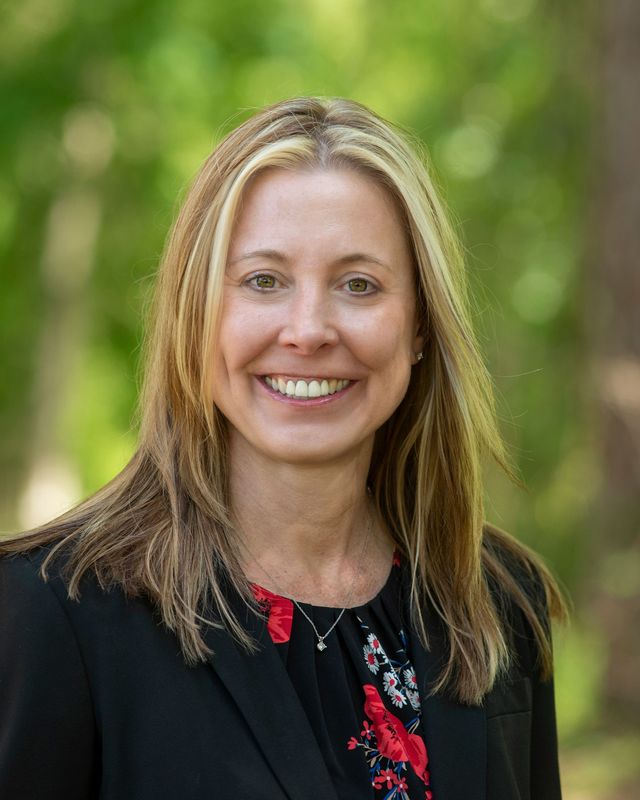
A: “Oh yeah, of course. I can’t imagine the City Commission limiting who could seek the position. I would hope that Deputy City Manager Karen Jumonville would apply. But that’ll be up to her. It’s a big commitment. I hope she does.”
Q: Have you spoken with her about that? Have you encouraged her?
A: “I think so. I’d leave it to her to make any commitments, but she’s a fantastic member. She’s been with the city for a really long time, done a lot of different things, has great credentials. It’s not all of the time that organizations have other senior staff that have spent time in an organization, learned it, done an excellent job. To the extent that you have that option available to you, I think you should consider that seriously.”
Q: Describe your time as city manager. I’m sure there have been good times and bad times.
A: “Really, we’ve as a city, accomplished a lot in the last nine years. We faced a lot of challenges, a lot of natural disasters and other challenges just that were, really difficult, and so and we’ve been successful in all those. But not only that, I think there have been a lot of things that the city has accomplished. We have a culture of teamwork working across department lines. It’s just superior and a desire to be the best. These are things that are ingrained, and I’m proud of that, and that really energizes me. Clearly it’s been tough, because the environment of politics have changed. And I think oftentimes I’m bundled in with the politics of the day, even though we work real hard to be professional and not political.”
Q: Did the hard nature of those politics play any role in your decision to retire now?
A: “Of course it’s tiring. I’ve been through four election cycles. This will be my fifth. Every two years, you have an election cycle, and those election cycles have almost extended the entire two-year period. So you’re always in an election cycle. And those are hard.”
“After a while, the election cycles become tiresome. Think about the last election and the one before that. There’s absolutely nothing new relative to me. And so yeah that’s certainly something you have to take into consideration.”
Q: What were the biggest factors in your decision to retire?
A: “There’s a lot of personal timing that works very well for me … Sometimes it’s just the right time. I think it is. A major accomplishment this past year that I wanted to see through was the transfer of the hospital to FSU Health. We completed that in April. I was really determined to see that through, so that obviously factors into things, too, as you try to accomplish certain goals or things that you’re working on. That matters a lot to me.”
Q: What are some of your biggest accomplishments?
A: It’s the most recent, but that’s the most significant accomplishment that I’ve played a major role in. It has a lot of potential to long term improve the healthcare in our community. So that allows us to take it to the next level, which is great, but it also has so much positive economic potential for our community.
“I’ve been a part of a lot of things. Some of them are measured in accolades. All-American City — awesome. Early in my career, I was tapped to lead the smart grid effort, and that was really hard because we have a complex system made up of electric, gas and water. No system had done that at the time. We were the first in the nation to do it. The recognitions are almost endless. One that I like the best, that people find a little funny sometimes, is our fleet department. Last year, our fleet department was recognized as the top fleet department in the United States. Our fleet, every month, drives 1.1 million miles. That just goes to the scale of the operation.”
Q: This interview wouldn’t be complete without talking about the many hurricane cleanups.
A: “The commission that was led by Mayor Gillum appointed me. The next (month) Hurricane Michael hit. That was a massive challenge … and we excelled in the recovery of that storm, which was a great improvement from our prior storm, from Hermine, and it was just a model of excellence. In fact, that storm and that approach — we basically built that approach with our public power partners — has become the model for all of the storms since. And there’s not utility system anywhere in the United States doing a better job at storm restoration than the city of Tallahassee.”
Q: What do you plan to do with your life once you retire?
A: “I don’t have an exit plan. People have asked me. You don’t do jobs like these with an exit plan. You’re all in. You’re either doing it or you’re not doing it. I’ll take some time. Personally there’s a lot of good things happening in my life, and I’ll take time to enjoy that. I don’t expect I’ll be another city manager.”
Contact Jeff Burlew at jburlew@tallahassee.com or 850-599-2180.
This article originally appeared on Tallahassee Democrat: ‘Timing is really good’: City manager Q&A on exit, ‘tiresome’ politics
Reporting by Jeff Burlew, Tallahassee Democrat / Tallahassee Democrat
USA TODAY Network via Reuters Connect