More details are coming out following a rare and deadly virus outbreak aboard a luxury cruise ship.
As of May 7, five people had been confirmed to have hantavirus, and three others were suspected of having contracted it, according to the World Health Organization.

The outbreak is theorized to have started with a passenger who boarded the vessel after becoming infected with the virus, according to a WHO health expert. The Argentine government says it believes the male passenger and his wife, who have both died, contracted the virus during a bird-watching outing at a landfill in Ushuaia before boarding the ship.
Hantaviruses are a group of zoonotic viruses that naturally infect rodents, sometimes for long periods without apparent illness, and are occasionally transmitted to humans.
There are different types of Hantavirus, each associated with a specific rodent reservoir species. The WHO said the strain of hantavirus in the latest outbreak has been confirmed by laboratory testing as the Andes virus, a strain found in South America known to cause limited human-to-human transmission.
The ship is sailing toward the Canary Islands off the coast of Spain and is expected to arrive at the port of Granadilla on the island of Tenerife during the “early hours” of May 10, according to a May 7 update.
What is the MV Hondius?
The hantavirus outbreak on the MV Hondius, a Dutch cruise ship traveling in the Atlantic Ocean. Since 2019, Oceanwide Expeditions has owned and operated it.
When did MV Hondius set sail during the hantavirus outbreak?
The MV Honduis departed from Ushuaia, Argentina, on April 1 at 3 p.m. local time, carrying about 150 people, according to USA TODAY.
See timeline of passengers disembarking, getting sick with hantavirus
How is hantavirus transmitted?
Hantavirus is primarily distributed by rodents through exposure to their urine, droppings or saliva and less commonly through a scratch or bite, according to the Centers for Disease Control and Prevention.
“While rare, hantavirus may spread between people and can lead to severe respiratory illness and requires careful patient monitoring, support and response,” the WHO writes.
What are the symptoms of hantavirus?
Symptoms usually begin between 1 and 8 weeks after exposure, depending on the virus type, according to the WHO. They typically include fever, headache, muscle aches and gastrointestinal symptoms such as abdominal pain, nausea or vomiting.
In HCPS, the disease may progress rapidly to cough, shortness of breath, accumulation of fluid in the lungs and shock.
According to the CDC, later symptoms can include:
What is the survival rate for hantavirus?
Hantavirus infections are associated with a case fatality rate of <1–15% in Asia and Europe and up to 50% in the Americas.
Who is most at risk for hantavirus?
The risk posed by hantavirus to the wider public is low, according to the WHO on May 4.
“This is not the start of an epidemic. This is not the start of a pandemic,” Dr. Maria Van Kerkhove, acting director of epidemic and pandemic management at the WHO, said in a May 7 press briefing.
Is there a vaccine or treatment for hantavirus?
There are no specific treatments or vaccines for hantavirus infections; however, the WHO reports that early supportive care and immediate referral to a facility with a complete ICU can improve survival.
Is hantavirus in Florida? Is hantavirus in the US currently?
As of May 7, there are no reported cases of hantavirus in Florida.
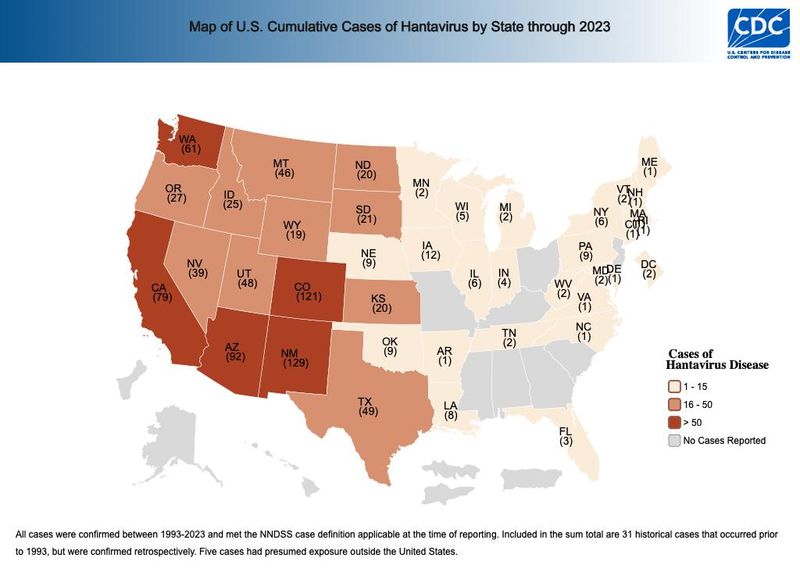
However, there have been cases reported in the state in the past. Hantavirus has been identified in hispid cotton rats in Florida, according to the Florida Department of Health. The CDC reports three cases in Florida between 1993 and 2023.
No cases have been documented in America. Health authorities in at least five U.S. states have reported the return of locals who were aboard the ship:
Contributing: Eve Chen, Melina Khan, Nathan Diller, Thao Nguyen, Kathleen Wong, Sara M Moniuszko, and Natalie Neysa Alund, USA TODAY
Samantha Neely is a trending reporter for the USA TODAY NETWORK-Florida, covering pop culture, theme parks, breaking news and more. You can get all of Florida’s best content directly in your inbox each weekday by signing up for the free newsletter, Florida TODAY, at https://floridatoday.com/newsletters.
This article originally appeared on Florida Today: Timeline of the cruise ship hantavirus outbreak. What we know so far
Reporting by Samantha Neely, USA TODAY NETWORK – Florida / Florida Today
USA TODAY Network via Reuters Connect