Michael Rajner remembers what HIV medication was like in 1996.
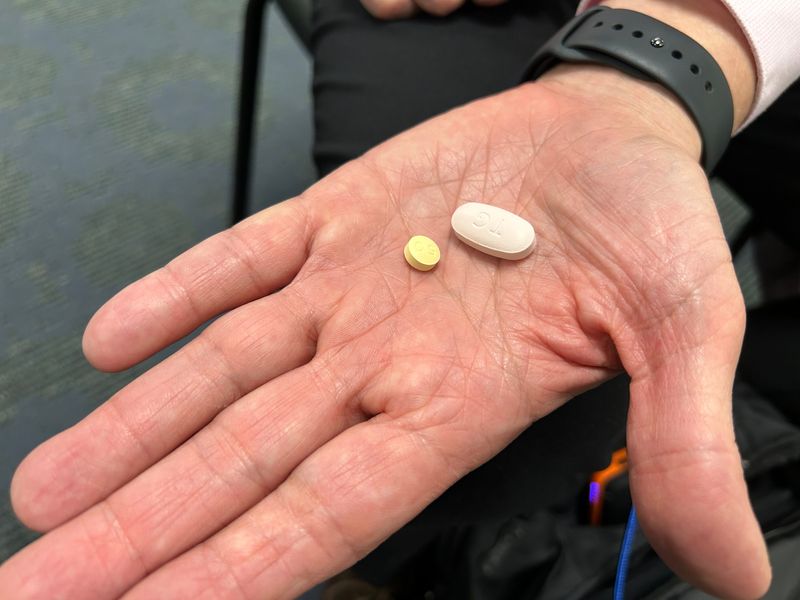
Newly diagnosed, the Fort Lauderdale resident had bottles and bottles of pills, some he had to take three times a day and sometimes he had to consume eight pills at once.

He’d taken two weeks off of work to adjust to the new antiretroviral regimen, but after seven hours on the bathroom floor, violently ill, he called his doctor and said: “I’m bringing this back to your office, you can give them to somebody else who needs them.”
The good news: Now, he only takes two pills once a day, a regimen he can handle, and has an undetectable viral load.
The bad news: For thousands in Florida who rely on the AIDS Drug Assistance Program (ADAP), the Florida Department of Health is about to change up their medication plans or even get rid of covering them altogether, citing federal cuts as the culprit.
Public health advocates warned legislators at the capitol on Wednesday, Jan. 14 that cutting funds would push people off of their meds and separate them from their doctors, causing lower adherence rates. When life-saving HIV medication isn’t taken daily, viral loads go up, making the virus transmissible again and putting people at risk for opportunistic infections.
“We’re going back to a time of fear,” Rajner told the USA TODAY NETWORK-Florida. “Some people don’t know how they’re going to be able to get their medications. They just are about ready to give up.”
Why is Florida cutting its subsidies for HIV medication?
According to letters sent to ADAP clients in January from DOH, as of March 1, the state is cutting its subsidies for HIV medication. Funds will only be available for people at or below 130% of the federal poverty level, a drop from 400%. The state is also removing a medication from the list of prescriptions covered called Biktarvy, a once-a-day pill.
In a statement to the USA TODAY NETWORK-Florida, a DOH spokesperson said the changes were “due to rising health care insurance premiums nationwide and lack of additional Ryan White Grant funding.”
The “adjustments” are to prevent a shortfall of $120 million, and DOH will also cover costs during a two-month transition period to give clients time to connect to other services if they are impacted.
But advocates, like Rajner and Dr. Paul Arons, the former head of the HIV/AIDS program at the Florida Department of Health from 1989-2007, questioned these numbers during public comment at a Senate Appropriations Committee on Health and Human Services, complaining about a lack of transparency from the DOH.
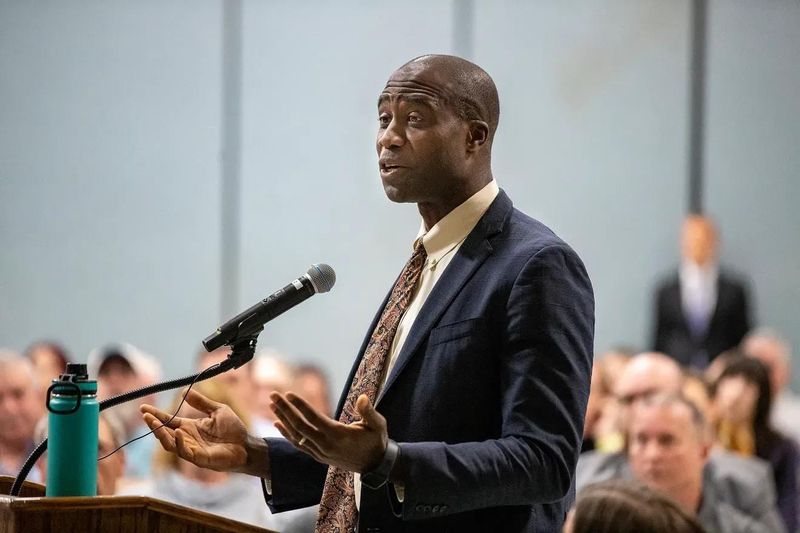
At the meeting, Surgeon General Joseph Ladapo responded to concerns, saying the situation is a “very real and consequential situation that we’re dealing with.”
He said the program was “exponentially increasing in costs” because of changes at the federal level, specifically the expiration Affordable Care Act tax credits, and there aren’t enough resources at the state level to cover the difference.
DOH’s proposal would cut approximately 10,000 Floridians from ADAP coverage, Ladapo said, but advocates say the number could be as high as 16,000.
“The Florida DOH can’t just unilaterally push tens of thousands of Floridians living with HIV off of their medications,” Sen. Carlos Guillermo-Smith, D-Orlando, told the USA TODAY NETWORK-Florida. “It is a life or death issue for them, we’re not going back 40 years.”
HIV in Florida: What are the numbers?
Current federal guidelines put someone at 400% of the poverty level making $62,600 a year and 130% of the poverty level making $20,345.
Out of the approximately 30,000 people who are enrolled in ADAP in the state now, 60% use Biktarvy, said Arons.
“Asking a person with HIV whose being successfully treated with a regimen that they tolerate, asking them to change that regimen for no medical reason is a traumatic request,” Arons said.
According to the U.S. Department of Health and Human Services FY 2025 Annual Performance Plan and Report, 89.6% of clients enrolled in the Ryan White HIV/AIDS program were virally suppressed. That same year, only 50% of people got their flu shot.
Rep. Gallop Franklin, D-Tallahassee, a pharmacist, said HIV medications have one of the highest adherence rates. But switching up medications, especially to those that cost less money, means maybe more pills and more challenges.
“Yes, you can save money doing that but what you risk is your adherence rate will absolutely decrease,” Franklin said.
In 2019, Florida ranked first in the number of new HIV diagnoses, according to KFF, a health policy non-profit, and the rate of new diagnoses per 100,000 people hit 20.6 in 2022, almost double that of New York, which had a rate of 11.8.
While new HIV diagnoses dropped during the COVID-19 pandemic in 2020, they rose again in 2021 and 2022.
Florida now has approximately 130,000 people living with HIV/AIDS, Rajner said.
He’s reconnected with old colleagues and advocates who he hasn’t spoken to in years, as HIV has become more of a chronic condition, he said.
Until this week.
“Things were going OK, but then all of a sudden … what just happened? They just blew up the program, and everyone is getting reactivated,” he said.
Ana Goñi-Lessan, government impact reporter for the USA TODAY Network – Florida, can be reached at agonilessan@usatodayco.com.
This article originally appeared on Palm Beach Post: Thousands in Florida to lose coverage for HIV meds because of state cuts
Reporting by Ana Goñi-Lessan, USA TODAY NETWORK – Florida / Palm Beach Post
USA TODAY Network via Reuters Connect