(This story was updated to add new information.)
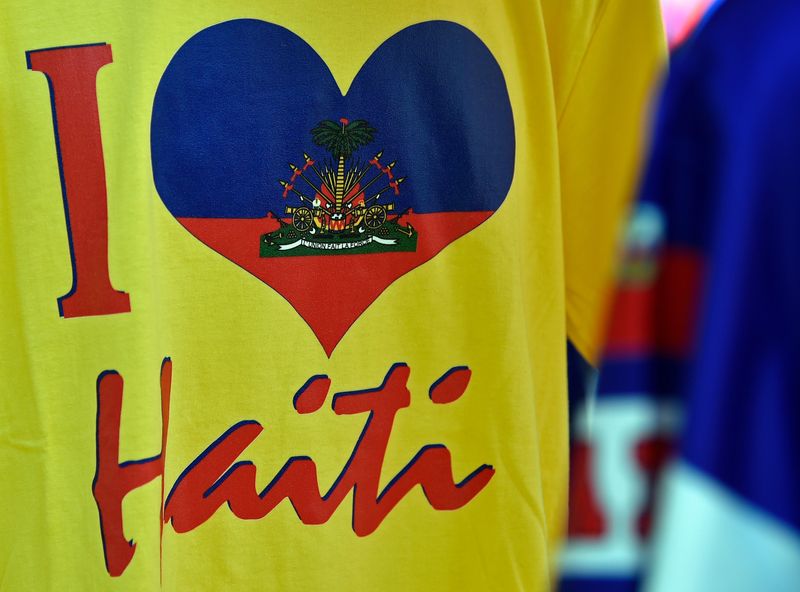
This year’s immigration actions have hit Haitians living in Florida as hard as a hurricane striking the Caribbean nation they call home, leaving thousands of people afraid of arrest, deportation and separation from their families.

Many are on the verge of losing legal status to live and work in the United States following two Supreme Court rulings and a policy change by President Donald Trump that has blocked travel to and from Haiti.
About 500,000 Haitians — most of whom are in South Florida — are scheduled to lose Temporary Protected Status on Aug. 3. The Department of Homeland Security said on June 27 that the termination will become official Sept. 2, the Tuesday after Labor Day.
Another 211,000 are on humanitarian parole and also are at risk of deportation.
Trump’s ban on people from Haiti from traveling to the United States blocked a final door of escape from a country struggling with gang violence, poverty and food and medicine shortages, although Homeland Security claimed in announcing the Sept. 2 date that conditions there were improving and that Haitians no longer qualified for TPS.
All of those actions are part of Trump’s bid to stage the largest mass deportation in history.
“When I first came, I saw the United States as the land of opportunities and where I would be safe to develop a new future,” said Goliath, a security guard who arrived in South Florida in 2024 and who The Palm Beach Post is identifying only by his first name because family is in hiding in Haiti.
“Right now, I just feel in trapped in hell.”
Elected officials expect the actions to cause labor shortages in Florida. The state’s economy stands to lose hundreds of thousands of workers who are nurses, farmworkers, hotel and restaurant staffers and day laborers who work on construction sites, roofing jobs, home remodeling and other intensive manual work.
➤ Access The Palm Beach Post on the go with the app: Our app offers a personalized experience to your liking. Download our app to personalize your news alerts, swipe and scroll through stories faster, and bookmark them to save and read later.
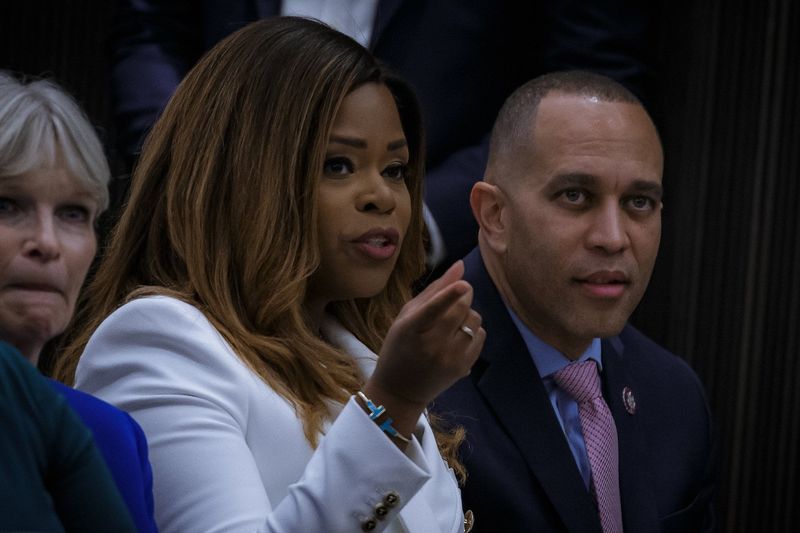
As a result, patients will receive less care, construction projects will meet with delays and restaurants will raise prices as they struggle to find cooks and servers, said U.S. Rep. Sheila Cherfilus-McCormick, the daughter of Haitian immigrants.
“When it comes to health care, hospitality and construction, we will literally see the economy of South Florida come to a collapse,” said McCormick, a Democrat whose district includes parts of Palm Beach County.
Byrnes Guillaume, an attorney in West Palm Beach, said a single mother on humanitarian parole recently approached him in church. She was frantic, Guillaume recalled, as she asked: How will I pay for food for my family? How will I pay rent? How am I going to live here?
“As a lawyer, I go in and they expect me to give them a path forward. They expect me to give them answers, and I have no answers to give them,” said Guillaume, who was born in Haiti.
“I looked at their faces and they are hopeless,” he said, adding: “They’ll have to be in the shadows.”
Court rulings, Trump decisions make life ‘chaotic’ for Haitians
More than 1.1 million people of Haitian descent live in the United States, census data has found. Many families have traveled the 700 miles to Miami from Port-au-Prince since the 1950s, initially fleeing the political instability of the Duvalier regime, which fell in 1986, and the governments and violence that have followed it.
The 2010 earthquake sent thousands to the United States as well. President Barack Obama granted those seeking refuge from the natural disaster TPS, allowing them to live and work legally once they passed background checks.
In January 2023, continued unrest in Haiti led President Joe Biden to extend humanitarian parole to Haitians. Between January and April 2023, about 40,000 Haitians entered the U.S. on humanitarian parole.
Parole is granted to people dealing with persecution or family or medical emergencies. They need a sponsor in the United States who can support them financially. Neither TPS nor humanitarian offers a pathway to permanent residency or U.S. citizenship, but they provide safe harbor and permission to live and work in America. They also prevent them from being deported.
These recent arrivals have helped cover labor shortages and become part of the “backbone” of Florida’s economy, said Nicholas Andre, a professor at Florida International University’s School of International and Public Affairs.
Andre, a native of Haiti, said their absence will be a “huge loss” for the employers who hired and trained them.
It will also affect large retailers like Walmart and Amazon, who have started to phase out some employees who have lost their status, he said. Those businesses also stand to lose hundreds of thousands of clients.
“It’s chaotic,” Andre said.
Cherfilus-McCormick said her office has heard reports of “silent” mass firings of immigrants who were legally employed as nurses and caretakers.
“That means on Friday, there were several patients who woke up and their nurse was not there,” McCormick said.
Trump targeted end of TPS for Haitians during first term
Trump tried to end TPS for Haitians during his first term. Federal judges stopped him, citing procedural errors and potential race biases in the administration’s orders.
During his campaign for a second term in 2024, Trump accused Haitians of eating an Ohio city’s dogs and cats, claims local officials debunked.
In announcing the end of TPS for Haitians on Feb. 20, Homeland Security Secretary Kristi Noem said the system had been “exploited and abused” for extended stays and should become temporary again. On March 21, Noem ordered the end of humanitarian parole.
Immigration advocates challenged both orders in court, with judges saying Noem lacked the authority to terminate the programs and did not provide evidence to support her claims that deportation is in the national interest.
The Trump administration made emergency appeals to the Supreme Court. In separate rulings, the high court allowed TPS and parole protections to end while the cases play out in the lower courts, a process which could take months.
In June, DHS sent letters to thousands of humanitarian parole holders urging them to self-deport within 60 days.
“It’s shameful,” Guillaume said.
Rulings leave Haitians unsure of job status, dreading deportation
Haitians covered by TPS and humanitarian parole say the government’s actions have flipped their lives upside down. Like Goliath, they spoke on the condition that only their first names would be used.
The U.S. government knows where they live, where they work and who their family members are, said Louis, who arrived in Florida in 2008 and works at a Home Depot. Each went through background checks. They renew their work permits and update their contact information annually.
“We are all concerned,” Louis said. We feel something wrong is coming.”
Rene said he arrived in the United States in 2018. His parents had green cards, but their status did not cover him because he was 18.
He applied for TPS in 2020 and got his work permit a year later. He landed a job at a T-Mobile store and became its manager. Now he’s a sales manager for a software company.
Without TPS, Rene will lose his job. He might have to move to another country and leave behind his parents, siblings and the life he has made.
“All the things I’ve been building for the past few years, it’s going to be for nothing,” he said.
Goliath, the security guard, said humanitarian parole let him flee persecution from the gangs that rule Port-au-Prince. He said he can’t sleep and is paranoid. When he sees a car behind him, he’s afraid it’s ICE agents. He said he has nightmares about being sent back to Haiti and targeted by gangs.
Worst of all, he has lost hope of getting his wife and daughter out of danger.
Louis, like many Haitians who fled to South Florida, said they no longer have a safe home to return to in Haiti.
“We would be going back to a country where everything has become worse than before,” he said. “There’s nothing, no lives, no jobs. We can’t go to school. We can’t get money. We can’t open the business. There’s nowhere to go back to.”
Counselor asks: How will Haitian crackdown affect children?
South Florida’s Haitian community has prospered in the past 30 years. Longtime members have seen newcomers go from the sugarcane fields of Belle Glade to opening restaurants, barber shops and grocery stores.
Their children have received educations and are becoming lawyers, doctors and elected officials like Cherfilus-McCormick and state Sen. Mack Bernard.
Many wonder if Trump’s policies will dismantle years of community-building that has helped Haitians thrive as professionals, homeowners and parents of U.S.-born children from whom they may soon be separated.
“It’s a human tragedy,” said Fritz, a member of the Haitian Committee for Social Services & Immigrant Rights who asked to be identified only by his first name.
The Rev. Pierre Agneau Georges has led Peniel Haitian Baptist Church of Lake Worth Beach for 38 years. He said the TPS and parole rulings have paralyzed many of the nurses, engineers, electricians and store clerks who attend Sunday services. They are terrified of losing their jobs, being separated from their children and being deported into danger.
Georges said his brother was kidnapped in Haiti in 2024 and that every other month, he hears a similar story at church.
“Sending us back is not only going to hurt us. It’s going to hurt this country as well,” said Georges, a native of Haiti. “Because we are contributing to make America a better country.”
Some Haitians, as Guillaume suggested, are already opting to living in the shadows, said Thierry Isaac, a behavioral therapist in Palm Beach County schools. He said he already is seeing it in the students he counsels.
Isaac says the rulings have spread fears and anxieties that will have lasting effects among Haitian students.
Students ask Isaac: What’s will happen to them? Will they be deported? Will they be separated from their parents? Parents call to talk about sleepless nights and fears of sending their children to school.
“In the next five or 10 years, we’re going to have a generation of young men and ladies with mental issues to deal with and to reckon with because of everything that is happening right now,” Isaac said.
Valentina Palm covers Royal Palm Beach, Wellington, Greenacres, Palm Springs and other western communities in Palm Beach County for The Palm Beach Post. Email her at vpalm@pbpost.com and follow her on X, the platform formerly known as Twitter, at @ValenPalmB. Support local journalism: Subscribe today.
This article originally appeared on Palm Beach Post: ‘They are hopeless’: Haitian immigrants face deportation to violence, poverty they fled
Reporting by Valentina Palm, Palm Beach Post / Palm Beach Post
USA TODAY Network via Reuters Connect