It was a logical question.
“Why on earth would a race-car driver need a boat that big?”

The short answer: He didn’t.
Didn’t need it, that is.
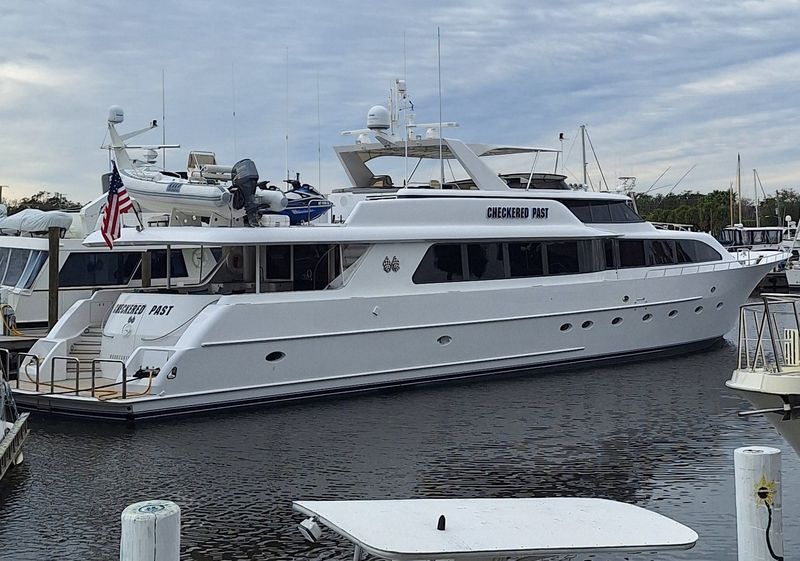
But he wanted it, and he could afford it, which explains the 112-foot yacht, “Checkered Past,” owned by former NASCAR racer Greg Biffle, who tragically died, with family and friends, in a plane crash last December in North Carolina.
The boat has spent many months tied to the docks outside the Chart House at the Daytona Marina and Boat Works. It’s said to still be for sale, though broker Fraser Yachts, which had it listed for $4.395 million, now lists it as “no longer available.” The guess is, no longer available through that broker.
Anyway, here’s another reason for that boat: Back in the day — not all that long ago, actually — it was the thing to do.
Many movers and shakers in big-league auto racing have always been infected with the desire to keep up with the Joneses. Or, in this case, the Penskes, Hendricks, Earnhardts, etc. Usually, it’s a bigger and better pit box, or fancier car hauler, or maybe a more luxurious Prevost to one-up your neighbors in the speedway’s motorcoach lot. Sometimes it’s a new jet.
But big boats have definitely had their day.
In fact, nearly 40 years ago, former NASCAR team owner Felix Sabates (his fleet included the “Big Easy” and “Victory Lane” over the years) talked Bill France Jr. into forming something they called the NASCAR Yacht Club, a loosely thrown-together outfit which seemingly had just a couple rules: Own a big boat and don’t talk about the NASCAR Yacht Club.
Kinda like the membership at Augusta National, but instead of a green coat, you sport a pair of John Lobb deck shoes. Hand-stitched, of course.
More informally, it probably started a decade or more before then, when the France family and friends would schedule a week off after the Firecracker 400 and motorboat (“Hi Banx” is their longstanding boat name) to the Bahamas for several days of fishing, snorkeling, etc.
You know the rest: Someone in the group thinks, “Maybe I should buy a boat, too,” and before long, the fever has spread. Over the years, several drivers and team owners have docked here and elsewhere in a variety of cleverly named vessels (some more clever than others, of course).
Roger Penske: “Detroit Eagle,” as well as “Podium” and “Excellence.”
Rick Hendrick: “Wheels.”
Rusty Wallace: “Midnight Express.”
Felix Sabates: “Big Easy” and “Victory Lane.”
Jeff Gordon: “24 Karat.”
Dale Earnhardt: “Sunday Money.”
According to the old stories, few took to the boating scene with as much gusto as Earnhardt, who joined those free-weekend Bahamas gatherings and quickly learned the in’s and out’s of maneuvering an offshore fishing boat — “probably because it had a steering wheel,” it was once explained.
In a horrible twist, Earnhardt’s promised pride and joy, the “Sunday Money,” was still being built but nearing completion when he was killed in that 2001 crash at Daytona.
Another Daytona Beach legend, Hawaiian Tropic founder Ron Rice, once said he was the same guy he’d always been back before he started printing money with coconut oil. “Except the toys are bigger and more expensive now,” he said. His 80-footer, by the way, was named “Princess Sterling,” after his daughter.
The scale of things is all that separates that John Lobb crowd from you and your absolute need to have the Carolina Skiff that might be gathering dust and moss in the side yard. And maybe your fast-arriving desire to sell it, which of course brings to mind those two best days in a boater’s life.
Sadly, Dale Earnhardt never got to take delivery on his dream boat, and Greg Biffle didn’t live to see someone sail away in his.
Halifax/Indian River
Spring isn’t prime flounder time around here, but maybe we should tell the flounder.
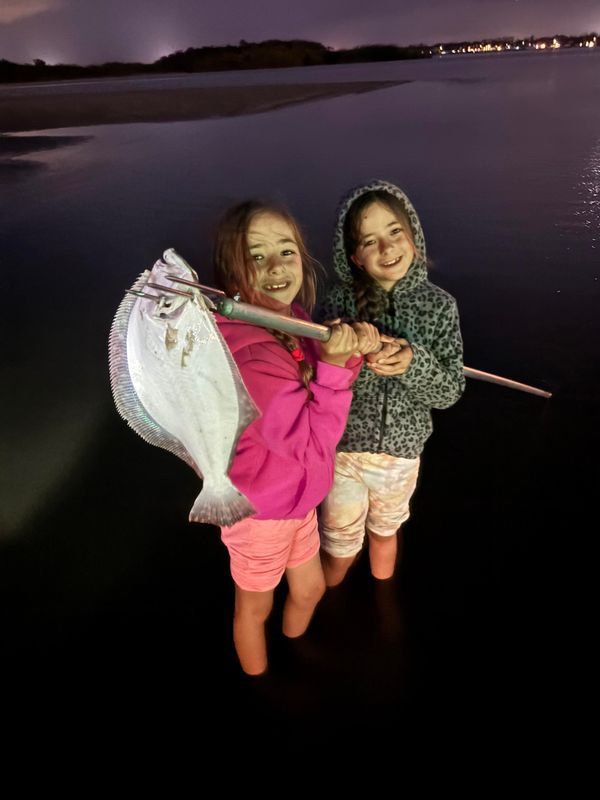
“We’ve been catching a flounder or two every day,” says Capt. Jeff Patterson (Pole Dancer). “I’ve been seeing a decent amount while catching bait, so I decided to beach the boat and check out one of those spots right after dark.
“I walked only 20 feet and found a decent flounder that I gigged. I’ve always wanted to gig a flounder walking a bank like that.”
Capt. Jeff says the water started looking cleaner by midweek, especially the closer you get to Ponce Inlet.
There were a few discussions this week that included talk of big leaping ladyfish throughout the intracoastal. They won’t feed you; they’re just here for a good time. You know the type.
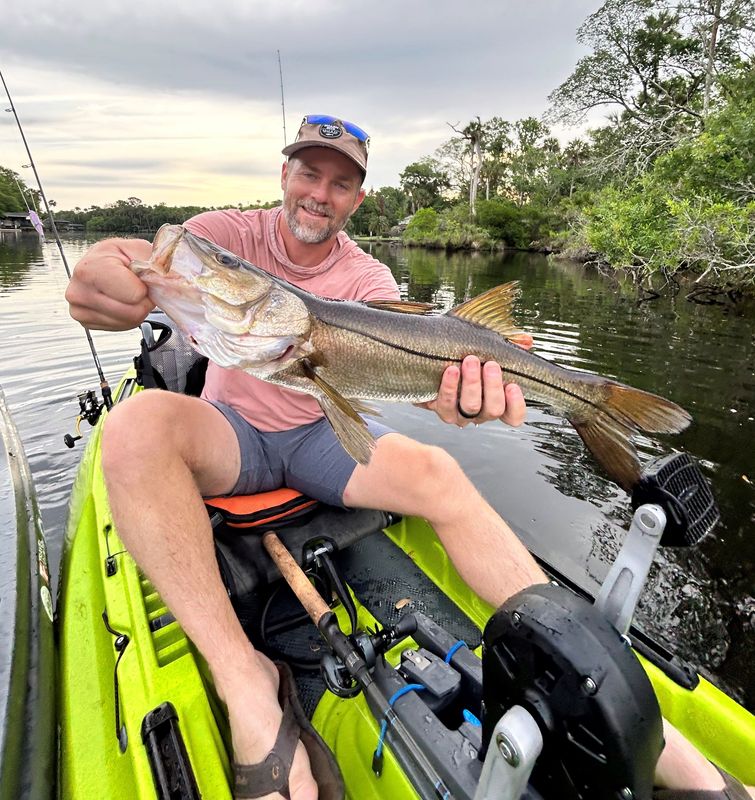
Kayak angler Blake Abbey has been on the road lately, hauling his fishing gear to other areas, but he’s back and says the snook are plentiful in the Tomoka River. All are shy of the 28-to-32 inch slot but still a fun fight in that 22-26 range.
“The top-water spook bite has been very good in the mornings,” Blake says.
Surf
The seaweed won’t relax, and that’s making it more of a chore than it needs to be.
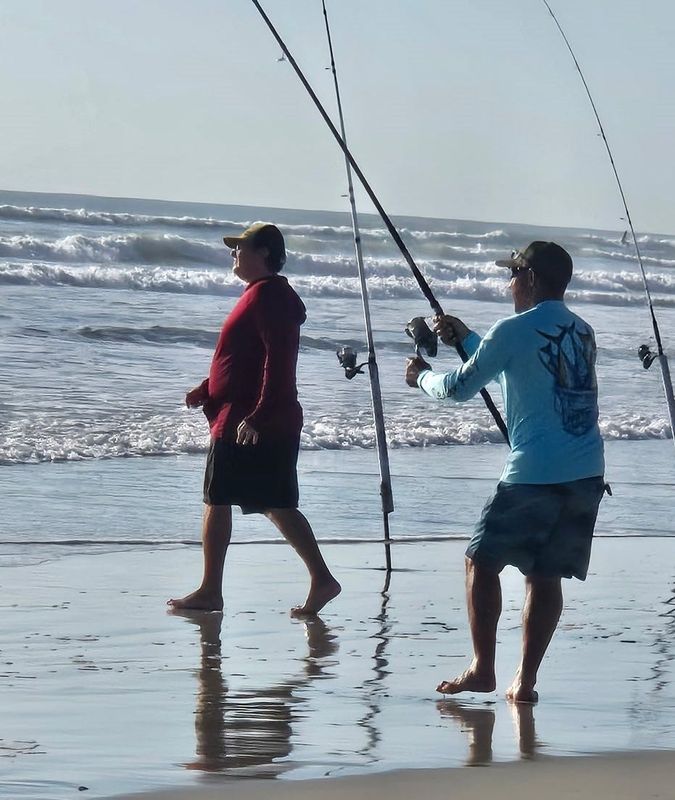
In between the onslaughts of sargassum, anglers are finding the surf’s best prize, the pompano.
“Everyone has been catching them on sandfleas and crab knuckles,” reports Marco Pompano, who said the waves of weeds eventually sent him home early.
“The fish are here, but what a mess,” he says.
St. Johns
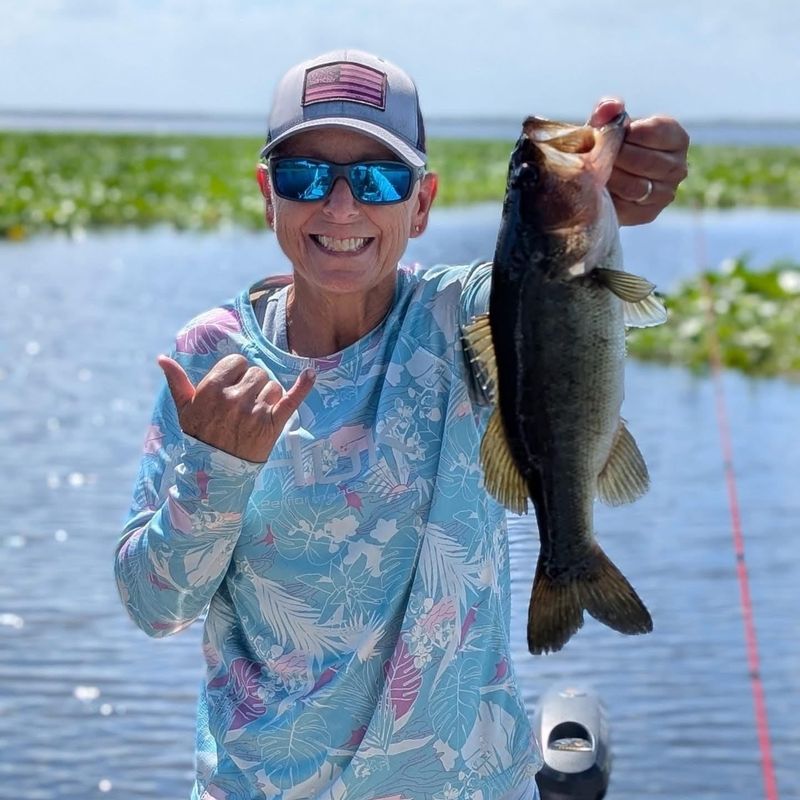
The influx of threadfin shad throughout the river continues, and yet again, the schools of largemouth bass still haven’t grown tired of them. We’re at something like 1.2 million consecutive years, and counting.
“April is just a fantastic month,” says Capt. Bryn Adams (Highland Park Fish Camp). “They’re providing great top-water action. Shellcracker and bluegill are starting to heat up, too, and later in the summer, you can add warmouth to that list.”
HSFC’s special day of fishing coming up
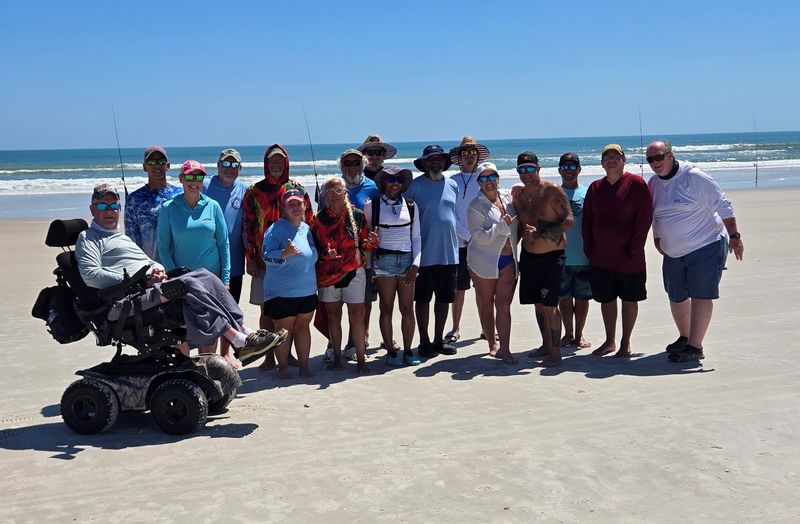
The Halifax Sport Fishing Club will be hosting its annual Special Needs Fishing Tournament May 2 at Bushman Park in Port Orange (4575 Spruce Creek Road), from 9 a.m. to 1 p.m.
That’s a week from Saturday.
The tournament is geared to help children and young adults with physical and mental handicaps have a fun day catching fish. Goody bags are given out to the first 60 who register (between 8:30-9 a.m. that day).
Fishing rods and bait are provided along with lunch and beverages. Club members will be there to assist. Folding chairs and sunscreen are recommended.
Oh, and it’s free.
More info: Contact Helen Klenk at 386-547-1813, email the club at Publicity@hsfc.com, or maybe you’ll find your answers at the club’s website (HSFC.com). Naturally, the club’s Facebook page will include plenty of info, too.
Hook, line and clicker: Send us your fish pics
We want to see your most recent catch. Email your fish photos to ken.willis@news-jrnl.com.
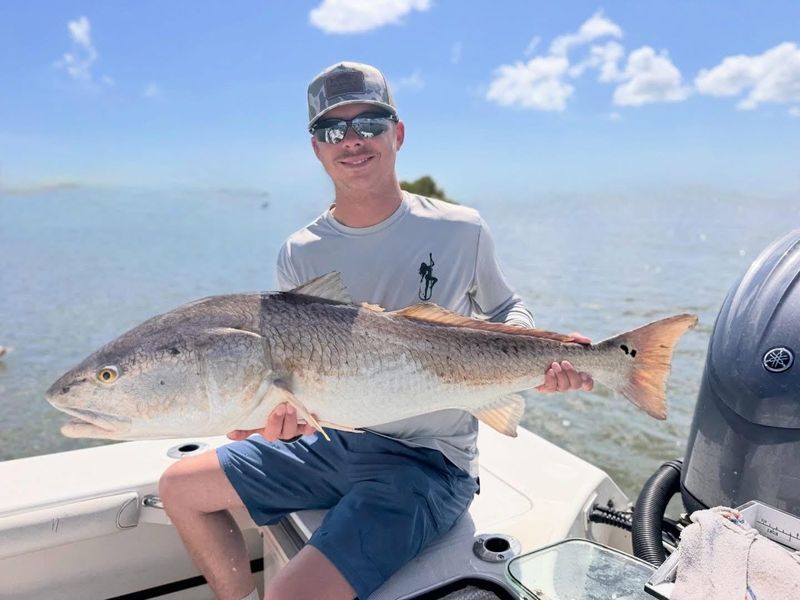
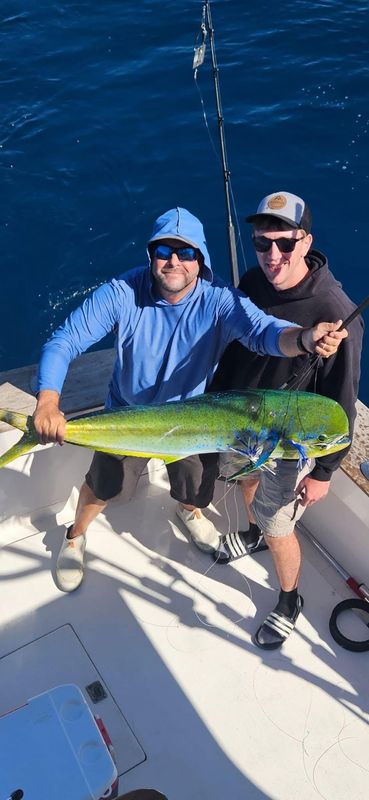
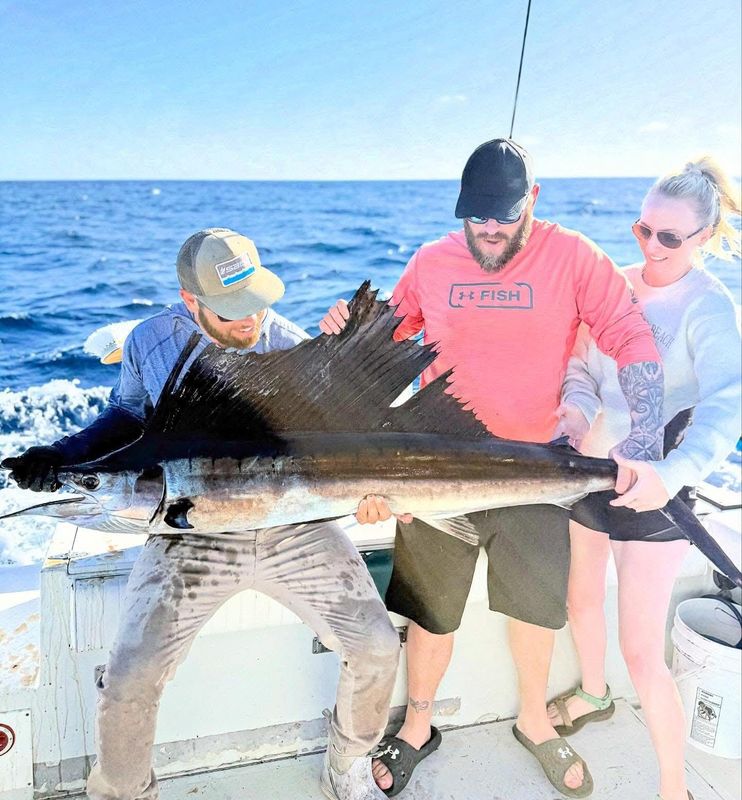
Please include first and last name of angler(s), as well as type of fish (we’re occasionally stumped). Some may be used in print, but all appear in the online version of the fishing roundup.
Do I need a fishing license?
You can find all the license info, including exemptions, on Florida’s Fish and Wildlife Commission website: MyFWC.com. But the basics are: No: If you’re 65 or older, 15 or younger, you don’t need a license. “Probably” Not: If you’re fishing with a licensed guide or charter boat, both of which often purchase commercial licenses that cover their customers. Yes: Most everyone else, including visitors from other states. Yes: Even if you’re a shore-based angler (shoreline, dock, pier, bridge, etc.), and even if fishing with a shore-based guide. However: The shore-based license is free . . . But: You still need to register for that free license.
Where do I get a license and what does it cost?
Many bait shops sell licenses, as do the bigger retailers (Bass, Dick’s, Walmart, etc.). Florida’s FWC uses a third-party site for buying or renewing fishing licenses: GoOutdoorsFlorida.com. The cost: $17 for an annual license. Don’t forget: Whether you’re fishing fresh or saltwater, you need the specific license. Freshwater and saltwater licenses are both $17 annually.
I’m here on vacation, do I need a license?
Yes you do, and some are available at GoOutdoorsFlorida.com, but what you need probably isn’t. Short-term: Three-day ($17) and seven-day ($30) licenses are no longer available online, but only at local tax-collector offices and many bait shops. Long-term: The yearly visitor pass is still available online for $47. “Some” exceptions: If you’re fishing on a charter boat (saltwater only), that guide should have a license that covers all his clients. If you’re hiring a shore-based guide, no such coverage exists and you must go purchase a license.
What if I get caught fishing without a license?
Florida residents: First-time violation is usually $50, plus the cost of the license you should’ve had. Non-residents: Fines range from $100-250, plus cost of license. Both go up exponentially with future violations.
— Email Ken Willis at ken.willis@news-jrnl.com
This article originally appeared on The Daytona Beach News-Journal: The Greg Biffle boat sits as reminder of the NASCAR Yacht Club
Reporting by Ken Willis, Daytona Beach News-Journal / The Daytona Beach News-Journal
USA TODAY Network via Reuters Connect