The world’s largest private collection of Dutch Golden Age artworks is making its United States debut in West Palm Beach’s Norton Museum of Art.
Running through March 29, “Arts and Life in Rembrandt’s Time: Masterpieces from the Leiden Collection” features 76 works from famed 17th-century Dutch artists including Rembrandt van Rihn, Johannes Vermeer, Gerrit Dou and Frans van Mieris.

Started in 2003, the collection is the passion project of Franco-American businessman, philanthropist and art collector Thomas Kaplan and his wife, Daphne Recanati Kaplan.
“Rembrandt serves as an anchor to the wider collection, as all other works stem from artists who mentored him or whom he mentored, as well as friendly rivals.”
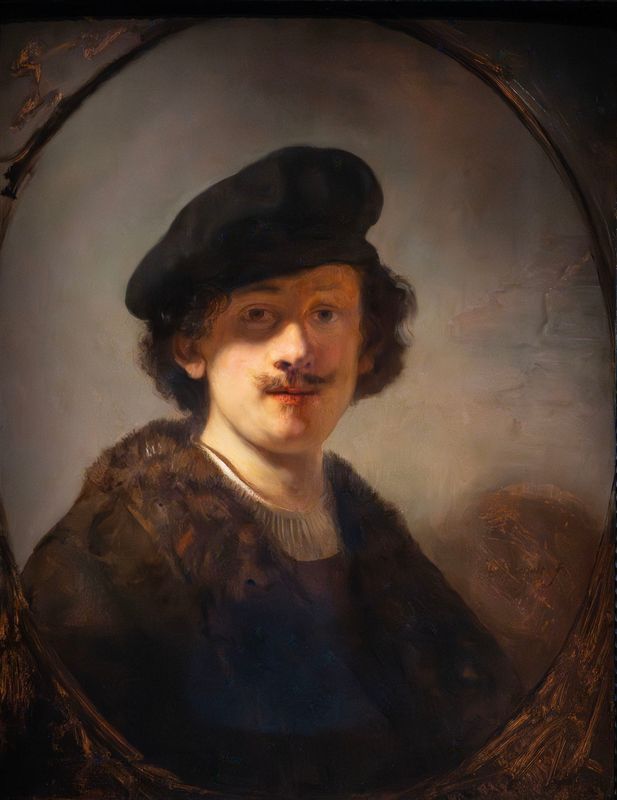
During an Oct. 23 preview gallery tour, Kaplan described Rembrandt as the “universal artist,” whose abilities and brushstrokes techniques were hundreds of years ahead of his time and commanded color and light in ways not previously seen.
“Rembrandt was, as André Malraux said, ‘the first artist to touch the soul with his painting,’” Kaplan said.
Though most recognize Rembrandt and the Dutch Golden Age style, for its meticulous recreation of reality, Kaplan emphasized that the artist’s style evolved during his lifetime to one that utilized free-flowing brush strokes and paint manipulation most often associated with 19th century impressionism.
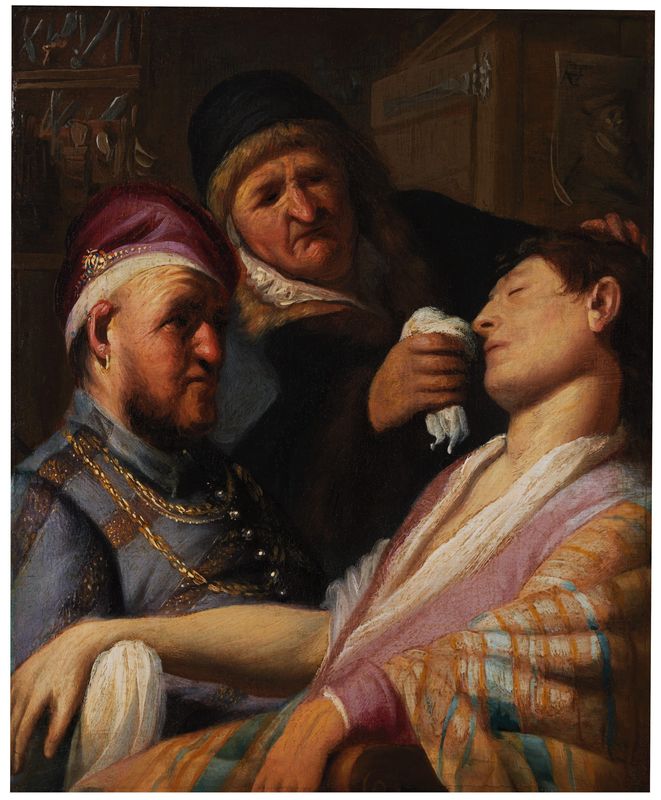
Early Rembrandts include three of the four known works from “The Senses” series, his earliest surviving works. “Three Singers,” “Unconscious Patient” and “Stone Operation,” each depict in striking detail a scene that serves to represent one of the five senses, Kaplan said
It’s a series that captures the Rembrandt raw talent, and aptitude for conveying emotion, he noted.
Those are among the 17 Rembrandts featured in the exhibition.
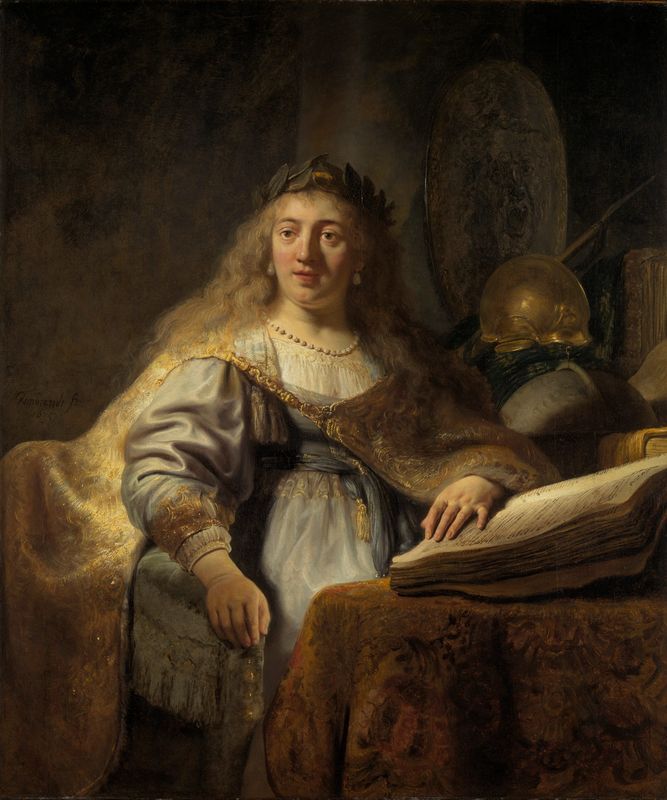
Later works from the Dutch artist include “Minerva in Her Study,” which Kaplan described as the collections “Mona Lisa.” The work depicts the Roman Goddess Minerva as a blonde woman seated in a study room, with spears and a bronze helmet in the background.
But unlike most works of the time, it doesn’t capture Minerva in her historical setting. Instead, it reimagines her as a Dutch woman with the style of his era, Kaplan said.
The work also displays the hallmarks of Rembrandt’s later works, namely, the thicker layers of paint and the impressionist-like brushwork used to create Minerva’s flowing gold cloak and blonde hair.
“I would call her the flagship of the collection,” Kaplan said.
Rembrandt’s evolution can also be seen in the impact Rembrandt had on his students, with Kaplan noting the difference between the exacting style of his first student, Gerrit Dou, compared to his last student, Arent de Gelder.
“Over a matter of several decades, those associated with Rembrandt go from meticulous brushwork where you can’t even see the brushwork, to something that is hundreds of years ahead of its time,” Kaplan said.
Unlike the Italian and Spanish art movements that preceded and coincided with the Dutch Golden Age, Dutch artists didn’t prioritize religious scenes and classic displays of beauty.
“They did something that was completely revolutionary; they made it popular to be able to display paintings that evidenced everyday life” in turn, creating a type of historical repository, Kaplan said.
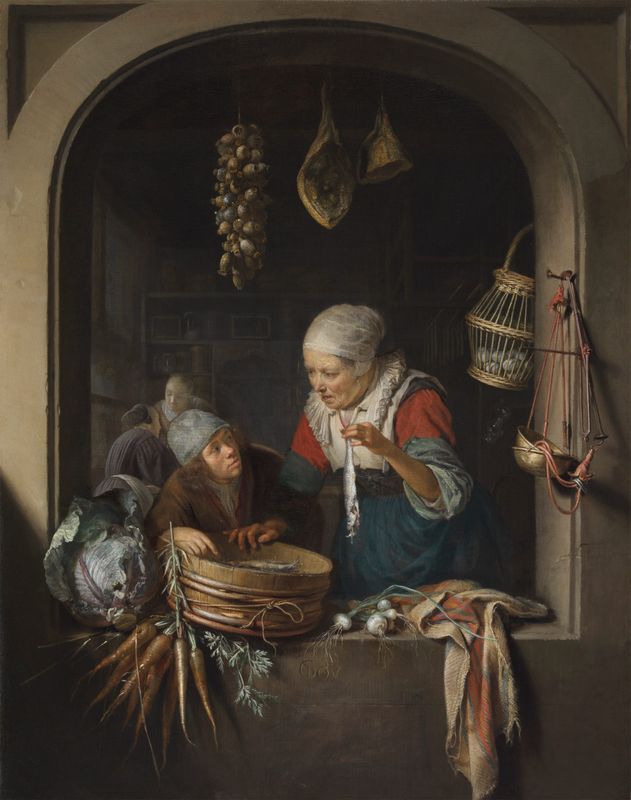
For example, Dou’s “Herring Seller and Boy,” portrays a window scene of a woman presenting a herring to a long-haired boy. The painting’s fine brushwork serves to accentuate the minute details of the painting’s subject, such as the faint shimmer of light being reflected from the woman’s hand.
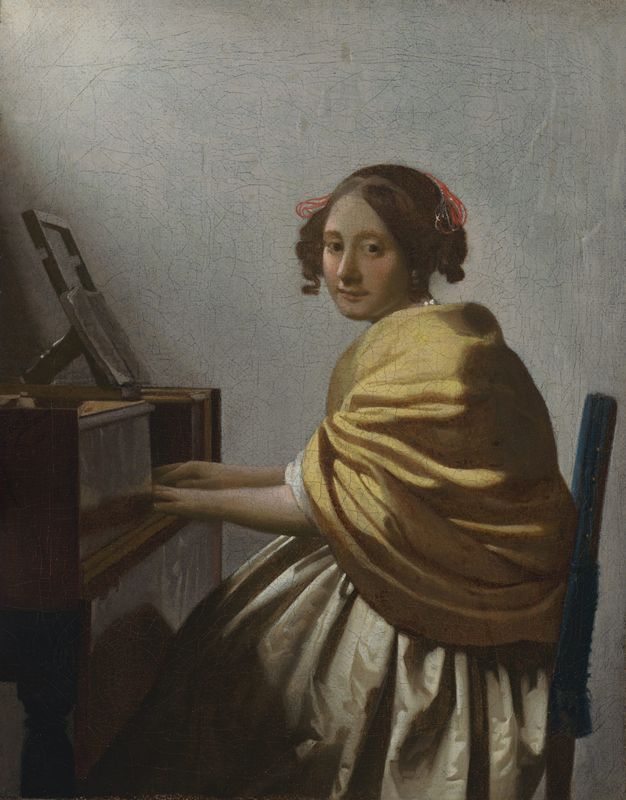
There’s also “Young Woman Seated at a Virginal,” the only Vermeer painting in the globe in private hands. It depicts a woman playing a clavichord while peering to viewers as if they walked into the room.
“What is so sweet about this painting, which just took me away from the first moment that I saw it, was that it’s as if you can hear the notes that she’s playing,” Kaplan said. “He captures than moment in time, which is almost impossible to imagine because you think of how many months it took him, and he doesn’t lose sight of that specific second in time, that single note.”
Diego Diaz Lasa is a journalist at the Palm Beach Daily News, part of the USA TODAY Florida Network. You can reach him at dlasa@pbdailynews.com.
This article originally appeared on Palm Beach Daily News: The Dutch Golden Age comes to Palm Beach County in the Norton Museum newest exhibit
Reporting by Diego Diaz Lasa, Palm Beach Daily News / Palm Beach Daily News
USA TODAY Network via Reuters Connect