Millions of dollars in preeminent funding are no longer a reward on the table for Florida’s top-performing public universities after the money was cut from this year’s legislative budget.
With the elimination of the preeminent fund, State University System (SUS) institutions that have obtained the elite status – Florida State University, University of Florida, the University of South Florida and Florida International University – are kissing the extra state dollars goodbye during the 2026-2027 fiscal year, which comes after they shared $40 million for preeminence last year.

“The Legislature made difficult decisions this year to produce a balanced budget for Floridians,” SUS Chancellor Ray Rodrigues said in a statement sent to the Tallahassee Democrat on May 27. “While we hoped preeminence would be funded, we recognize there just isn’t enough money to fund every worthy program.”
Florida Board of Governors Chair Alan Levine was not available to comment on the legislature’s decision.
The state’s preeminent research universities program was established in 2013 as a collaborative partnership between the Florida Board of Governors and the legislature to “elevate the academic and research preeminence of Florida’s highest-performing state research universities,” according to state law.
Last year’s state budget included $40 million for preeminent universities, and the fund is usually split evenly between universities that hold the status. This means FSU, UF, USF and FIU each received $10 million for the 2025-2026 fiscal year. In 2024, the institutions shared a total of $100 million.
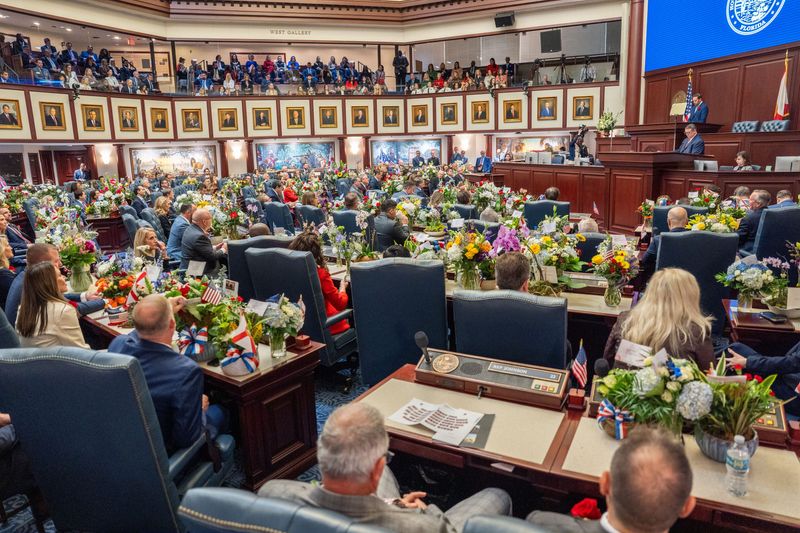
Lawmakers’ decision to cut out the funding during this week’s special legislative session comes after efforts were initially made by the Senate to reward preeminent research universities with $100 million for the 2026-2027 fiscal year, but the House was not in favor of the intended move. The offer was then lowered to $50 million until it was eliminated altogether due to a lack of compromise.
FSU President Richard McCullough declined to comment on the cut, according to a university spokesperson, and a UF official was not immediately available. Florida Sen. Gayle Harrell (R-Stuart) – who chairs the Senate’s Appropriations Committee on Higher Education – was also unavailable to comment on the decision.
An SUS university can become a preeminent institution by annually meeting at least 12 of 13 academic and research excellence standards set by the Board of Governors. Some of the accountability measures include:
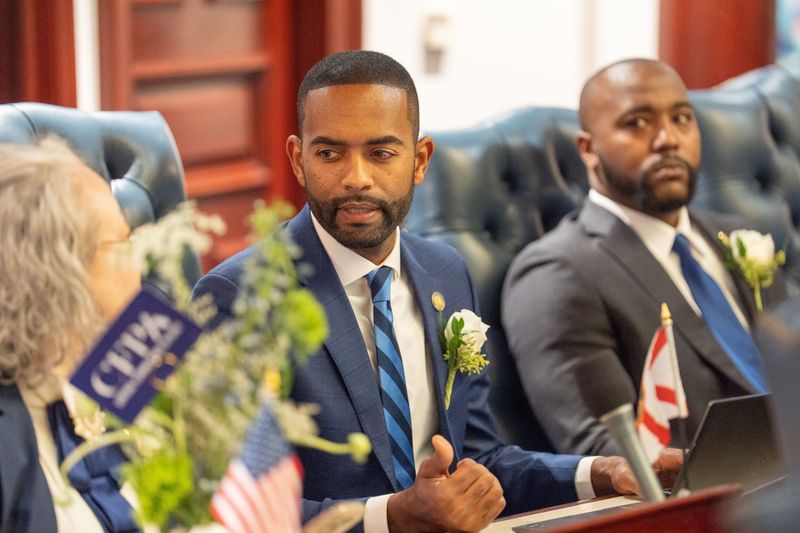
As a former student member of the Board of Governors, Rep. Gallop Franklin, II (D-Tallahassee) – a Florida A&M University alumnus and former student body president of the university who currently sits on the House’s Higher Education Budget Subcommittee – says he’s seen the progress the state has made over the years of funding higher education.
But when it comes to the recent preeminent funding cut, he says he’s aware of the disadvantages of the decision, saying it’s “unfortunate” that it didn’t make it in the budget this year.
“When you completely axe the preeminent funding, you’re not just hurting a line item in the budget spreadsheet – you’re hurting the actual students, faculty and researchers inside those institutions,” Franklin told the Democrat during a May 28 phone call.
“As we’re trying to compete with institutions in other states, they’re charging two or three times what we’re charging in tuition to help make up the difference. To make sure that UF, FSU or any of these institutions can compete, obviously it takes strategic support.”
Despite the preeminent funding cut, the SUS institutions are projected to get $4 billion in state operating funding through in the 2026-2027 fiscal year budget – per Florida Gov. Ron DeSantis’ recommendation. An appropriation of $645 million in performance funding is also in line for the state’s colleges and universities.
Lawmakers will approve the 2026-2027 fiscal year’s proposed $115 billion budget on Friday, May 29 and will forward it to DeSantis, who will need to sign it and who also has line-item veto authority.
“I wouldn’t say it’s the new norm,” Franklin said, referring to the preeminent funding cut. “It was based on the priorities of this year’s leadership. With new leadership coming into the legislative and executive branches in the next cycle, I’m sure there will be talks on where they stand on different funding categories.”
Tarah Jean is the higher education reporter for the Tallahassee Democrat, a member of the USA TODAY Network – Florida. She can be reached at tjean@tallahassee.com. Follow her on X: @tarahjean_.
This article originally appeared on Tallahassee Democrat: State lawmakers cut preeminent funding for FSU, other top universities
Reporting by Tarah Jean, Tallahassee Democrat / Tallahassee Democrat
USA TODAY Network via Reuters Connect