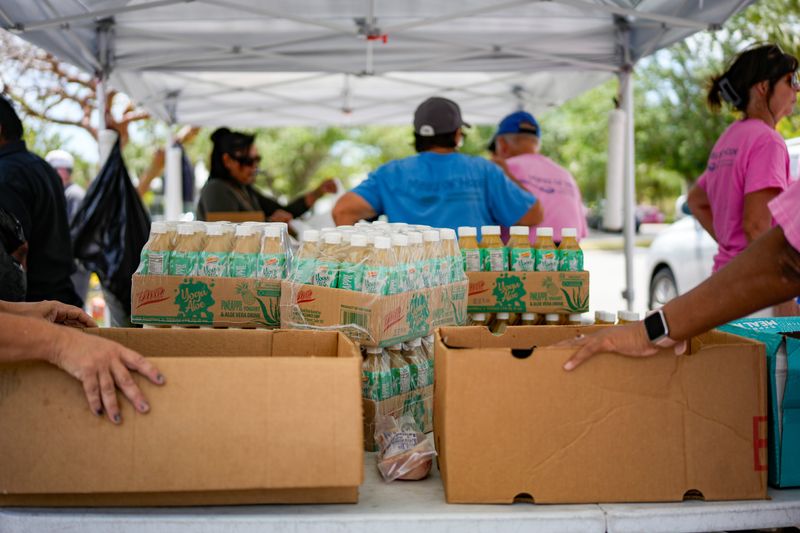
New data shows nearly 300,000 Floridians have lost SNAP benefits, commonly called food stamps, stemming from cuts made by the federal government last year.
The impacted are needy seniors, veterans and others who lost assistance because of tougher eligibility and are hard pressed to put food on the table during prolonged inflation and rising gas price hits.

Nationally 3 million people nationwide lost SNAP benefits in six months from July 2025 to January 2026 for an 8% decline, according to the Center on Budget and Policy Priorities.
The source is the Big Beautiful Bill that took effect last July 4 that cut funding of $186 billion over 10 years; it imposes stricter eligibility and passes more program costs onto states.
The 8% enrollment drop nationwide represents the sharpest decline in decades, according to the budget policy center, a progressive think tank in Washington, D.C.
What’s the hit in Florida?
Besides Florida’s enrollment drop of 9.78%, Arizona’s enrollment plummeted by 42% and Georgia saw a 24% drop. Enrollment dropped 12% both in Virginia and Tennessee, among other states that saw changes.
After the record 43-day government shut down last fall over Obamacare and spending, SNAP beneficiaries in Florida saw their suspended assistance get reinstated in mid-November.
That was a short-lived reprieve that ended when the Florida Department of Children Families said it would start enforcing new eligibility rules Dec. 1, 2025.
At the time, roughly 2.8 million Floridians were receiving SNAP, according to state data.
The state DCF estimated 181,000 in Florida would lose SNAP under the tougher eligibility while the budget policy center estimated the hit at 253,000.
Federal data, based on figures from the state, show July 2025 enrollment was 2,849,238 and dropped in six months to January 2026 to 2,570,518 enrollees.
That means 278,720 Floridians lost their assistance out of the 3 million nationwide, according to a SNAP Tracker by the budget and policy institute.
“This dramatic six-month drop cannot be explained by a rapid improvement in people’s economic well-being or reduced need for help affording food,” according to the budget policy center.
The federal budget passed last year shifts more costs to states and expanded provisions that allowed people to lose benefits for not meeting work requirements, according to the think tank.
States also will get penalized for their “error rates” on eligibility.
What are the tougher work requirements for SNAP recipients?
Able-bodied adults under the age of 54 without dependents had to meet minimum work requirements or be taking part in other qualifying programs before the federal budget bill.
For the first time, adults between the ages of 55 and 64, as well as adults with children over the age of 14, are subject to the work requirements through the federal budget bill, according to the Harvard Kennedy School.
Florida had already expanded work requirements in 2023 to include individuals aged 55 through 59 who do not meet an exemption, according to DCF.
They must work at least 20 hours a week or only get benefits for a maximum of three months over three years.
The federal law also removes exemptions from the work requirement for veterans, homeless people, and former foster care youth that had been in place since 2023.
The state agency last fall estimated 181,000 Floridians would lose SNAP eligibility because of the tougher federal rules. It broke down to 91,000 homeless people, 55,000 people aged 55 to 64 who had exemptions from the work requirement, and 33,000 with dependents aged 14 to 17.
What can Florida expect on cost sharing?
A DCF official last December at a House health care budget subcommittee hearing said Florida can expect a higher share of administrative program costs of $50.6 million starting this Oct. 1.
Currently the federal government and the state each have 50% of the administrative costs but last year’s federal budget bill shifts another 25% to the state this fall.
When it comes to Florida’s error rate on SNAP enrollment, it stood at 15%, one of the highest in the U.S., the DCF official told state lawmakers at the December hearing.
The penalty is having to cover $984 million in a share of SNAP grocery costs, the official said.
Do you have an opinion about this topic? Write a letter to the editor and send it to letters@naplesnews.com and/or mailbag@news-press.com. Keep it to 250 words or fewer and include your contact info. Have more to say: Send a guest column of no more than 600 words.
Liz Freeman is a health care reporter. Reach her by emailing lfreeman@naplesnews.com
Please support local community journalism and stay informed about Southwest Florida news by subscribing to The News-Press and Naples Daily News; download the free News-Press or Naples Daily News app, and sign up for daily briefing email newsletter, food & dining and growth & development newsletters here and here.
This article originally appeared on Naples Daily News: SNAP cuts impact nearly 300,000 Floridians. It’s not over.
Reporting by Liz Freeman, Fort Myers News-Press & Naples Daily News / Naples Daily News
USA TODAY Network via Reuters Connect