The release — intentional or not — of the invasive Burmese pythons into the fragile Everglades is one of Florida’s greatest ecological catastrophes.
Pythons are voracious eaters with no native natural predators. Florida began hunting pythons in earnest in about 2012, but by then the population of medium-sized furry animals in Everglades National Park, such as raccoons and rabbits, had seen a decline of 85 to 100%.

A determined phalanx of environmentalists, scientists and state agencies mobilized to fight the python threat with varying degrees of success.
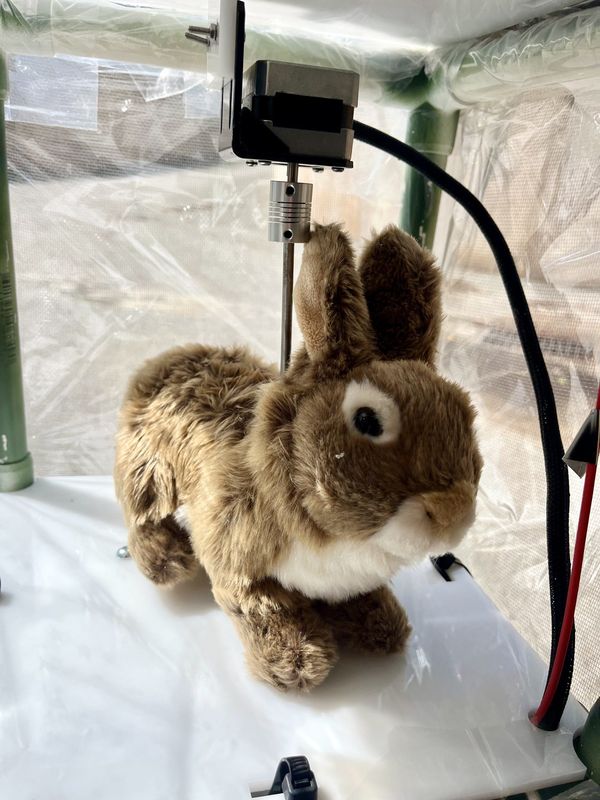
The latest weapon in their arsenal is one you may not expect; a furry robot bunny. Here are six things to know about them.
Who created the robot rabbit as lure for Burmese pythons in Florida Everglades?
Robert McCleery, a University of Florida wildlife ecology and conservation professor, is leading a research team that came up with the idea for the robot bunnies as a lure for pythons. Previous studies found that pythons were attracted to live rabbits placed in pens in the Everglades, but caring for multiple live rabbits in large areas wasn’t practical. Instead, they designed the robot rabbits.
How do the robot rabbits work to catch pythons?
The researchers took toy rabbits and replaced their stuffing with motors that mimic the movements of a live rabbit. The rabbits were also outfitted with a heater that replicates the body temperature of a live rabbit. One of the bigger challenges was making sure the temperature was correct after the researchers added waterproofing to the bunnies. The rabbits can be controlled remotely and are powered by solar energy. They were placed in different areas of South Florida in July 2025 for a test phase.
How do the robot rabbits catch Burmese pythons?
Part of the project includes programming digital cameras to turn on when they sense the movement of a snake. That movement alerts researchers that something is approaching the robot bunnies. It’s not always a python. Other snakes squirm by also and the person who receives the message will need to be able to tell the difference.
If the experiment proves successful in attracting pythons, the alert could go to a rapid python response team or nearby python hunters who can quickly respond to the area. If this phase of the project is unsuccessful, the researchers plan to add bunny scent to the toy rabbits to see if that is more effective.
Who is paying for the robot rabbit research?
The South Florida Water Management District, which oversees a 16 county region from Orlando to the Keys, has taken a lead in python elimination and is paying for the robot rabbit research. Previous studies have also been funded by the Florida Fish and Wildlife Conservation Commission, which also has a focus on python removal.
What else is Florida doing to control the python population?
State efforts to mitigate python proliferation have included a myriad of efforts. Renowned snake hunters from the Irula tribe in India were brought in to hunt and share their skills. There have been tests using near-infrared cameras for python detection, special traps designed, and pythons are tracked by the DNA they shed in water, with radio telemetry, and with dogs. Also, the annual Florida Python Challenge has gained legendary status, attracting hundreds of hunters each year vying for the $10,000 grand prize.
The highest profile python elimination program is the 100 bounty hunters who work for the water management district and FWC. The novel project, started in 2017, pays hunters hourly wages and bonuses based on the length of the snake caught.
Can the Burmese python be eliminated from Florida Everglades?
It’s unlikely the Burmese python will ever be fully eliminated from Florida. Today, there are no reliable estimates of python abundance in the state, according to a more than 100-page report published in 2023 that summarized decades of python research. The study said, “eradication of the entire population across the landscape is not possible with any existing tools.”
Kimberly Miller is a journalist for The Palm Beach Post, part of the USA Today Network of Florida. She covers real estate, weather, and the environment. Subscribe to The Dirt for a weekly real estate roundup. If you have news tips, please send them to kmiller@pbpost.com. Help support our local journalism, subscribe today.
This article originally appeared on Palm Beach Post: Robot rabbits: 6 things to know on bunnies used to catch Burmese pythons in Florida
Reporting by Kimberly Miller, Palm Beach Post / Palm Beach Post
USA TODAY Network via Reuters Connect