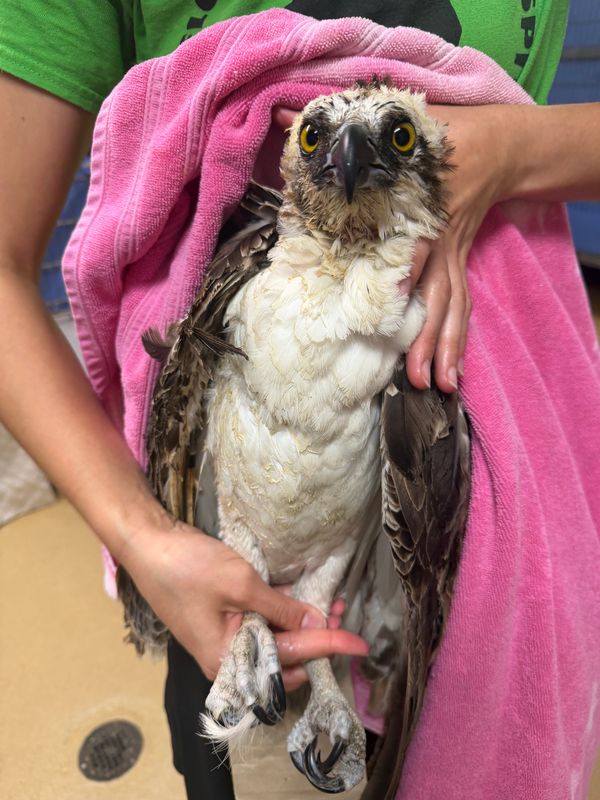
A singed osprey is on the mend at Florida Wildlife Hospital in Palm Shores. But no one’s sure how the bird got burned.
The plight that temporarily grounded the bird happened close in space and time to the dramatic May 28 Blue Origin New Glenn rocket explosion during an engine “hotfire test” at Launch Complex 36 at Cape Canaveral Space Force Station around 9 p.m. May 28.

According to the wildlife hospital, on May 29, a call came in from Cape Canaveral Space Force Station that an osprey was found injured.
But there’s not way to know for sure if the explosion was to blame.
Raptors often get electrocuted on Brevard’s power lines, according to those treating the bird.
“He is improving,” Tracy Frampton, the wildlife hospital’s director said Wednesday. “We can’t say it couldn’t have been electricity. We don’t want to point fingers.”
What burned the bird?
According to the wildlife hospital, a “concerned employee” at Cape Canaveral Space Force Station noticed the osprey on the ground.
“The bird arrived with burns on his legs and one wing and all of his flight feathers were singed to the point that he could not take flight,” the hospital said in a statement. “The bird’s prognosis is still guarded but he is making steady improvements. The burns are healing slowly but the flight feathers have not molted.”
The wildlife hospital is providing wound care, laser treatments, feeding assistance, oral medications and vitamins.
“Since the osprey will need to heal his wounds and molt (replace it feathers) completely before he can be released, it will likely be months before he is ready to go,” wildlife hospital officials said. “Any donations to help with this bird’s cost of care are greatly appreciated.”
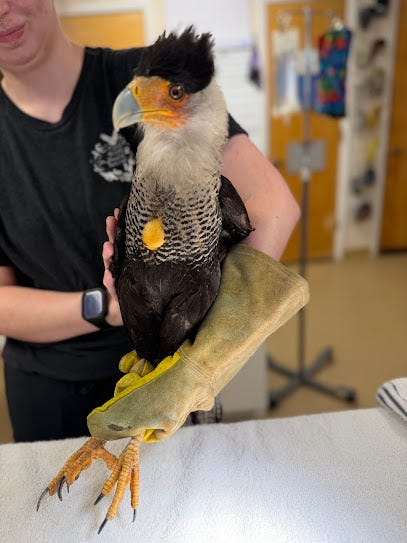
Frampton also recently rescued a caracara off Cox Road in Cocoa that couldn’t fly because of burn wounds.
“It was like chasing a chicken around for 20 minutes,” Frampton said of the rescue.
Frampton said the wildlife hospital typcally treats a few electrocuted birds each year. There were seven last year, she added, and two racoons that also got electrocuted.
“We’re optimistic,” Frampton said about the osprey they’re currently treating.
Want to donate to the Florida Wildlife Hospital?
To donate, visit the wildlife hospital’s website at floridawildlifehospital.org.
Phone: (321) 254-8843Address: 4560 N. U.S. Highway 1, Palm Shores.
Hours of Operation: 9 a.m. to 4:30 p.m. After-hours dropoff from 4:30 p .m. to 9 a.m.
Contact Waymer at (321) 261-5903 or jwaymer@floridatoday.com. Follow him on X at @JWayEnviro.
This article originally appeared on Florida Today: Singed osprey found near Blue Origin blast site is recovering
Reporting by Jim Waymer, Florida Today / Florida Today
USA TODAY Network via Reuters Connect
By Jim Waymer, Florida Today | USA TODAY Network