Editor’s note: This is part three of a three-part series on the growing economic challenges older people are facing in Sarasota and Manatee counties. Read part one and part two.
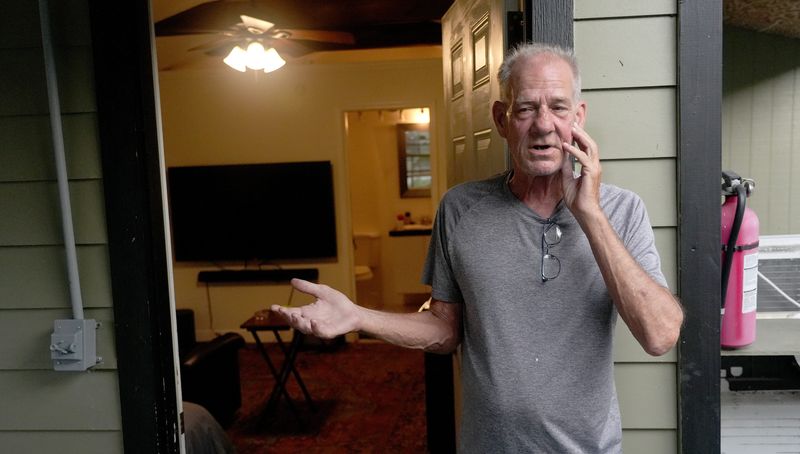
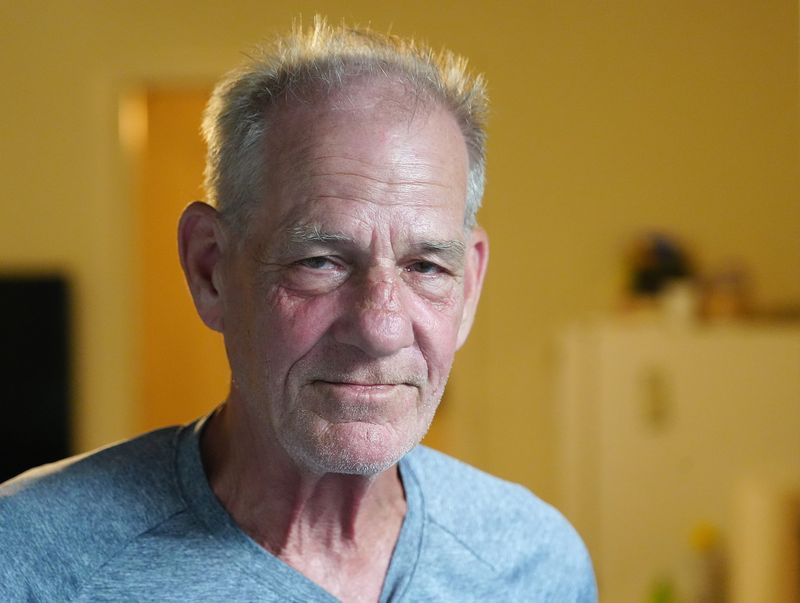
Charlie Harris lay in his bed at Centerstone hospital earlier this year, despondent about a recent fall and the idea of returning to his moldy, roach-infested apartment in Bradenton.

“I was severely depressed over my housing situation and overall quality of life,” he said.
A survivor of four heart attacks and a past motorcycle accident, the 65-year-old had been living on $2,400 monthly checks from Social Security disability benefits.
But each month, almost half of his income was chewed up in the $1,150 rent for an efficiency-sized unit that the owner had carved out of a one-car garage behind a fire-ravaged house.
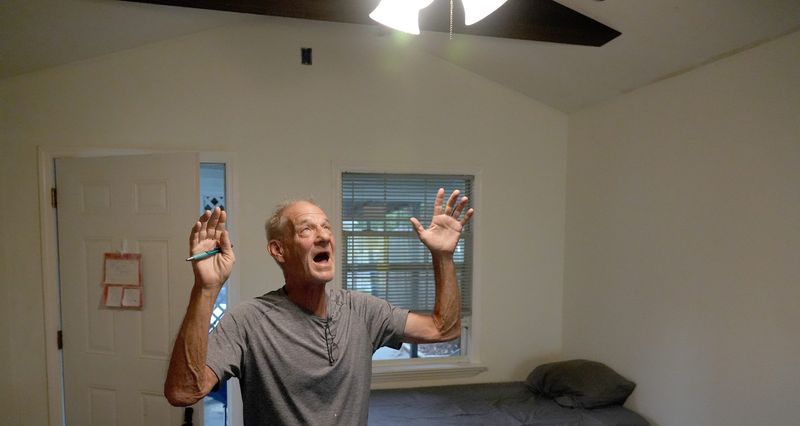
Inside Harris’ unit, the sink was clogged. The air conditioner leaked. Termite wings fell on his face at night as he tried to sleep. And given his unanswered pleas to the landlord to fix the washer and dryer, every few days Harris was left to lug dirty clothes to a nearby laundry mat on a bike, praying his four heart stents would hold up.
Yet for the former manager at the Port of Baltimore, now living on a fixed income, the unit was all he could afford.
“It’s horrible, it’s absolutely horrible,” he said.
Harris is among a surging number of older residents grappling with a worsening housing crisis for senior Americans – one that is particularly dire in retirement havens like Sarasota and Manatee counties. Many are at risk of losing their housing, live in unsafe conditions, or wind up homeless for the first time in their lives.
What makes the predicament especially urgent for older people is their age and the prevalence of health conditions, experts say. Illnesses and physical problems make it impossible for many to return to work for extra income to cover rising rents. Homeless shelters lack the capability to cater to their health needs and mobility challenges. And in turn, housing instability and homelessness profoundly hasten the severity of physical and mental health issues, while also hindering access to health care, studies show.
Still recovering that day in his hospital room, Harris told doctors he was at his wits’ end.
“Everything was falling in on me,” he said. “I just couldn’t do it anymore.”
Housing is health care
Harris was about to get an unexpected assist from Sonia Shuhart, clinical supervisor with the Manatee County Community Health Program.
Along with co-leader nurse practitioner Shannon Shanks, Shuhart is part of a team with outreach case managers Angie Sciarrone, Katie Scott, and Tameka Foster-Wilson. Almost daily, the five women scour the community looking for clients in search of help. Increasingly, they’re finding seniors on the street.
“We see a lot of people living on oxygen tanks living out of their car and sometimes they have to plug in at a gas station to keep the portable concentrator running,” Shuhart said.
Since January, her outreach team has found 150 homeless clients – a third of them 55 or older. With Social Security failing to keep up with the cost of living, seniors who have lost a spouse are struggling to survive on one fixed income. Others endured hurricane damage to their homes and couldn’t afford repairs, she noted. Many were homeless for the first time, traumatized and overwhelmed.
Shuhart said team members work with them on their medical care and housing.
“In the community health program, we are very much thinking that housing is health care,” Shuhart said. “We try to get a holistic view of our clients.”
That might include finding resources to help get them into skilled nursing or assisted living facilities. As a social worker, Shuhart and case managers assist in repairing rifts with relatives, who often provide an essential support network, especially if an out-of-state move is the best or only option.
But case managers throughout the area say communities need to develop more affordable opportunities that allow seniors to age in place, such as the recent public-private partnership in Manatee County that resulted in Astoria on 9th.
A relocation at this stage of their lives is devastating for many seniors getting priced out of their housing, said Leah Hudson, Manatee County Homeless Project Manager.
Not only are they losing a lifetime of social contacts; they are walking away from a carefully constructed network of doctors for various health care needs and ailments, she said. A move can mean starting from scratch with searches for both housing and medical care, a particularly daunting task for older people.
Hudson’s office is attempting to develop alternative programs to assist seniors in finding roommates or home-sharing possibilities.
“We really need to get ahead of this because the wave is coming,” she said.
Compounding difficulties
The number of Americans older than 65 is expected to double by 2050, exponentially increasing the need for affordable senior housing.
Locally, half of Sarasota County’s senior households are now living on the economic edge or have fallen into poverty, while seniors are now the fastest-growing group in Florida to experience homelessness.
The implications are severe for seniors as well as for local communities that must adapt health-care services and shelters to accommodate their needs, case managers say.
“Once people do lose their homes and they’re literally homeless, their health deteriorates rapidly,” said Maria Barcus, coordinator of the Elder Housing Initiative with the Florida Supportive Housing Coalition.
“The difficulties compound,” Barcus added. “It is much easier to intervene when they’re still housed than to try to rehouse them after they are already homeless.”
That is what the Suncoast Partnership to End Homelessness is trying to do in relaunching its Suncoast Housing Collaborative, which was paused last year due to hurricanes and staff transition, said CEO Taylor Neighbors.
While the collaborative seeks to help residents of all ages with affordable rents by providing incentives to local landlords (interested landlords can contact David Setchel at david@suncoastpartnership.org), seniors are a focus.
The partnership hears almost daily from older residents who are homeless or at imminent risk of losing housing. Some are elderly cancer patients forced to sleep in their cars. Others are in their 80s and grappling with autoimmune diseases.
Neighbors fears the situation for seniors could get much worse under the proposed federal budget and expected impacts to Medicare and Medicaid that would make health care far more expensive. Already, a good number of them are dealing with impossible choices between paying medical bills or paying rent. For those facing terminal illnesses, the situation is especially dire.
“They are people really just trying to live out their final days and they shouldn’t have to stress about their housing,” Neighbors said of the latter. “They should be able to focus on getting their affairs in place and spending time with their loved ones and to be in a place where they can die with dignity and not in a vehicle or out on the streets.”
‘I feel like I can live’
During his hospital stay earlier this year, Harris got a call from Shuhart that changed his life.
Among other resources, Shuhart helped him secure a one-bedroom apartment in the new affordable senior housing community, Astoria on 9th, in Bradenton.
Though his new rent of $1,149 will be only one dollar less than what he currently pays, it covers his water and the apartment is clean, safe, brand new and more than twice as big. It also offers amenities like a fitness center, resident assistance with daily activities such as shopping and housekeeping, and a nearby bus stop. Harris moves in at the end of June, and he’s ecstatic.
“It is absolutely gorgeous. I even have my own washer and dryer, and a dishwasher. Imagine that! All the comforts – and a microwave!” he said.
“Oh my God, and the way it’s facing,” he added, “I’ll be able to see the sunsets off the Gulf.”
But one of the things that excites him most is the social contact that comes from living in a community with other people his age. His housing is safe and secure, and he’ll have help navigating his health issues.
“I feel like I got hope,” he said. “I feel like I can live.”
This story comes from a partnership between the Sarasota Herald-Tribune and the Community Foundation of Sarasota County. Saundra Amrhein covers the Season of Sharing campaign, along with issues surrounding housing, utilities, child care and transportation in the area. She can be reached at samrhein@gannett.com.
This article originally appeared on Sarasota Herald-Tribune: Senior housing: For Sarasota-Manatee seniors, housing problems come with health issues
Reporting by Saundra Amrhein, Sarasota Herald-Tribune / Sarasota Herald-Tribune
USA TODAY Network via Reuters Connect