In the last 20 years, Pensacola’s downtown has transformed into a vital economic center, but Florida’s property tax cuts could threaten the city’s funding source that made that transformation possible.
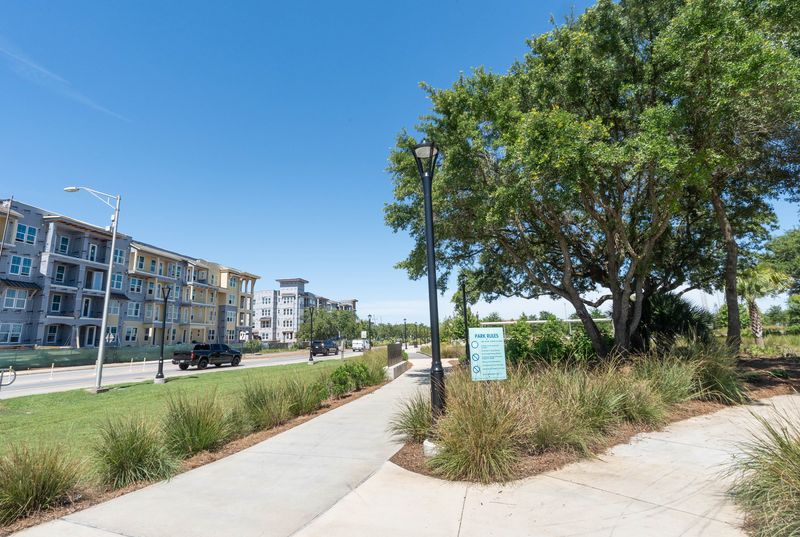
Pensacola’s Community Redevelopment Agency has made payments on bonds that funded the relocation of the old downtown sewer treatment plant, the development of Community Maritime Park, Bruce Beach, the Blake Doyle Skate Park and numerous street improvement projects throughout the downtown area.

The New Palafox Project was funded in part with 2019 bond money from the CRA.
The Pensacola Community Redevelopment Agency’s combined annual budget was $15.3 million, and 98% of those funds came from property tax revenues, according to a News Journal analysis of city budget documents.
In the current budget year, nearly 37% of the CRA’s budget was obligated to debt payments. When a proposed tax cut poised to drastically reduce property taxes statewide passed the Florida Legislature on June 2, city officials had no idea how it would impact the CRA.
“We would have a bond payment due, and we would not have property tax to then pay that bond,” Pensacola Mayor D.C. Reeves said when asked about how the cut would impact the CRA. “And where does that put us with banks? Where does that put banks with the state of Florida? I don’t know. Well, I guess we’ll figure out in a couple of days.”
The measure, named “Save our Homes from Excessive Property Taxes,” will go before voters in November as a state constitutional amendment that will need 60% approval to pass, but if it does, it will radically change how local governments are funded.
The new law allows homeowners who’ve lived in Florida for at least five years to raise their homestead tax exemption on non-school district property taxes to $150,000 in 2027 and $250,000 in 2028. Raising that exemption would eliminate non-school district property taxes for 76% of all homeowners who reside in Escambia County.
The average homeowner in Escambia County would save about $84 a month, while the average city of Pensacola homeowner would save about $156 a month, according to a News Journal analysis of Florida Department of Revenue data.
The measures still allow local governments to use the property taxes they collect to pay for things like bond debt, but Pensacola will be left scrambling for a way to fill the gap.
The effect on the Pensacola CRA will come down to how many properties have a homestead exemption attached, and city officials were working with the Escambia County Property Appraiser’s Office on June 5 to generate a report calculating the number.
CRAs are special districts where Florida allows local governments to essentially set aside growth in property tax revenues in blighted areas to restore and redevelop those areas.
Pensacola has three different CRA districts: the Urban Core, which covers much of downtown, the Westside, which covers much of the areas west of downtown, and the Eastside, which covers a small area along Martin Luther King Jr. Boulevard and Davis Highway.
The Urban Core CRA is the city’s oldest and most successful CRA in that much of the area it covers, many critics have argued, is no longer blighted. Florida law allows CRAs to continue to exist as long as they have outstanding bond debt, and the Urban Core CRA has the highest debt payment.
Throughout Florida, CRAs have been the source of both urban revitalization and corruption. The Florida Legislature has sought to reform CRAs and passed laws that require the closure of most CRAs in 2039 unless they have outstanding bond debt.
The Urban Core has an annual budget of $12 million, with $7.4 million coming from property taxes that would otherwise go to Escambia County and $4.7 million coming from property taxes that would otherwise go directly to the city’s general fund.
About $5.2 million of the Urban Core’s 2026 budget is being spent on debt payments.
By law, that money can only be spent inside the district where it was generated.
Funding much of the city’s future plans over the next decade—as laid out in its recently adopted strategic plan and recently passed CRA plans—like contributing to the Pensacola Bay Center expansion, helping preserve the historic L&N Railroad Depot in whatever comes next for the Grand Hotel, and completing the Hollice T. Williams Greenway, is dependent on the CRA funds. A large cut to the CRA’s annual revenue could force the city into a tough decision about what projects it can support.
The issue will undoubtedly be part of the debate over the property tax referendum in the coming months.
This article originally appeared on Pensacola News Journal: Property tax cuts could end Pensacola’s downtown project era
Reporting by Jim Little, Pensacola News Journal / Pensacola News Journal
USA TODAY Network via Reuters Connect
By Jim Little, Pensacola News Journal | USA TODAY Network