UPDATE: A third case of Vibrio vulnificus infection was reported in Escambia County according to a Sept. 4 update from the Florida Department of Health.
The story of Pensacola woman Genevieve Gallagher’s life-threatening battle with vibrio vulnificus, the so-called “flesh-eating” bacteria, has captured international headlines and the attention of some local leaders who are taking a closer look at ways to warn the public and raise awareness about the rare but potentially deadly illness.

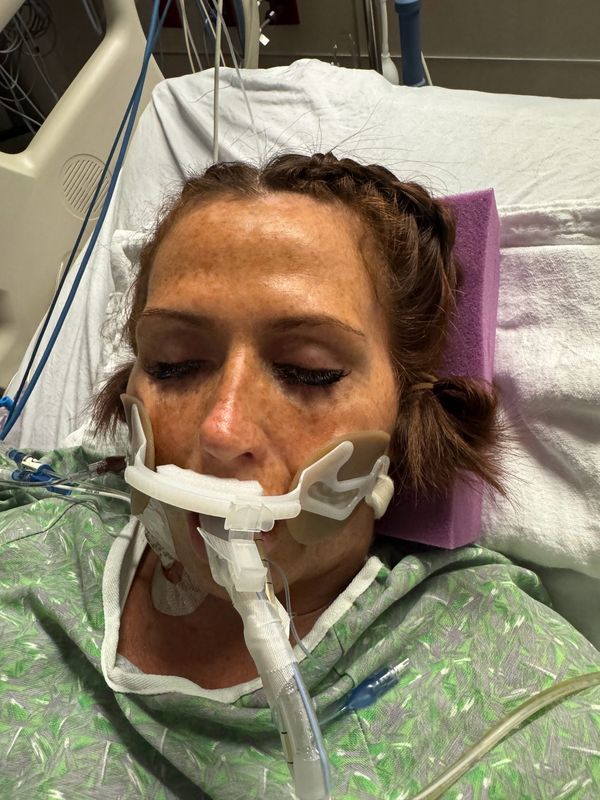
The 49-year-old Pensacola woman nearly lost her life and her leg to vibrio vulnificus after swimming with her daughter in Santa Rosa Sound off Pensacola Beach on July 27.
She became septic three days later and was intubated for nearly a week while doctors removed the infected tissue, constantly cleaned out the wound, and prevented her organs from shutting down.
Publications across the country and the world picked up her story from the News Journal, including People, the New York Post, Inside Edition, and the Daily Mail in the United Kingdom.
“I’m hoping I am the last person that ever gets this flesh eating bacteria,” Gallagher said Thursday. “I won’t stop until I get signs up and regular daily water testing. This was just my story to share because if I kept silent that’s not helping anyone.”
In response to her story, Escambia County District 4 Commissioner Ashlee Hofberger, who represents Pensacola Beach as part of her district, wants to know if more can be done to let people know of potential hazards in local waterways.
She has received several calls from citizens concerned about water quality after seeing Gallagher’s story.
Hofberger said she is learning more about the testing process of local waterways and how the results are posted to the public to see if there’s room for improvement.
“How often are they doing the testing and where are they doing that testing and where are those results posted?” Hofberger said about her questions for county staff. “We’re looking at that and exploring ways that we can help get those posted and get the word out as well.”
Gallagher believes the bacteria infected her body through a small cut on her left leg.
She took precautions to cover the cut but says she would not have entered the water at all had she known the risk of vibrio was so high, but there were no signs.
Who tests for vibrio?
According to the Florida Healthy Beaches Program on the Florida Department of Health’s website, FDOH regularly tests for the presence of enterococcus bacteria because it serves as a reliable indicator of fecal contamination from human or animal waste. Testing for enterococcus bacteria is not a reliable indicator of the presence or abundance of vibrio vulnificus, however, according to the National Institutes of Health.
Escambia County Department of Health did not respond to requests regarding their testing procedures in regards to vibrio vulnificus.
In Bay County, where three people have been diagnosed with vibrio and two have died from it, the Florida Department of Health issues public health advisories to warn about vibrio risks.
The advisories are primarily distributed through news releases and updates on the county health department’s website.
The Florida Department of Health in Escambia County also posts alerts on its website, but Hofberger says signs with regular updates may be a consideration.
So far this year in the Panhandle, there have been three cases of vibrio infection in Escambia, one case in Okaloosa, two cases in Santa Rosa, and one case in Walton County.
Vibrio rare but not uncommon
Although rare, the illness is unfortunately more common than many may realize.
“I bet most people don’t even know what vibrio is or how you get it,” said Jodi Gup, the daughter of a former Pensacola vibrio patient. “That’s starting with not only the locals, but all the tourists who come into town. When to stay in the water, when not to stay in the water. We’re not educated about it from the beginning.”
The family of the late Pensacola urologist, Dr. Alex Gup, says he contracted vibrio in 2017 after swimming in Santa Rosa Sound, near his Pensacola Beach home.
He also had a cut on his leg, and it was in July.
His daughter said he woke up sick in the middle of the night and family rushed him to the hospital where he was in ICU for nearly a week fighting for his life and to keep his leg from being amputated.
Doctors managed to save his leg, but Gup says the “horrific” illness along with the follow up wound care and rehabilitation that was needed afterward took a toll on him.
“It was a total lifestyle change for someone who was in incredible health until then,” Gup said. “It happened overnight and had he gotten to the hospital any later than he did, he would have died.”
Dr. Gup passed away last January from unrelated causes, but his daughter says the illness was the beginning of the elderly man’s decline.
Gup’s family grew up in Pensacola and she says she had never heard of the bacteria before her dad got sick from it, and others soon shared similar experiences with them.
“There’s got to be more education overall,” Gup said. “We need to have signs, I personally think, in all the public beaches, just like you put up red flags and purple flags for surf conditions. There should be signs saying vibrio at Baby Beach or Fort Pickens or wherever it is because it’s usually not in the Gulf because it’s moving water.”
What is vibrio?
According to the Florida Department of Health, vibrio vulnificus is a bacterium that normally lives in warm, brackish water and infections are rare.
The hotter months of May through October are the peak season for it, and FDOH warns against entering the water if you have fresh cuts or scrapes.
While many reports refer to the bacteria as “flesh-eating,” the CDC says this is a misconception because the germ doesn’t actually eat flesh.
Infections can lead to necrotizing fasciitis, where the tissue around a wound dies. This makes the bacteria appear to be “flesh-eating.”
What’s next for Genevieve Gallagher?
Gallagher is currently undergoing treatment at UF Health Shands Hospital in Gainesville for wounds she received after doctors were forced to remove much of the tissue on her left leg below the knee to stop the bacteria from progressing.
Doctors say she will be in the hospital for at least another few weeks and her road to recovery will be long.
Gallagher has started a Go Fund me account to help cover the costs of her medical expenses.
“I’m not going to be quiet about it because families need to know about it,” Gallagher said. “People need to know about it. This is just crazy that there’s nothing out there telling anybody about this flesh-eating bacteria that can kill you.”
C. A. Bridges, USA NETWORK – Floirda, contributed to this story.
(This story was updated to add new information.)
This article originally appeared on Pensacola News Journal: Pensacola woman’s battle with vibrio leads local leaders to look at ways to warn public
Reporting by Mollye Barrows, Pensacola News Journal / Pensacola News Journal
USA TODAY Network via Reuters Connect