Firefighters, paramedics, local government officials and community activists packed a Florida Capitol hearing room to capacity June 1 to warn lawmakers that the sweeping property tax proposal they were considering could eliminate money to pay for basic services.
Members of the public began filling seats in Room 101 of the Senate Office Building as soon as the doors to the committee room were opened, a half hour before the meeting began.

They occupied all 140 seats set aside for spectators and those wishing to speak by the time state Sen. Ed Hooper, R-Clearwater, gaveled the meeting of the Senate Appropriations Committee to order.
And while most public speakers who addressed the committee talked about potential harm to public schools, fire departments and other services, Democratic lawmakers pointed out Republican lawmakers were rushing forward with an incomplete plan that does not consider the consequences of eliminating property taxes.
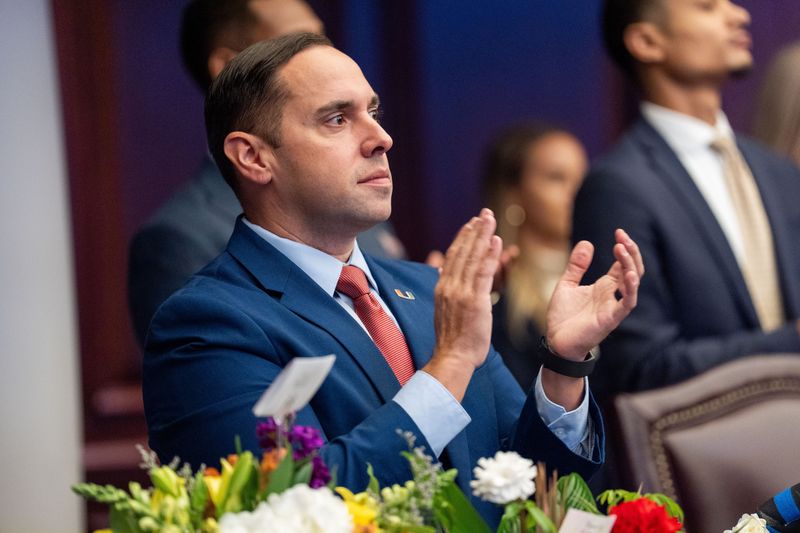
Sen. Bryan Avila, R-Miami, is carrying the plan proposed by Gov. Ron DeSantis. Avila said the changes are necessary because property tax revenues have surged far beyond economic growth: “These increases have far exceeded growth in the Consumer Price Index, or population,” he said, noting tax collections have doubled since 2019, while inflation rose about 6.3% and population grew 1.7%.
At the center of the debate is a package of proposals moving in tandem through the Legislature — a constitutional amendment from the House and an implementing bill from the Senate — that together would significantly reduce property tax collections while also reshaping how local governments can raise and spend revenue. A full vote of the Legislature could come as early as June 2.
Opponents warn of service cuts, cost shifts
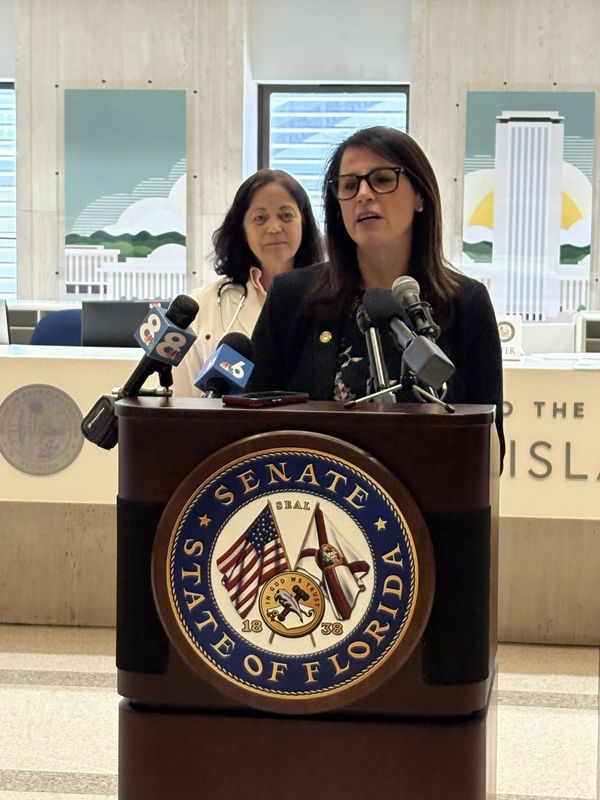
But a major sticking point for Democratic and some Republican senators is fear the plan will significantly reduce money for local budgets without a clear replacement for lost funding. Senate Democratic Leader Lori Berman, for example, called the plan a “political stunt that threatens to bankrupt our local communities,” warning it could force stark choices.
“We could find ourselves in a situation where our communities have to decide between funding the police department or keeping open a public school,” Berman said.
Sen. Jason Pizzo, a no-party-affiliated lawmaker from Sunny Isles Beach, argued the proposal will trigger a cost shift to consumers as communities make up for the loss of property taxes with a higher sales tax. “This is a redistribution of wealth,” Pizzo said. “I’m going to pay more … more for the cars I buy, more for the clothes I buy, more for the trips I take, more for the restaurants I eat at. I’m going to pay for this.”
Sen. Tina Polsky, D-Boca Raton, resented how the proposal is being rushed through the process without an investigation of the consequences. “We are spending two days to completely revamp our tax structure,” she told Avila. “That’s legislative malpractice to try to hammer this out in two days.”
Plan limits revenue and spending
The Senate measure would cap how local governments adjust tax rates by tying them to the “roll-back rate” — the level that produces the same revenue as the prior year — and requiring supermajority approval to exceed it. Senate analysts reviewed the measure and described its impact as “indeterminate.”
The House proposal would raise the homestead exemption to $250,000 and start a process to eliminate taxes on primary residences, while also restricting remaining property tax revenue to “core” uses such as public safety, schools and infrastructure. That combination — less revenue and tighter restrictions — is fueling concern among local governments.
Leon County Commissioner David O’Keefe said the proposal would cost his county about $151 million and force cuts to services residents depend on. “The result would be cuts to core services … libraries, parks, community centers, veteran services — all things that make our community a community,” O’Keefe said.
Winter Haven City Manager Michael Stavres said his city collects about $31 million in property taxes while police and fire operations alone cost $34 million. He estimated the plan would reduce revenue by $10 million.
As the police chief told him, “If you cut parks and recreation, you need to increase police funding by the same amount, because that’s where the impact will be felt.” In other words, fewer community resources lead to public safety problems.
Dr. R. Shaun Ferguson, a Rockledge city councilman, said the cost of government services do not suddenly disappear when property taxes are eliminated. “Government does not automatically become free,” Ferguson told senators, warning no property taxes means “higher sales taxes, increased fees, reductions in critical services.”
Debate also reveals division within Legislature’s GOP majority
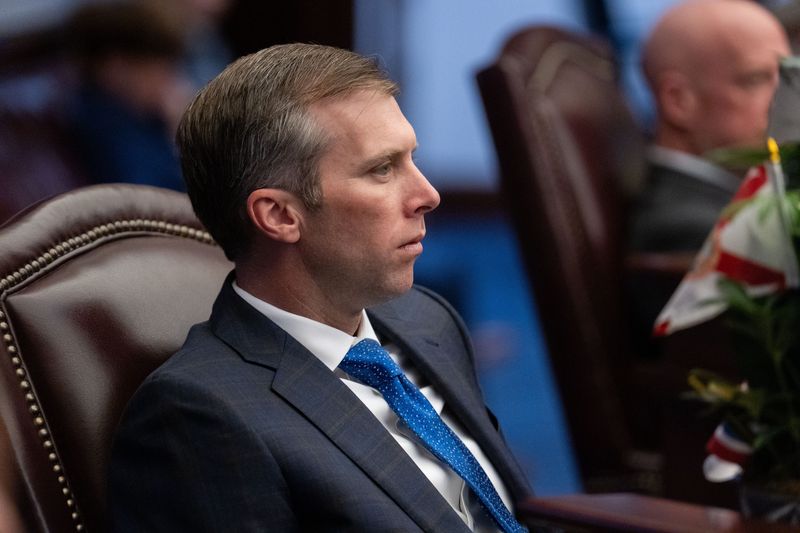
During the five-hour consideration of the Senate proposal, Republican lawmakers expressed their unease with the plan’s scope and structure. Sen. Jay Trumbull, R-Panama City, offered an amendment to protect school district property tax revenue, saying he could not vote for a measure that would cut “billions” from the public education budget.
“Let’s give our schools the chance to adjust … while still moving forward with generational property tax relief,” he said.
Sen. Erin Grall, R-Vero Beach, added an amendment that removed a proposed state trust fund meant to offset losses for local governments. She called the trust fund a “blank bank account” without a funding source.
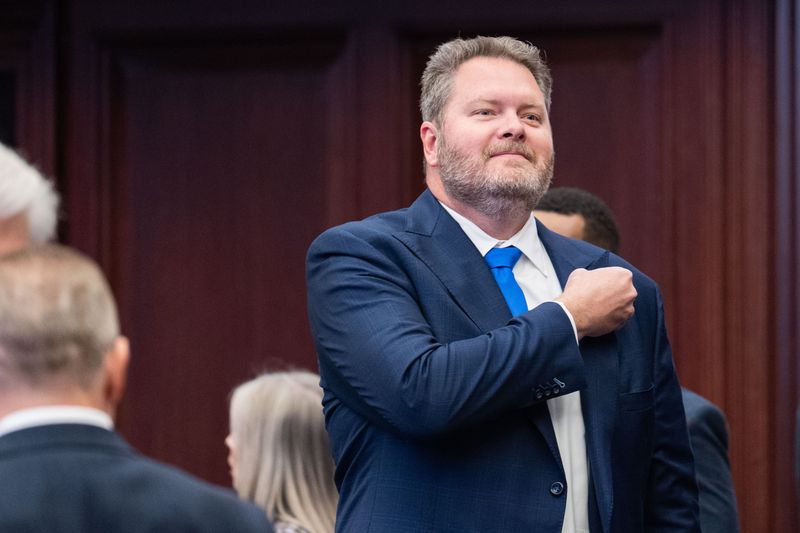
Those changes highlighted how lawmakers are wrestling with how to balance tax cuts while maintaining services. Sen. Tom Wright, R-New Smyrna Beach, said he would vote to advance the bill to the Senate floor but warned that, unless changes are made, he would not be a ‘yes’ vote when the full chamber takes it up.
“We’re doing too much, too fast, too quickly,” Wright said, adding that the amount of revenue loss “scared the bejeebers out of me.” And Sen. Gayle Harrell, R-Stuart, also said the ballot language “needs work” and the proposal itself “needs changes,” before she would commit to voting for it on the Senate floor.
Tax cuts now, answers later
Still, supporters like Sen. Jonathan Martin, R-Fort Myers, said lawmakers should let voters decide. “What are we afraid of?” Martin said. “I’m going to make sure that this is on the ballot.”
In closing, Avila acknowledged questions remain but urged lawmakers to act. “If you say you’re for reasonable tax relief, we’ve been waiting,” Avila said, adding that lawmakers would not be in special session if local governments had cut spending.
Democrats said that kind of response underscores the core problem they were debating. Sen. Carlos Guillermo Smith, D-Orlando, had pressed Avila on whether the state will guarantee funding if local governments fall short on basic services and warned lawmakers were committing to “an open-ended recurring obligation” without analysis.
Avila declined to offer a guarantee. “I can’t give guarantees when we haven’t fully looked at everything,” he said.
While two self-identified Libertarian Party members praised the plan as delivering long-promised tax relief, almost all of the other 25 members of the public who spoke said the plan would result in fewer services, higher fees or both — costs that residents will feel directly, even if their property tax bills go down.
Public safety officials said they remain concerned about a tax plan that will result in underfunding key safety agencies. For example, Trip Barrs of the Florida Fire Chiefs Association said decrease funding could cost lives.
“There is no greater tragedy than knowing that a life could have been saved by us getting there just a few moments sooner,” he said. “I know this is not an easy decision for you, and my hope for you is that you won’t ever have to experience the burden that we do when we are unable to meet our community’s needs.”
And Sherry Burrows of the Florida Mosquito Control Association warned the measure does not classify mosquito control as a “core” service and mosquito control districts would lose funding.
“We urge the Legislature to consider the unintended consequences … to critical public health infrastructure our communities rely on every day, and it goes to this fact, the two things that people tell me are needed in Florida is mosquito control and air conditioning,” Burrows said.
The Senate Appropriations Committee OK’d the measure on a 13–5 vote; Sen. Darryl Rouson, D-St. Petersburg, voted with Republicans. The full Senate is cleared to take up the measure June 2.
James Call is a member of the USA TODAY NETWORK-Florida Capital Bureau. He can be reached at jcall@tallahassee.com. Follow on X: @CallTallahassee.
This article originally appeared on Tallahassee Democrat: Cities, counties warn DeSantis property tax plan will gut services
Reporting by James Call, USA TODAY NETWORK – Florida / Tallahassee Democrat
USA TODAY Network via Reuters Connect