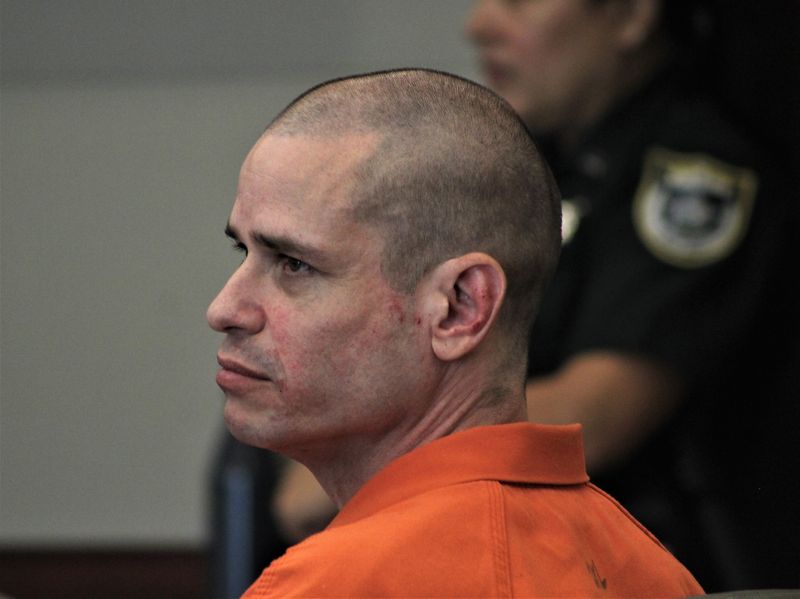
A Palm Coast man sentenced to life in prison for killing his wife seven years ago was back in court Sept. 26 challenging his conviction by arguing, among other things, that his defense attorney was ineffective because he did not file for a stand-your-ground hearing before trial.
Keith Johansen, 43, was found guilty by a jury and subsequently sentenced in November 2021 to life in prison without the possibility of parole for killing his wife, Brandi Celenza, 25, on April 7, 2018, at their home on Felter Lane in Palm Coast.

Johansen initially claimed Celenza accidentally shot herself, even though she was shot twice, including once with a rubber bullet. Johansen later suggested her child shot her. At the trial, he finally admitted he shot her, but claimed he did so in self-defense.
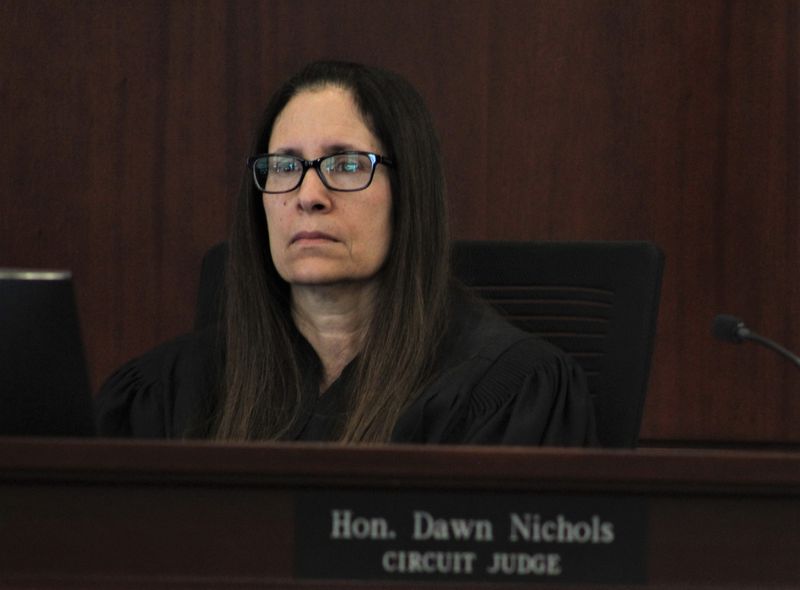
Circuit Judge Dawn Nichols said at end of the morning-long hearing at the Kim C. Hammond Justice Center in Bunnell that she would issue a ruling on Johansen’s motion at a later date.
Johansen claims stand-your-ground should have been filed
Johansen testified that his defense attorney at trial, Garry Wood, should have filed a stand-your-ground motion. Such a motion would have shifted the burden of proof to prosecutors at a pre-trial hearing requiring them to show that Johansen was not justified in shooting Celenza.
“I told my lawyer that I was in fear for my life. I had to use deadly force, unfortunately, to prevent imminent danger that I was placed in,” Johansen told Nichols.
Wood said that Johansen brought up a stand-your-ground defense shortly before the trial, saying that he and his wife had gotten into an argument and she had pointed a gun at him.
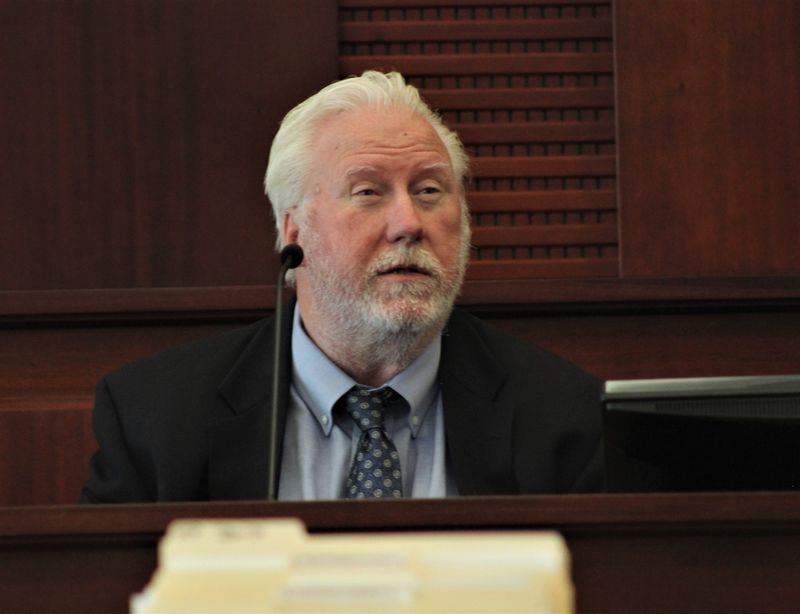
Wood, a veteran criminal defense attorney, said he and Johansen discussed the “huge discreprancy” in Johansen’s accounts.
Wood testified on Sept. 26 that a stand-your-ground defense would require Johansen to testify and come under attack from prosecutors about his differing accounts. Wood said Johansen’s testimony at a stand-your-ground hearing would then be another factor prosecutors could use at his trial.
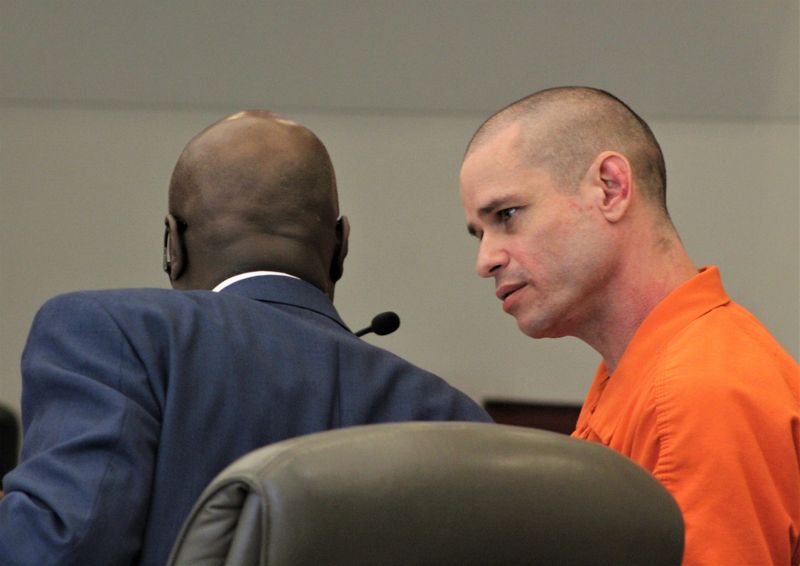
While Johansen wrote his own motion arguing that Wood had been ineffective at trial, Johansen was represented at the hearing by attorney Marc Joseph.
Johansen smiled a few times during the hearing to his attorney.
Some of the arguments in Johansen’s motions were withdrawn after the judge or prosecutor pointed out that they were invalid.
When questioned by Joseph, Wood agreed that if a stand-your-ground motion failed it could still be used as a grounds for appeal.
Wood agreed that Johansen was in his own home and had no duty to retreat, which are among the elements required to win a stand-your-ground argument.
But the law also contains other elements, including that the person reasonably believes that deadly force is needed to prevent “imminent death or great bodily harm” or to prevent a forcible felony.
Johansen claims gun should have been tested
Johansen also claimed that Celenza’s gun should have been tested for DNA and fingerprints.
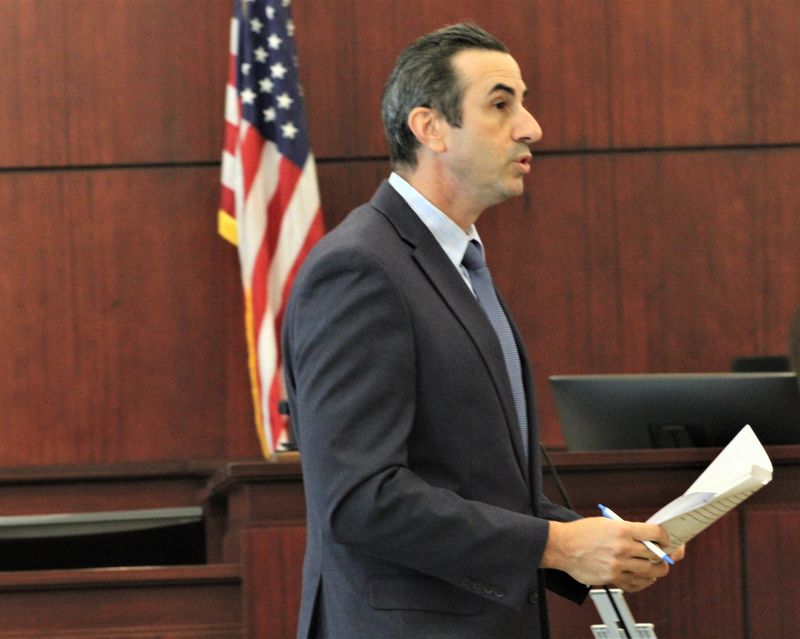
But Lewis said that Celenza was not shot with her gun. She was shot with another gun, so the absence of Johansen’s prints or DNA on her firearm was irrelevant.
Lewis also said that Johansen had testified at trial that he had shot Celenza, again making the test of the gun irrelevant.
Johansen: Trial should have been moved to different venue
Johansen also wrote in his motion that the trial should have been moved from Flagler County because of the publicity it received. During the hearing, Johansen noted there was media in the courtroom for the Sept. 26 hearing and motioned toward a News-Journal reporter.
Johansen listed in his motion eight people in the jury pool that he said had seen or read about the case before the trial.
But Lewis said seven of the eight were excluded from the jury and the one who wasn’t had said they had only read a headline about the case and could be fair and impartial.
Wood testified that he did not believe that the trial needed to be moved from Flagler County and that it had not been difficult to pick a jury. It required only one group of potential jurors to select a panel.
Johansen: Dead woman’s son should have testified
Johansen also argued that Wood should have called to testify Celenza’s son, who could have corrobated some of what he said, such as that he had been in the shower.
But Lewis said the child told investigators that right before he heard a gunshot he heard his mother scream.
“You claim that it was self-defense. You don’t think 12 people hearing that Brandy screamed right before you shot and killed her that that’s going to push them over the top to think that you premeditated killing her,” Lewis asked Johansen.
Johansen said he didn’t know and later added that she was screaming and not in “her right mind.”
Wood testified about deciding against having the boy testify at trial about hearing his mother scream before being shot: “I did not want that to come out.”
Convicted murderer asks court for victim’s rings
At the end of the hearing, Johansen brought up a previous motion he had filed for return of seized property, which included cellphones, a computer, a rifle, a 12-gauge shotgun, a .45-caliber handgun, a 9 mm handgun and the “victim’s rings.”
The murder weapon, a Canik handgun, would not be returned and was not among the firearms listed.
Judge Nichols said she would not return the firearms or ammunition to Johansen, who was a convicted felon and prohibited from having them. She said Johansen would have to file a new motion showing that the property would go to family members who are legally able to possess firearms.
NIchols said Johansen would not get the victim’s rings.
This article originally appeared on The Daytona Beach News-Journal: Palm Coast man serving life for wife’s murder challenging conviction
Reporting by Frank Fernandez, Daytona Beach News-Journal / The Daytona Beach News-Journal
USA TODAY Network via Reuters Connect