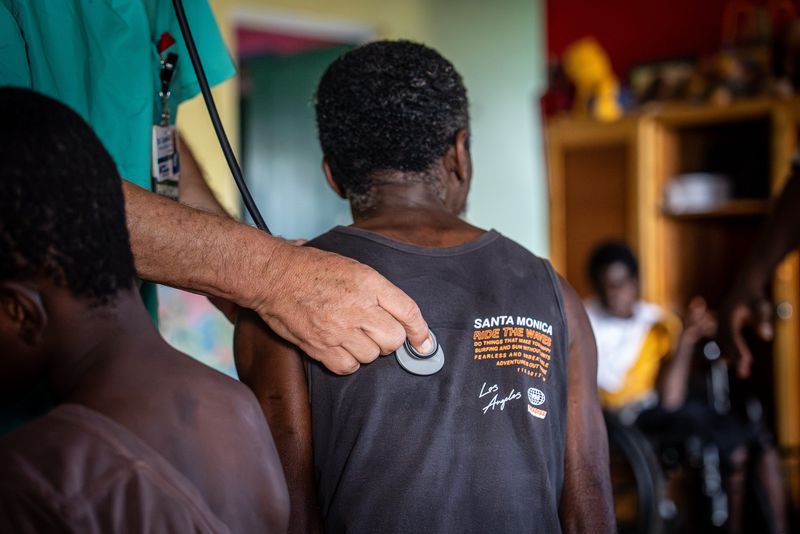
The children and their caretakers had been isolated for weeks.
The area around the home, which housed some 95 disabled children, was decimated by Hurricane Melissa as the powerful Category 5 storm ravaged Jamaica.

The storm made landfall on Oct. 28 in the island country’s southwest and then moved toward the northeast, across mountains and through Montego Bay, a tourism hub in the Caribbean.
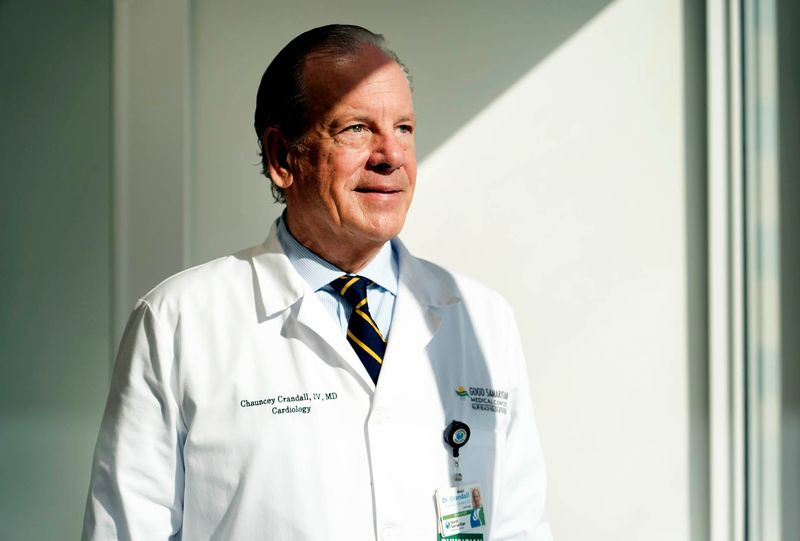
Eighteen women took care of the children in the home surrounded by leveled structures and stripped trees, in a building with no roof, no electricity, no running water and with children unable to move resting on water-logged mattresses, said Palm Beach resident and cardiologist Dr. Chauncey Crandall.
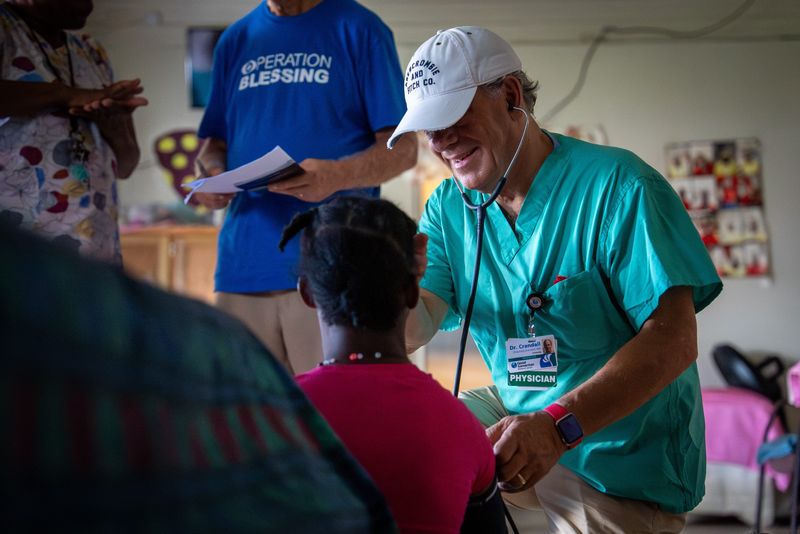
Crandall was on a team that offered the first medical care to the home and other remote areas in Jamaica’s mountains two weeks after Hurricane Melissa.
“The women taking care of these children with severe defects, most of them, were just worn out,” Crandall said. “These poor women were just beat up.”
Crandall’s 9-to-5 is with The Palm Beach Clinic in West Palm Beach. But his passion is working as a sort of medical missionary, traveling to help people in crisis in communities that over the years have included Haiti, Colombia, Singapore, Nigeria, Ghana, the Dominican Republic, Italy, Mexico and Norway.
While Crandall always felt called by his faith in God to help those in need, his work took a turn in 2004 after the death of his 15-year-old son to leukemia. In his son’s honor, Crandall created the Chadwick Foundation, which provided a platform for Crandall to bring medical aid to hard-to-reach and high-need communities.
“Many good friends in Palm Beach were able to raise some money for that, and so that work has continued since 2004 to present,” Crandall said.
He traveled to Jamaica after Hurricane Melissa and worked with Operation Blessing, a humanitarian group based in Virginia. They arrived two weeks after the storm and set up a base camp in Montego Bay, staying in a cottage there and traveling into the mountains each day.
“When I go into the battlefield of humanity like this, I feel the glory of God,” Crandall said. “I have nothing really to give other than my mind, my hands, my intellect. But the glory is there, and when we go in the name of the Lord, he will go with us and everything will work out.”
A morning began when the sun rose about 5:45 a.m., Crandall said. Crews loaded up medical supplies before going into the mountains. Because it was more than a week after the storm, crews that had been in Jamaica for days already knew the greatest needs and sent Crandall to those places first. Each night, the team had a meal of chicken, rice and beans before going to bed by 8 p.m.
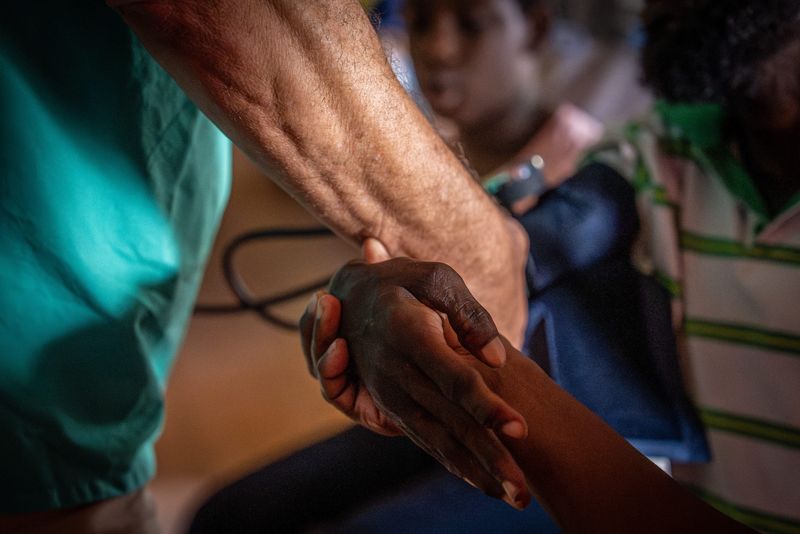
At the children’s home, Crandall and the Operation Blessing team examined the children and then offered medical care and prayers to the caretakers. Operation Blessing also worked with the home to create a new roofing system within the next week, Crandall said.
On another day, the team went to a small, remote prison where three women had been in the same small cell without running water or electricity since the storm, Crandall said. He was asked to provide medical clearance for the women to be moved to another prison, he said.
“Some of them had been in there for well over three months in the small cell,” Crandall said.
Operation Blessing worked with other groups, including some from Israel and from the U.S.
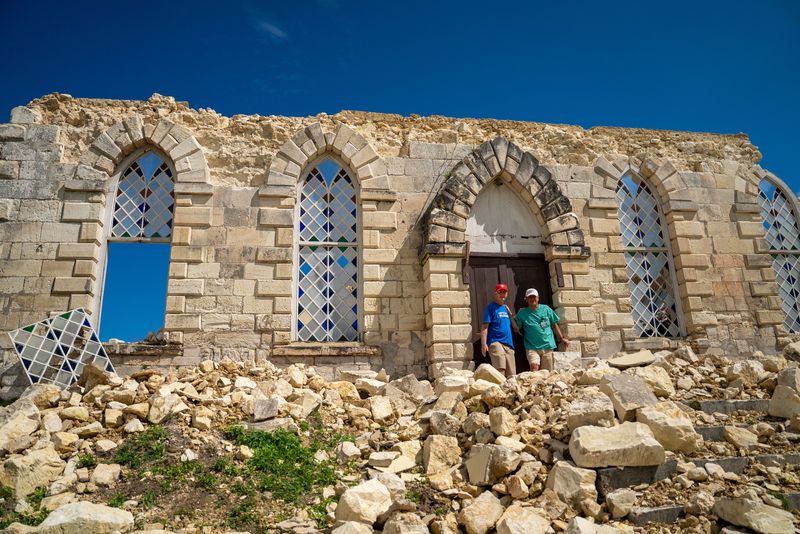
“We were working out of churches,” Crandall said. “Usually the churches were the most well-built buildings throughout the area, and many of them were partially standing.” The churches became hubs for medical and trauma care, he said.
The days were long and filled with medical care and prayer, assessment of patients and heartache, Crandall said.
But there was also great hope, he said.
Jamaica is a very spiritual country, Crandall said. Many of the people he helped physically also sought prayer and needed mental health support, he added.
One young man to whom Crandall spoke said it was the most horrific thing he’d been through. “He said it was so intense and so fierce, and he could not take it anymore,” Crandall said. “He walked out of the building and then all of a sudden he called on God and the storm stopped. They survived.”
Others in Jamaica who were surrounded by the devastation, who had lost their homes and businesses and family members and friends, told Crandall they
The strength and resilience of the Jamaican people is astounding, Crandall said. In speaking with people in the weeks after Hurricane Melissa, they told Crandall of their prayers.
“I said, ‘How are you going to make it?'” he said. “And they said, ‘Doc, if you have life and you have God, you have everything.'”
Crandall sat in his corner office on the campus of Good Samaritan Medical Center and looked across the Intracoastal Waterway toward Palm Beach island. “We’ve got it all,” he said. “And they have nothing. But, ‘If you have life and you have God, you have everything.'”
He added, “We need to let people know in Palm Beach that there’s hope, and that there is a God, and things will be OK.”
For more information about Operation Blessing, go to OB.org.
Kristina Webb is a reporter for Palm Beach Daily News, part of the USA TODAY Florida Network. You can reach her at kwebb@pbdailynews.com. Subscribe today to support our journalism.
This article originally appeared on Palm Beach Daily News: Palm Beach doctor goes to Jamaica to provide medical care after Melissa
Reporting by Kristina Webb, Palm Beach Daily News / Palm Beach Daily News
USA TODAY Network via Reuters Connect